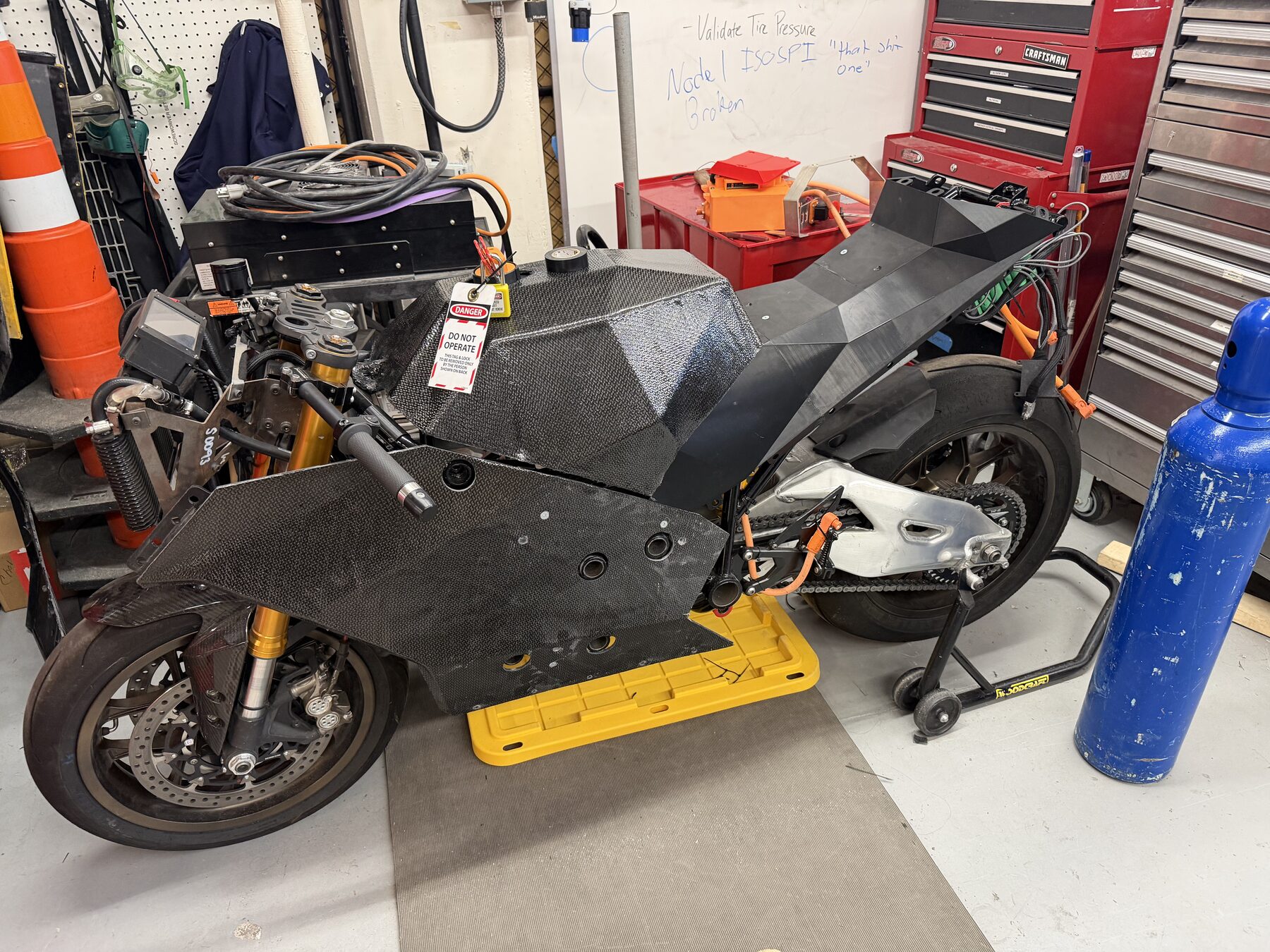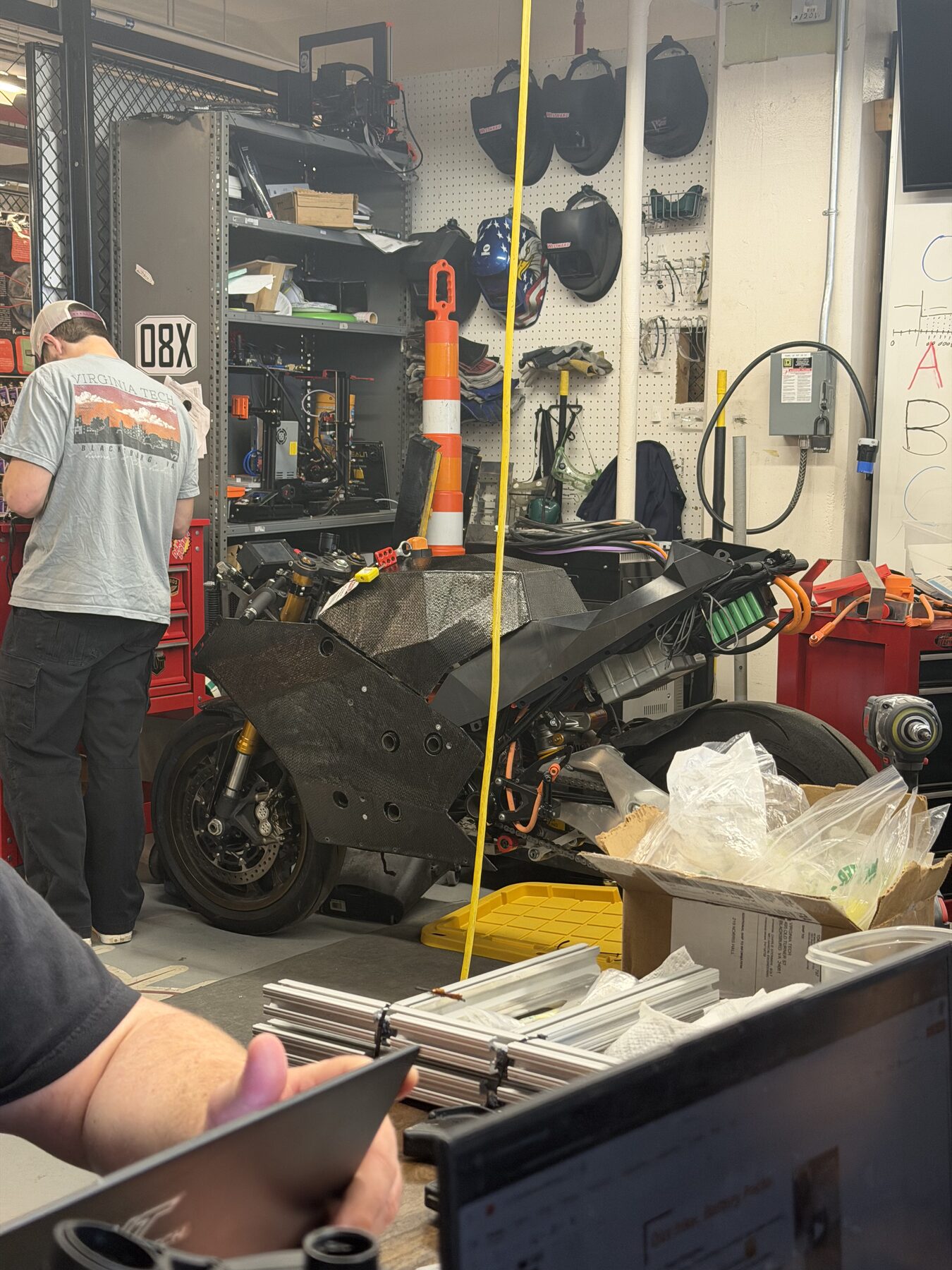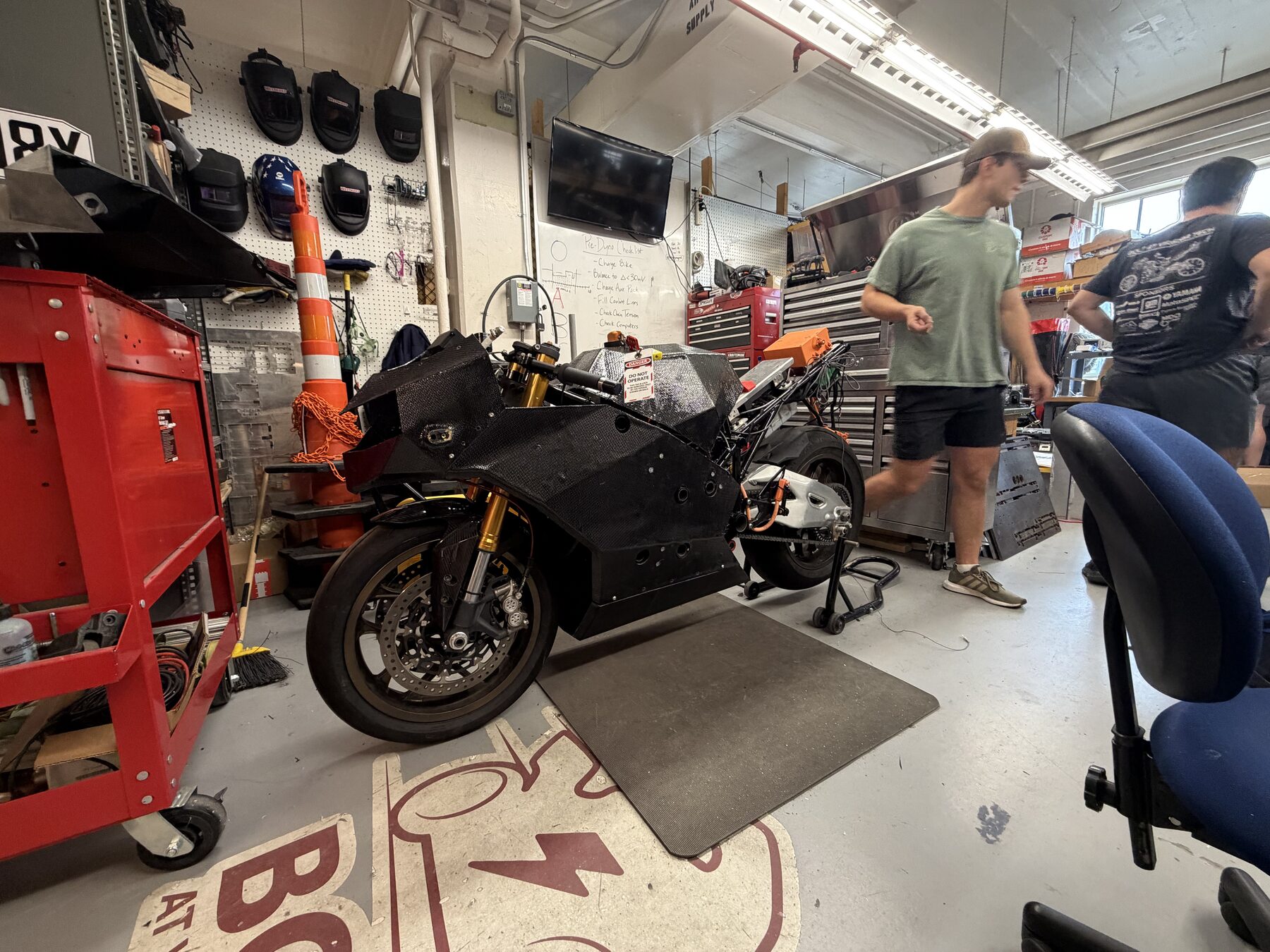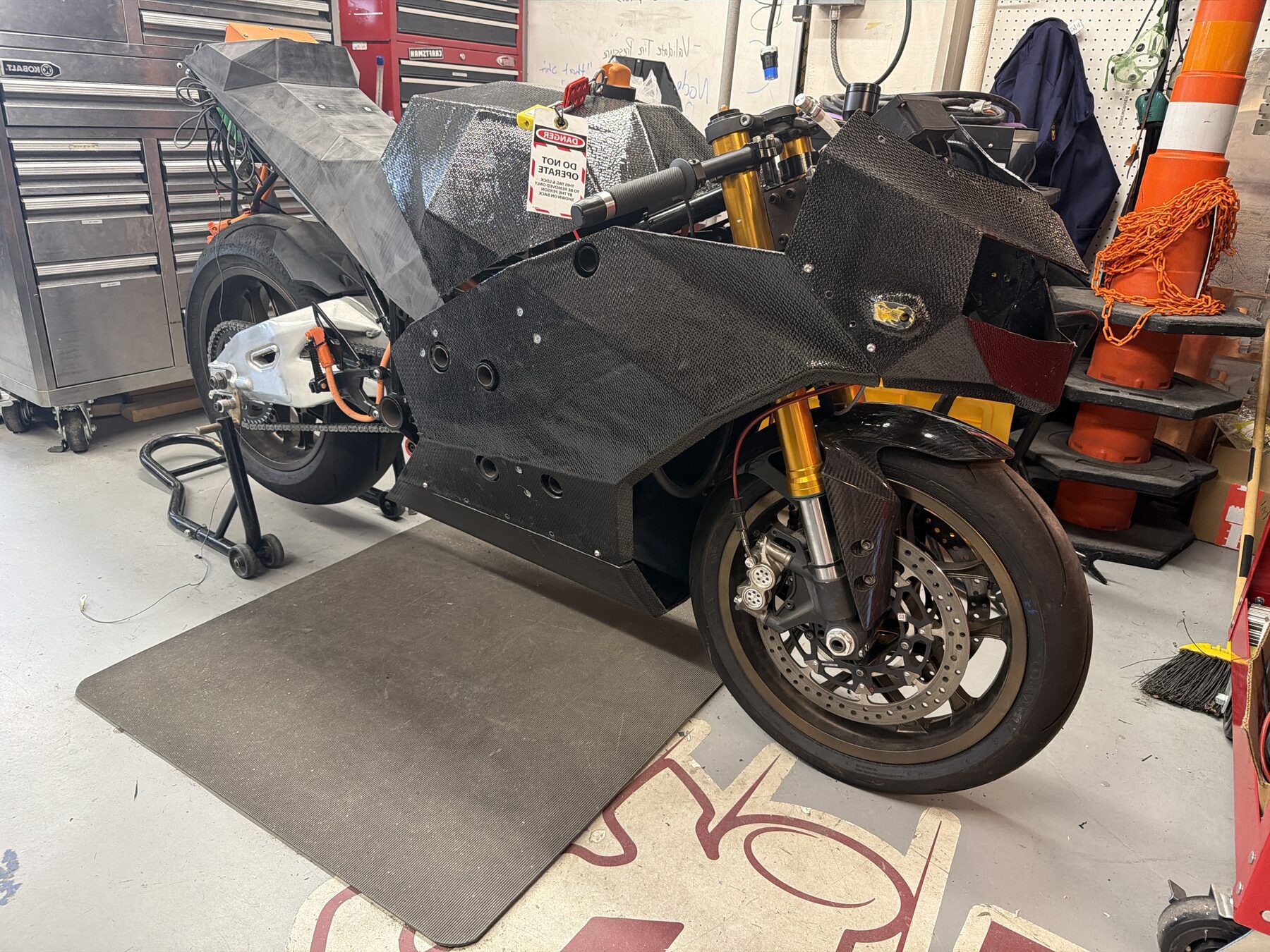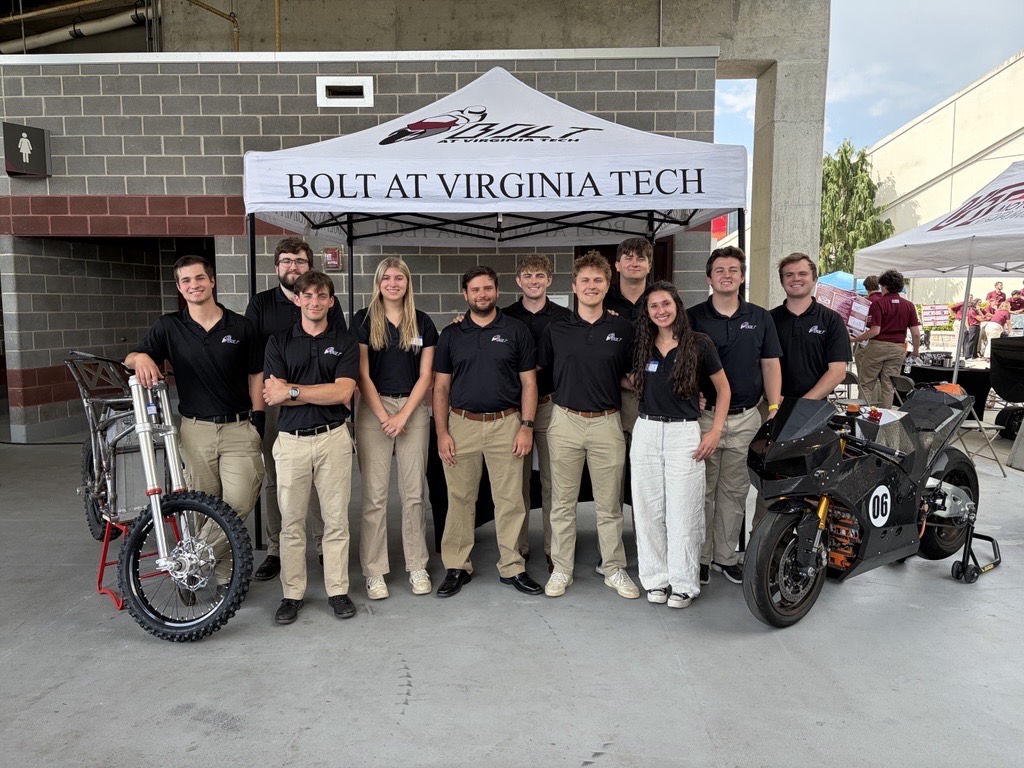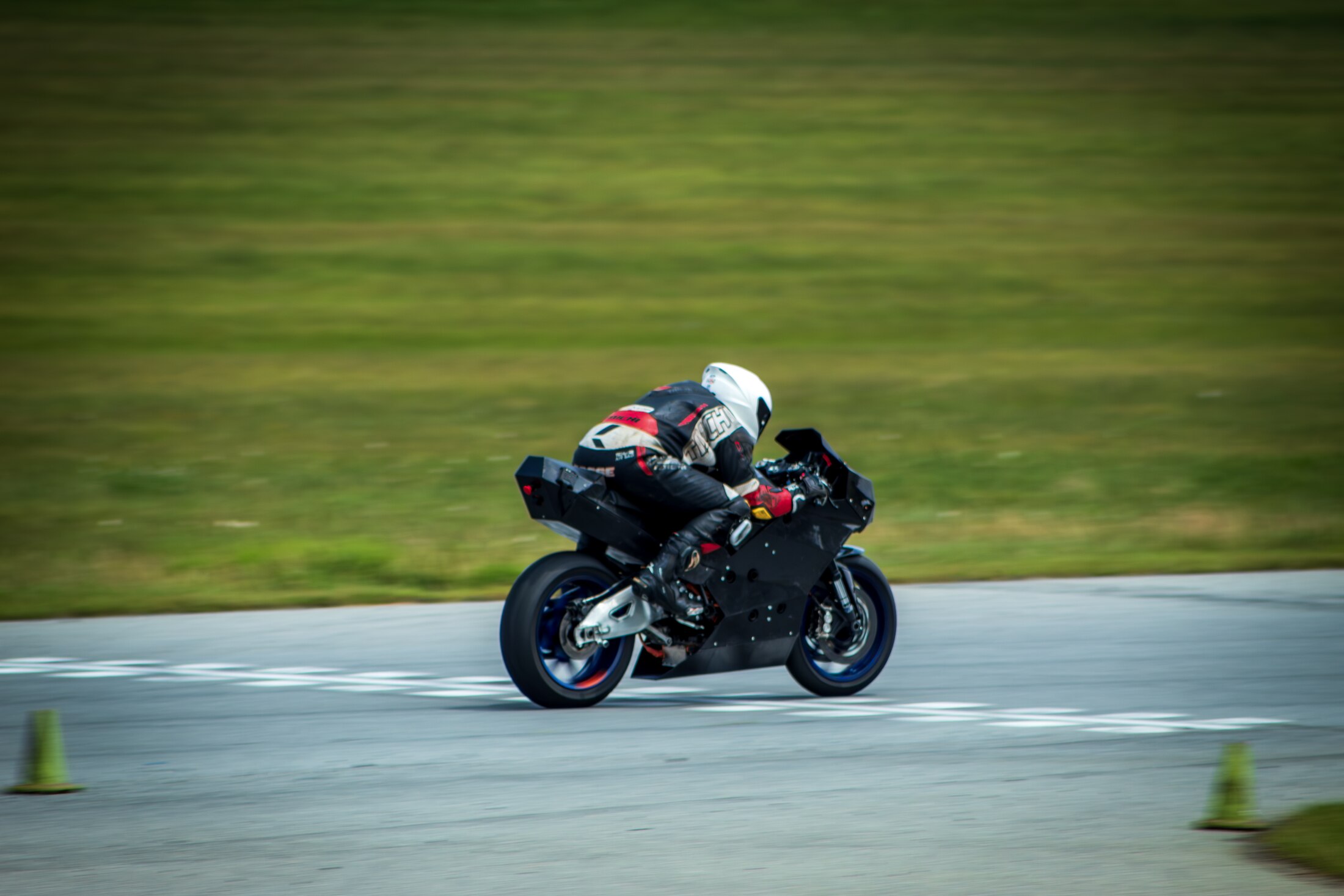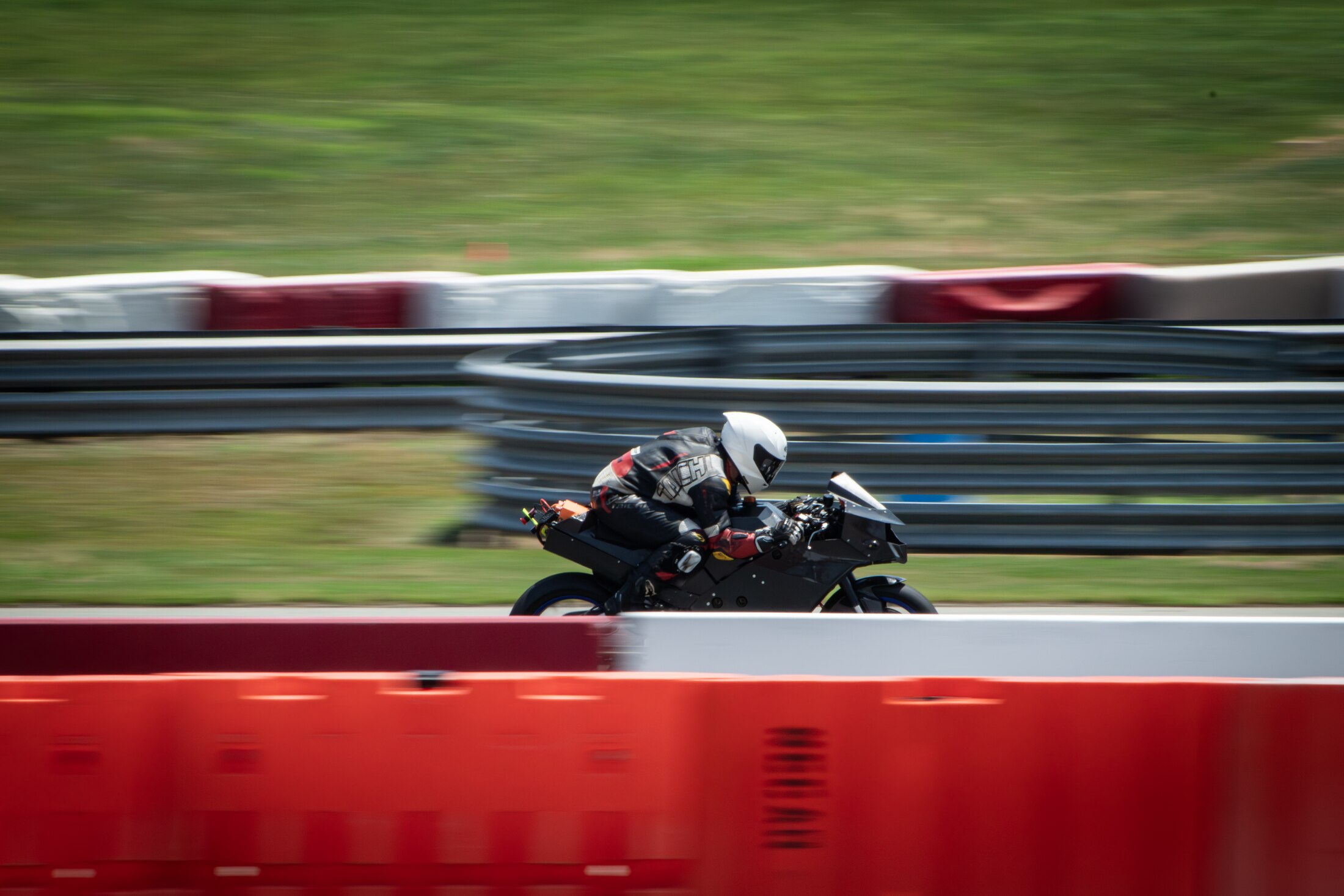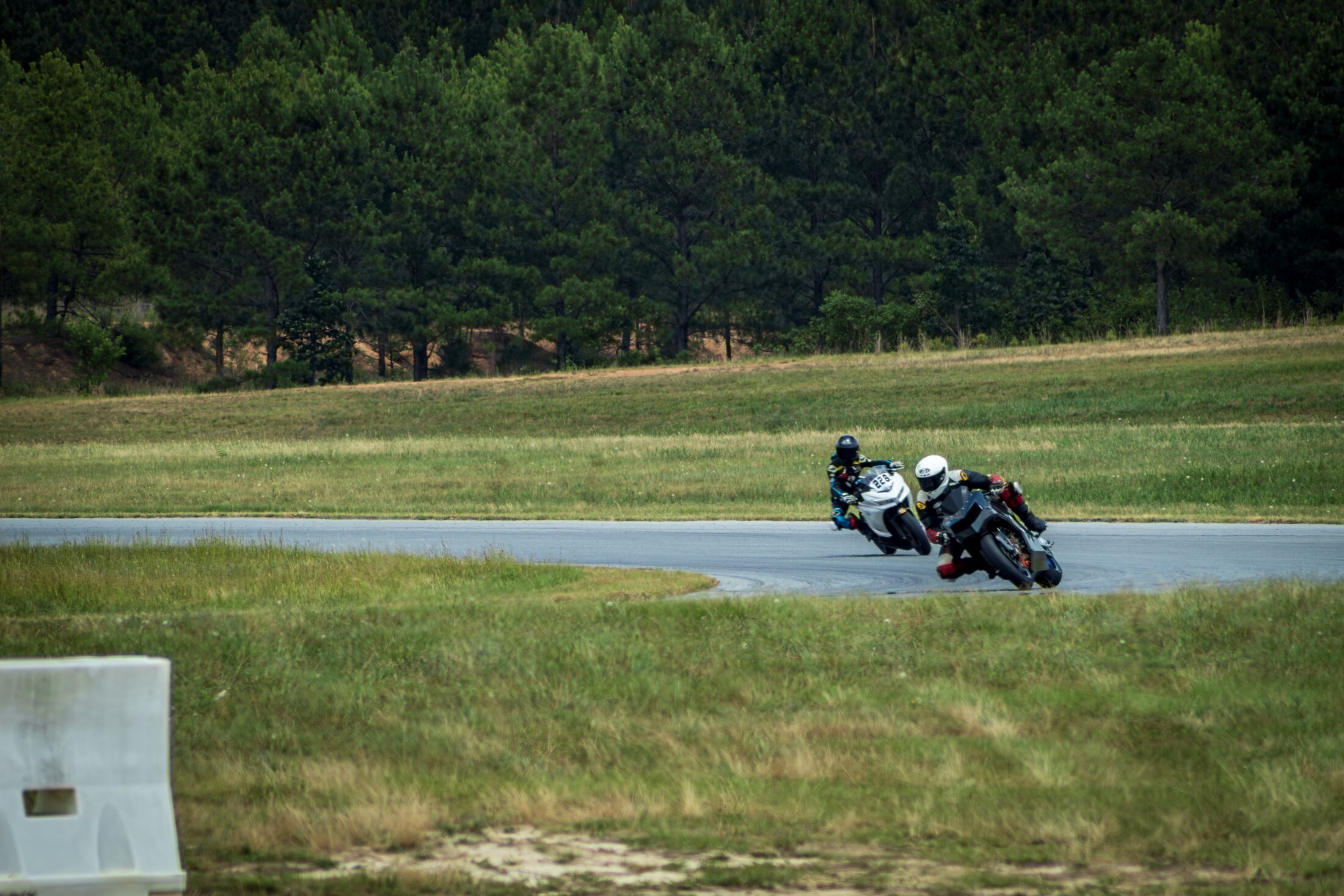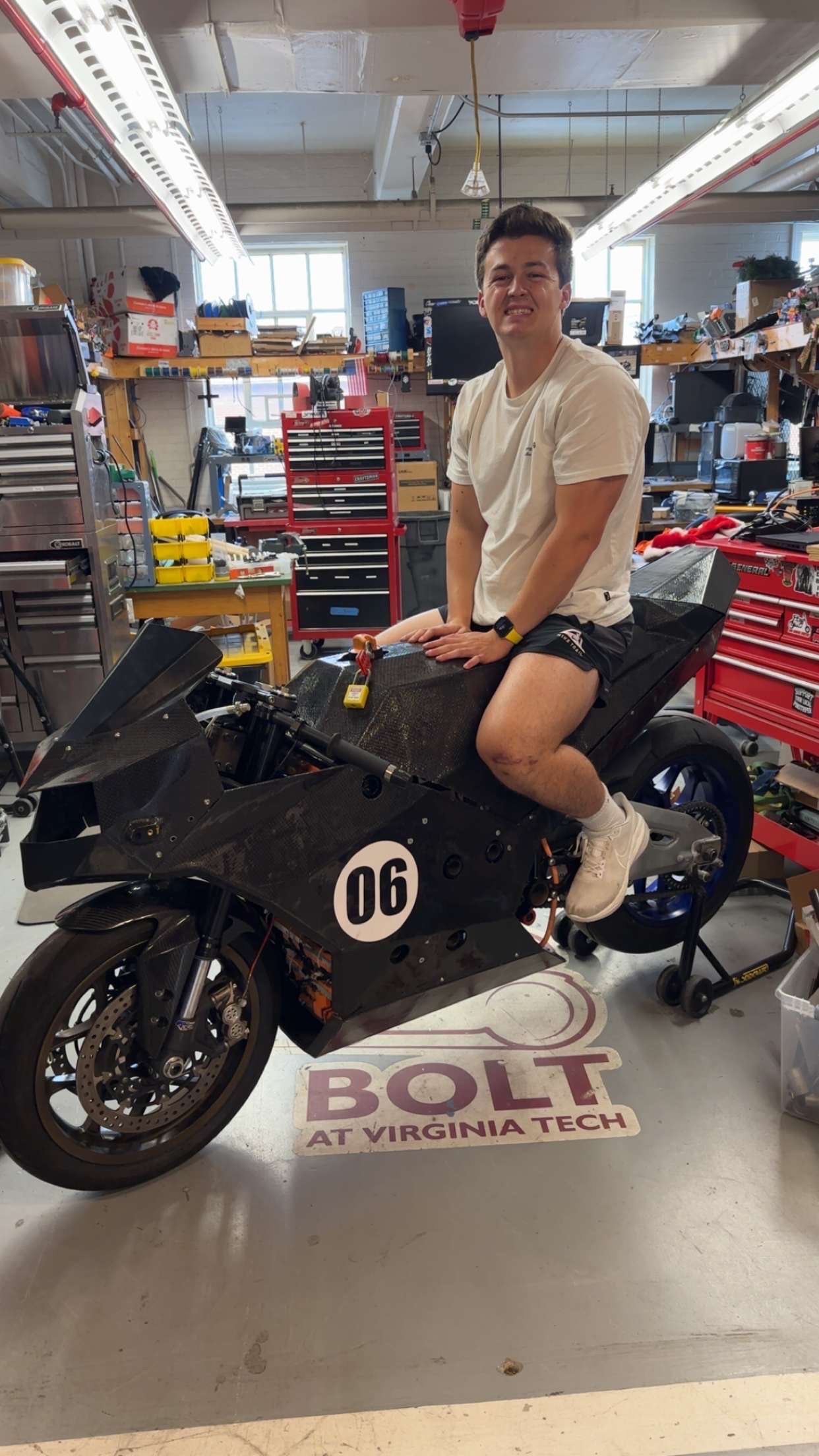
Virginia Tech's BOLT (Battery Operated Land Transport) team designs, builds, and races an electric motorcycle from the ground up each year, competing in events including the TTXGP and similar electric racing series. Every subsystem — frame, suspension, battery pack, motor controller, fairings — is engineered and fabricated by students.
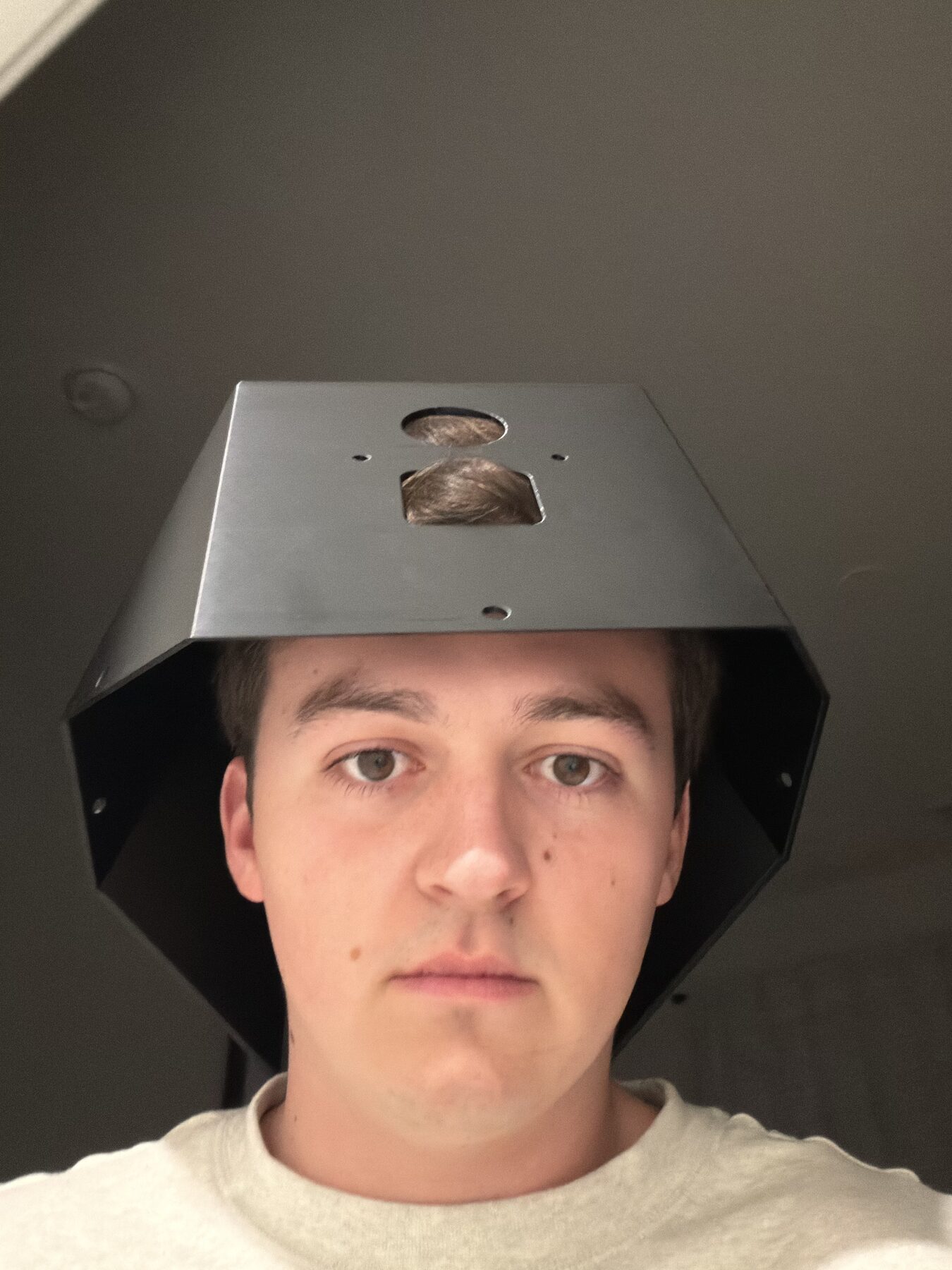
I joined as a chassis engineer working on the Emrax 248 (400kW) motor and its mount, along with various electronic housing components and simulation work on miscellaneous parts. I also helped extensively with construction, picking up hands-on fabrication skills along the way — waterjet cutting, CNC milling, and more.
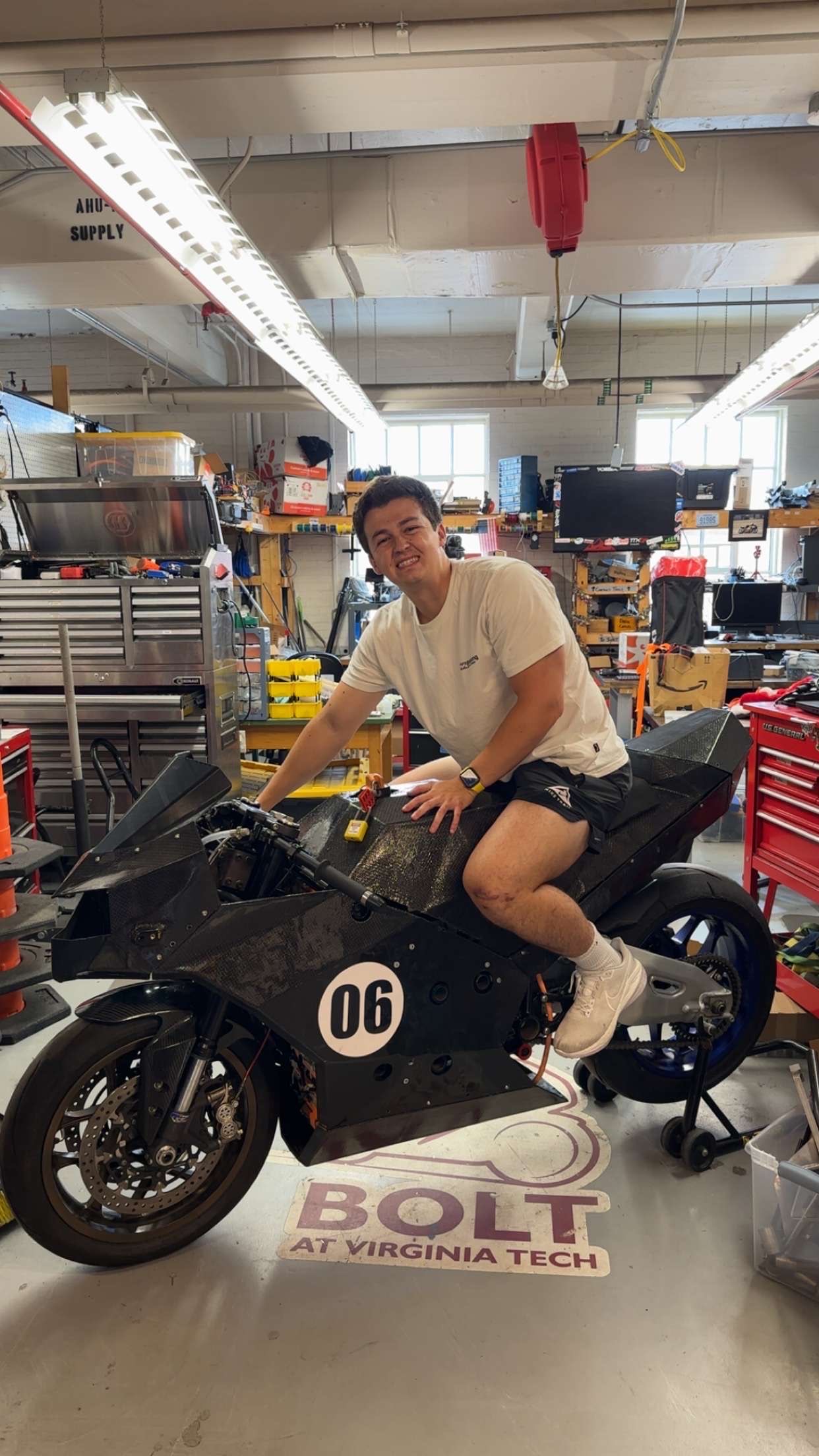
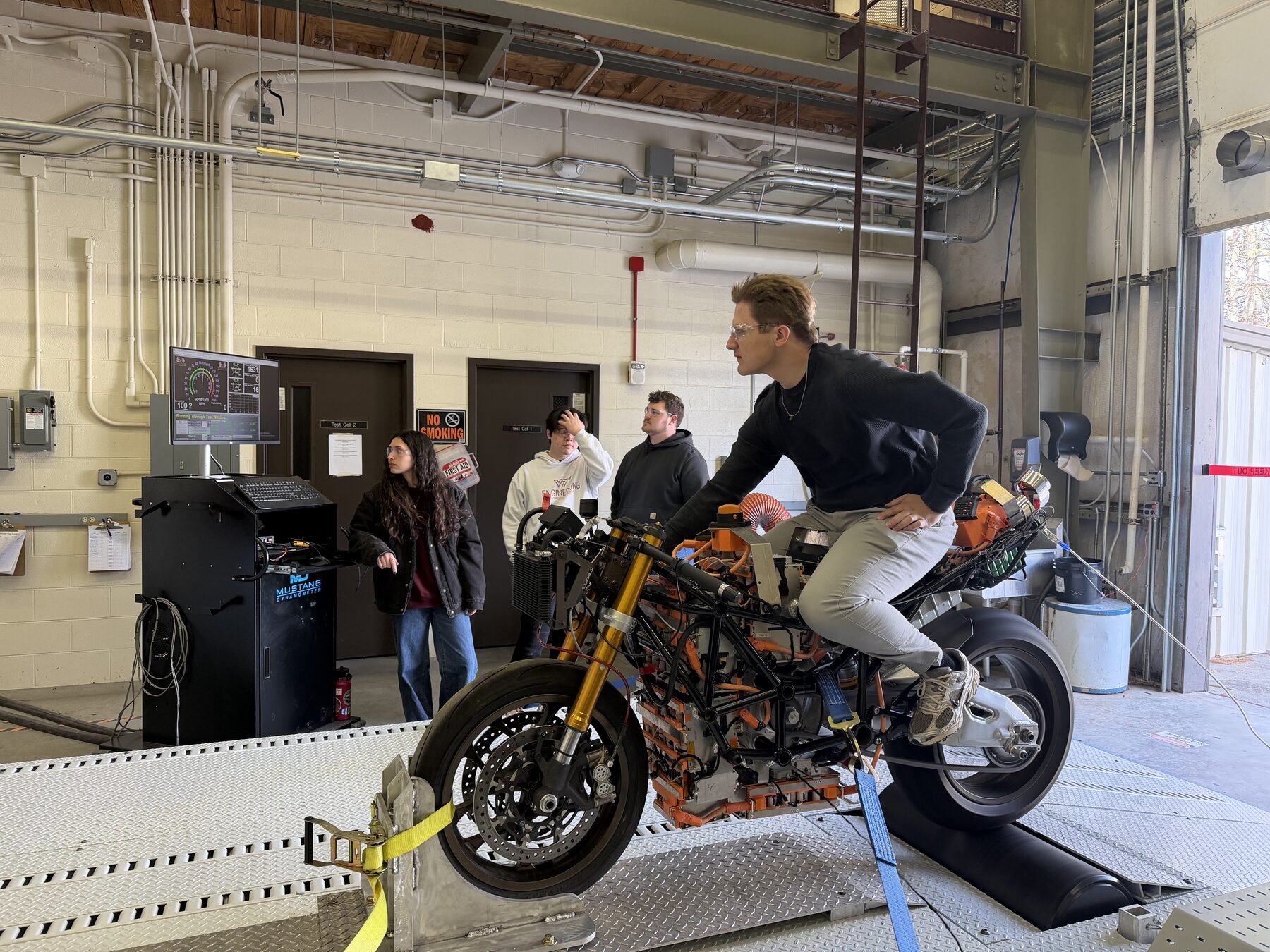
My senior year I was promoted to Admin Lead. The role meant owning recruiting, community outreach, safety compliance, and all of the organizational infrastructure behind a 100+ person student engineering team, but I stayed involved in engineering decisions throughout rather than stepping away from the technical side entirely.
Despite accepting fewer than one in four applicants, team membership doubled from 55 to 120. For the first time in BOLT's history, the ratio of upperclassmen to underclassmen became balanced — a sign the pipeline into the team was finally healthy.
On the outreach side, we attended nearly every promotional event we were invited to — 14 total, including STEM days at local elementary and middle schools, a multi-school field trip to Roanoke, and a visit to VWCC where we showed the bike running. Prior years had done almost none of this.
On the compliance side, I was responsible for ensuring BOLT met all university safety requirements: EHS inspections and Ware Lab certification both passed on schedule.
Designing the fairings became my senior design project. I chose to take it on specifically because of my dedication to the team, and because it meant designing for fluid dynamics and CFD for the first time — a discipline I hadn't worked in before this bike.
CFD analysis showed the fairings increased downforce by 150% while drag rose just 3%, despite the added frontal area — modeled at 200 mph, well above anything the bike can actually reach, to keep margin in the numbers. On track, BOLT VI has hit a real top speed of 165 mph and does 0–60 in 2.3 seconds.
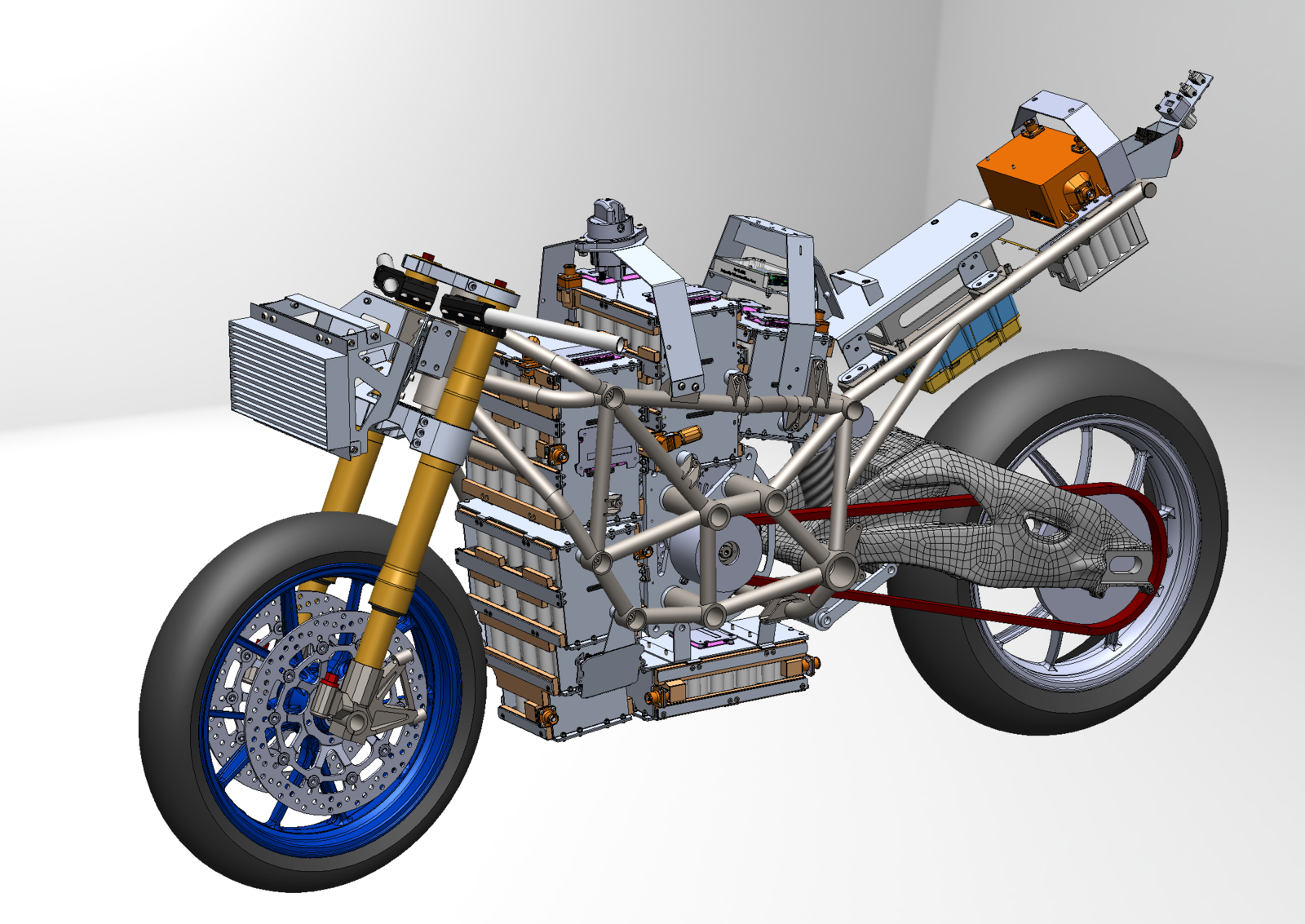
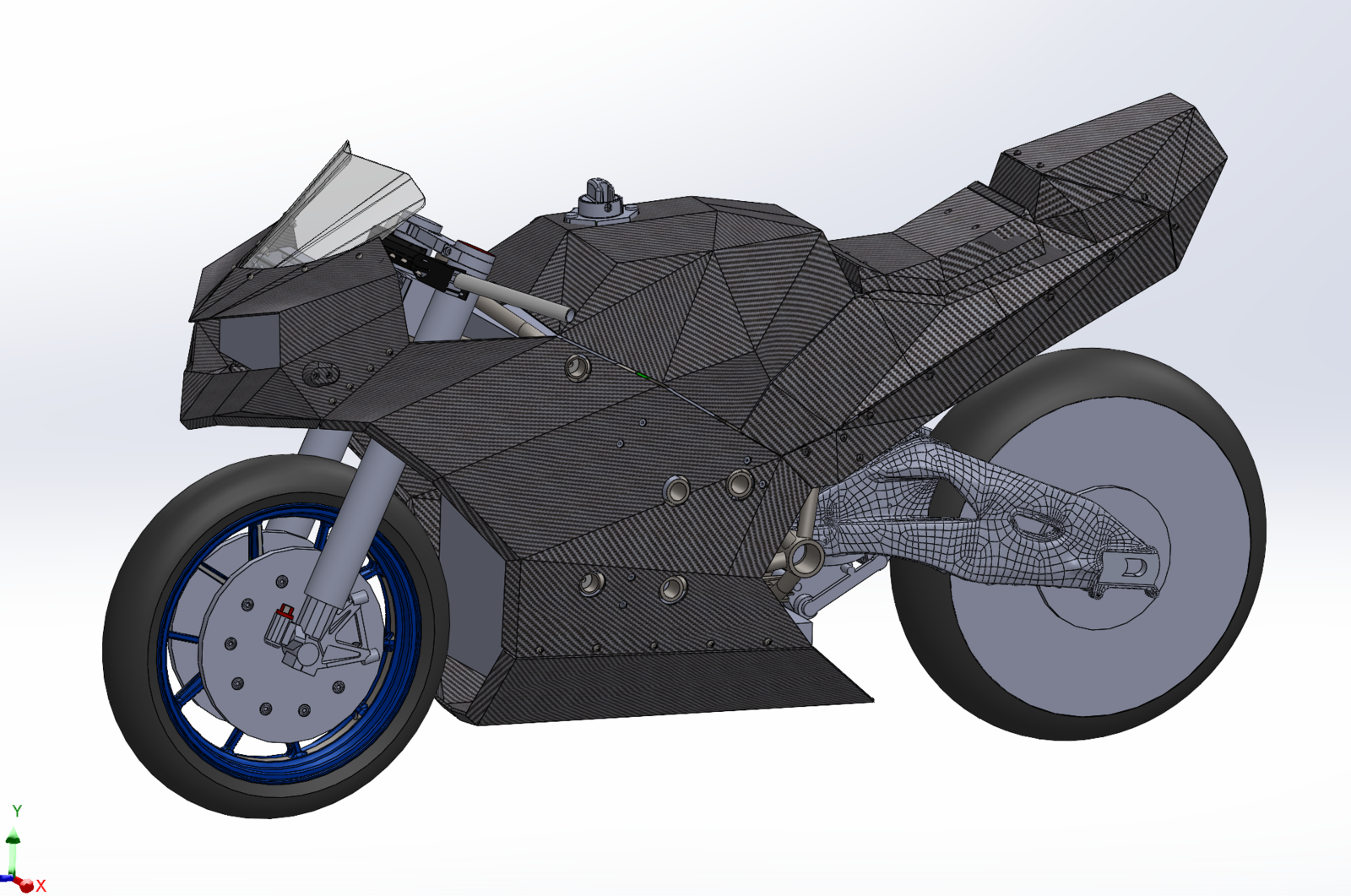
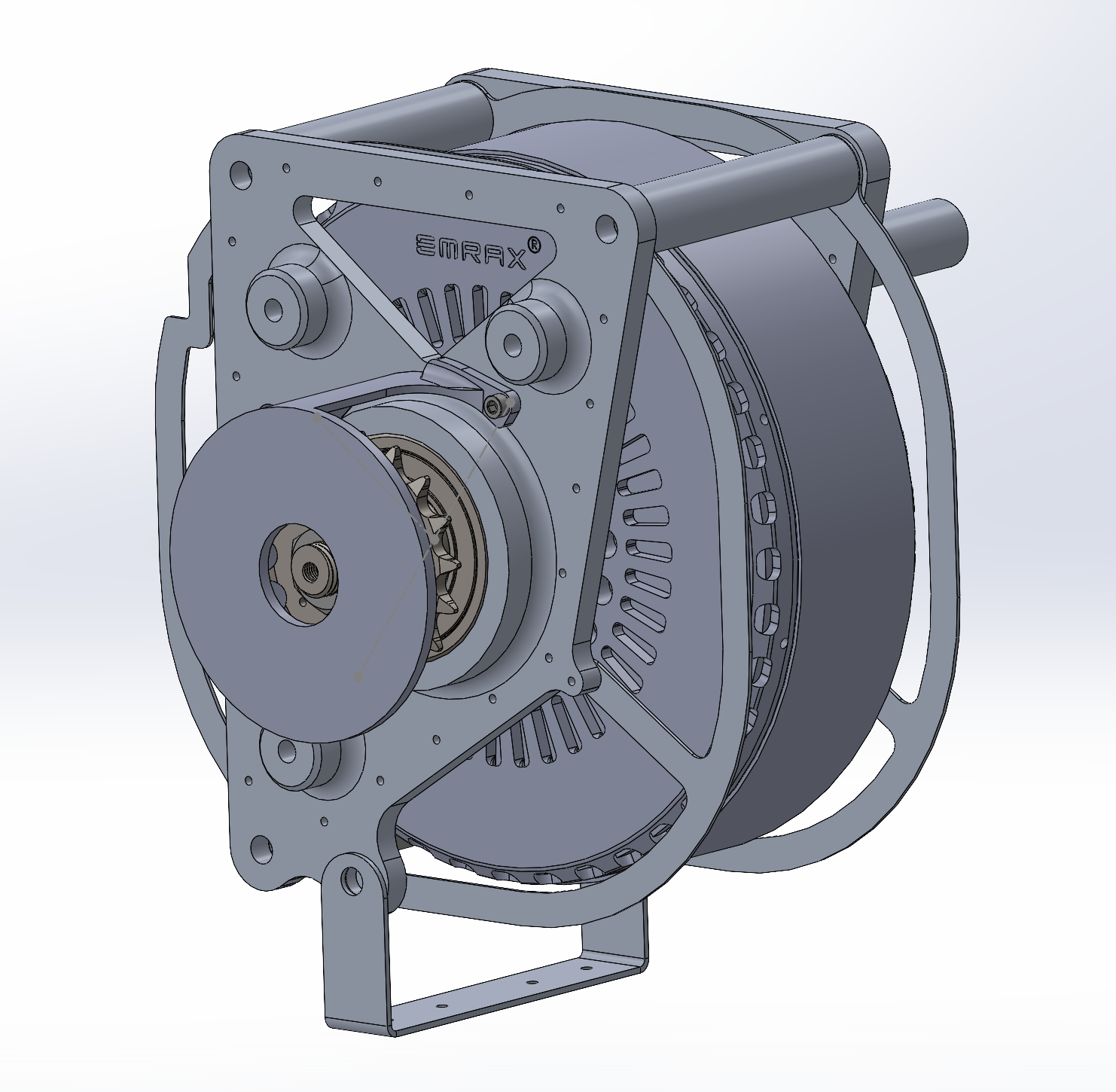
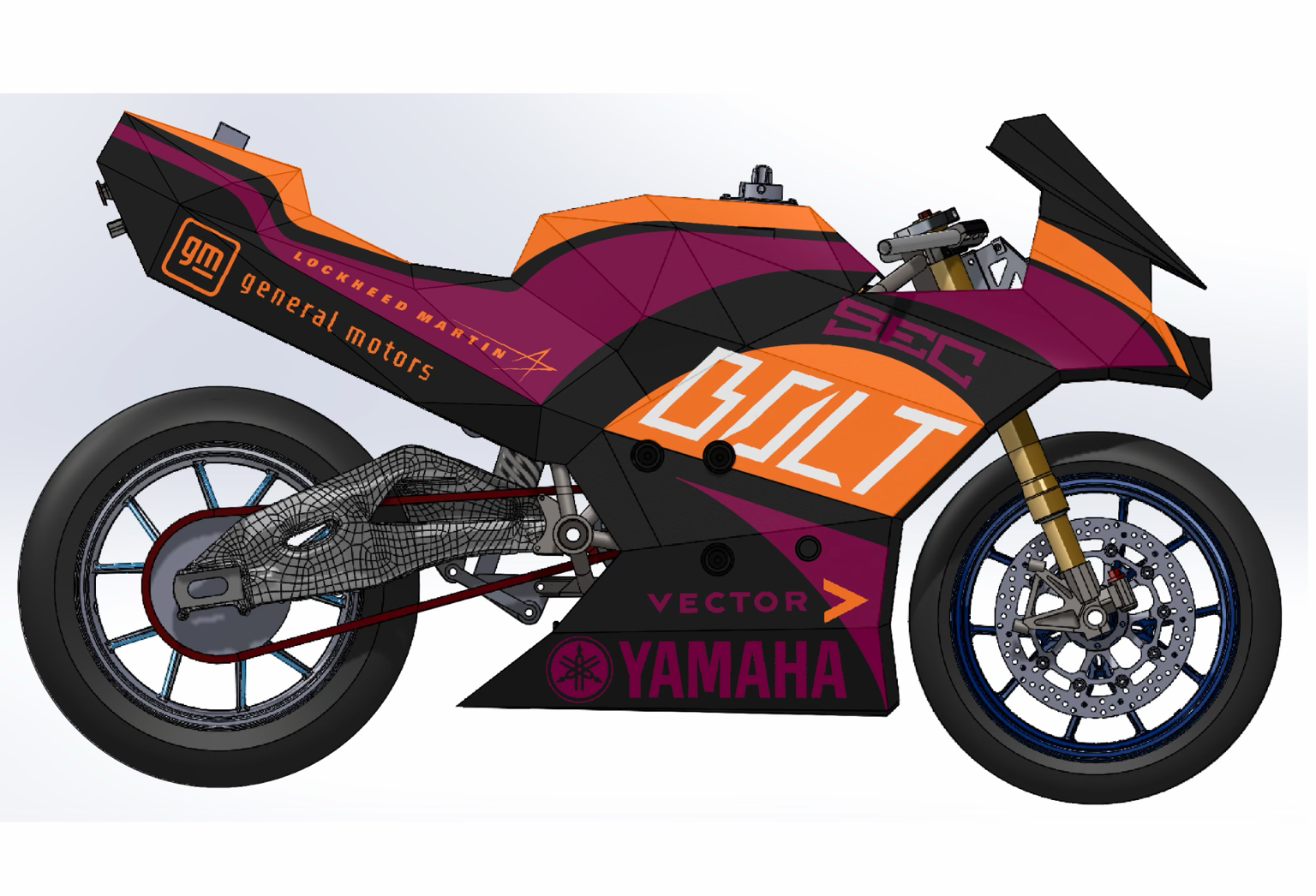
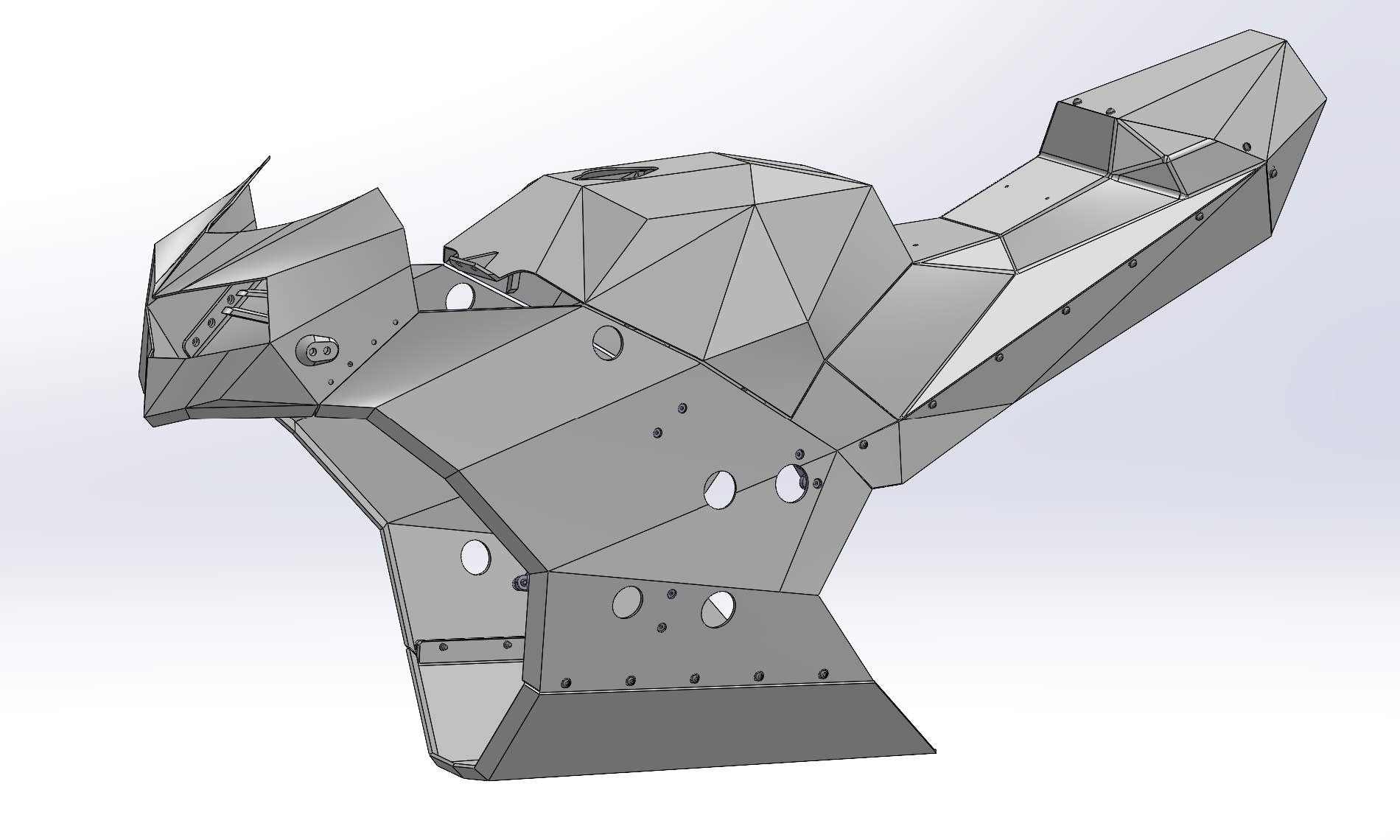
Both the motor mount and the fairing bodywork started as CAD assemblies before any material was cut or printed. Drag either model to rotate it, or move your mouse across it to explode the assembly into its individual parts.
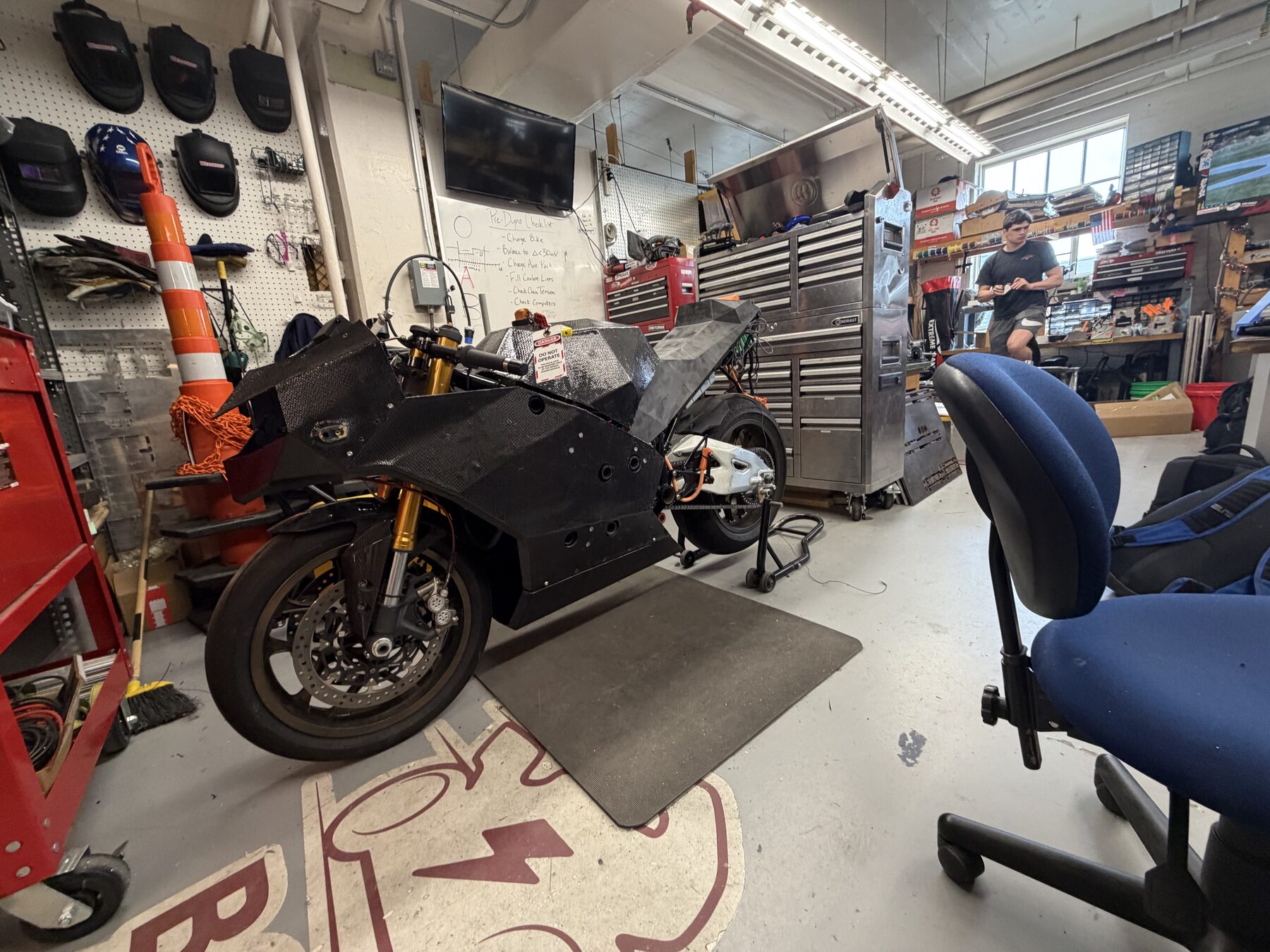
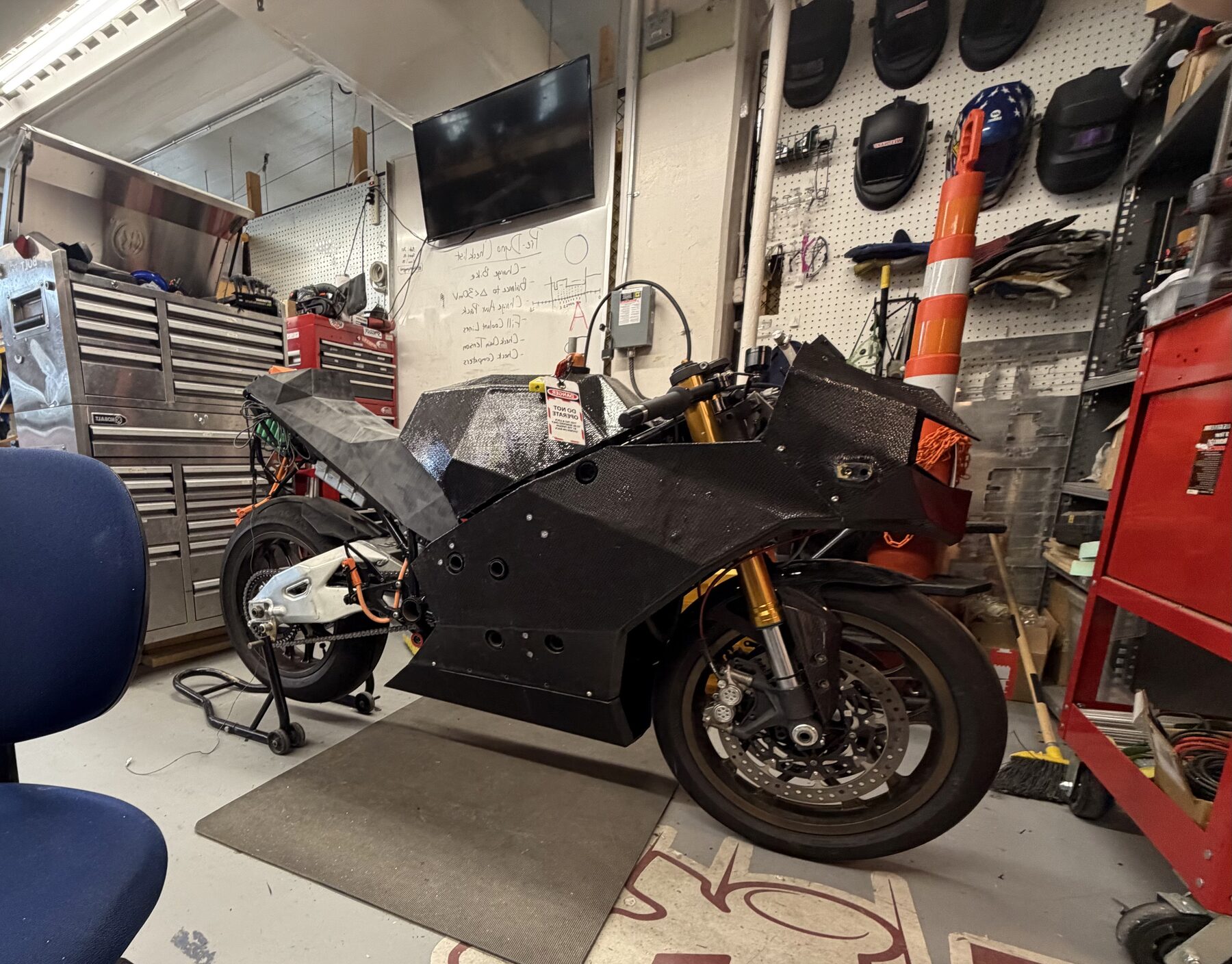
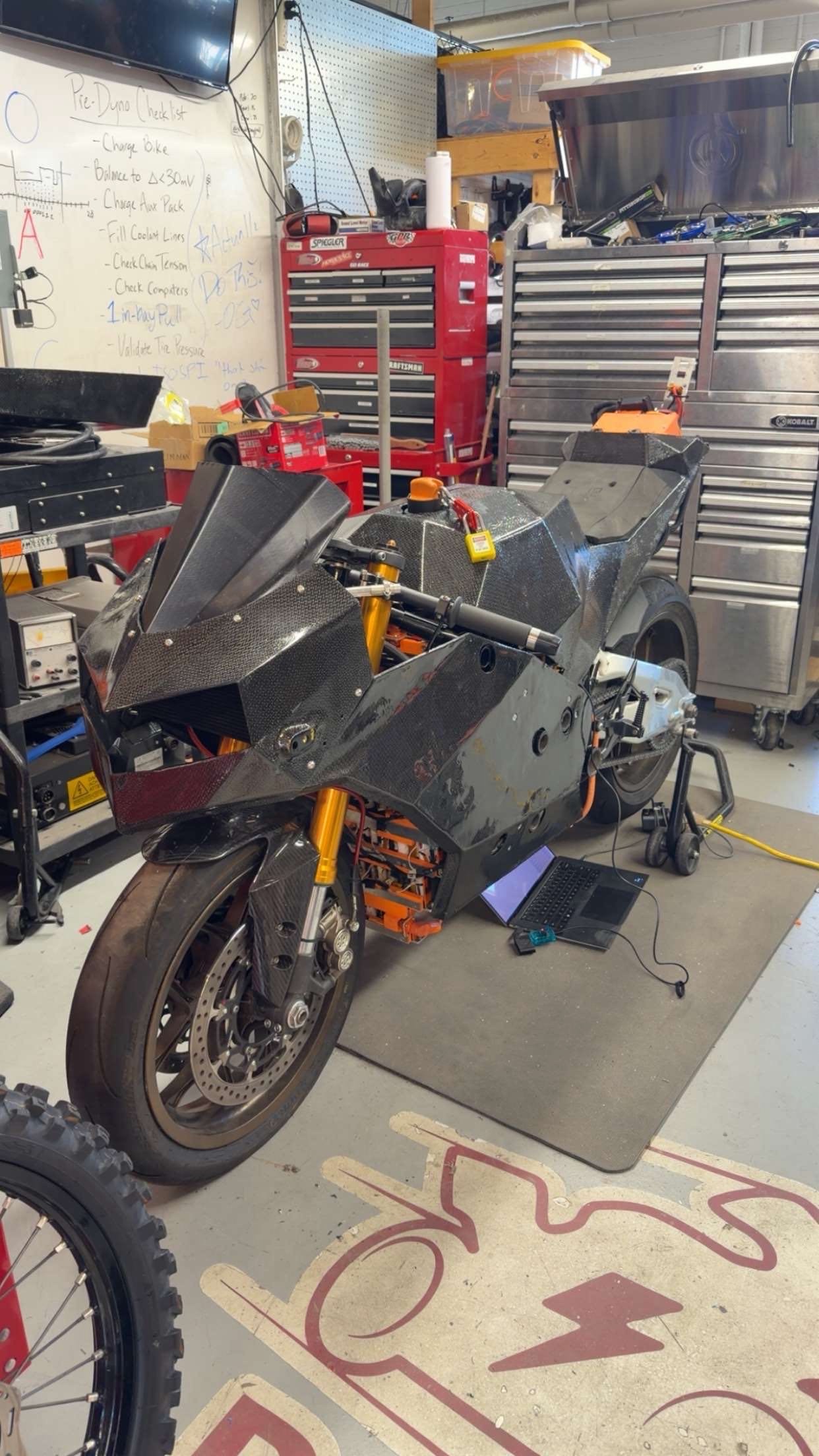
The bodywork was modeled in CAD and split into printable sections — each piece sized to fit on the printer bed while keeping parting lines where they wouldn't be visible after assembly. Dozens of individual parts were printed, test-fit on the bike, revised, and reprinted before we committed to the full set. Getting consistent wall thickness and mating geometry across the entire body took multiple rounds of iteration.
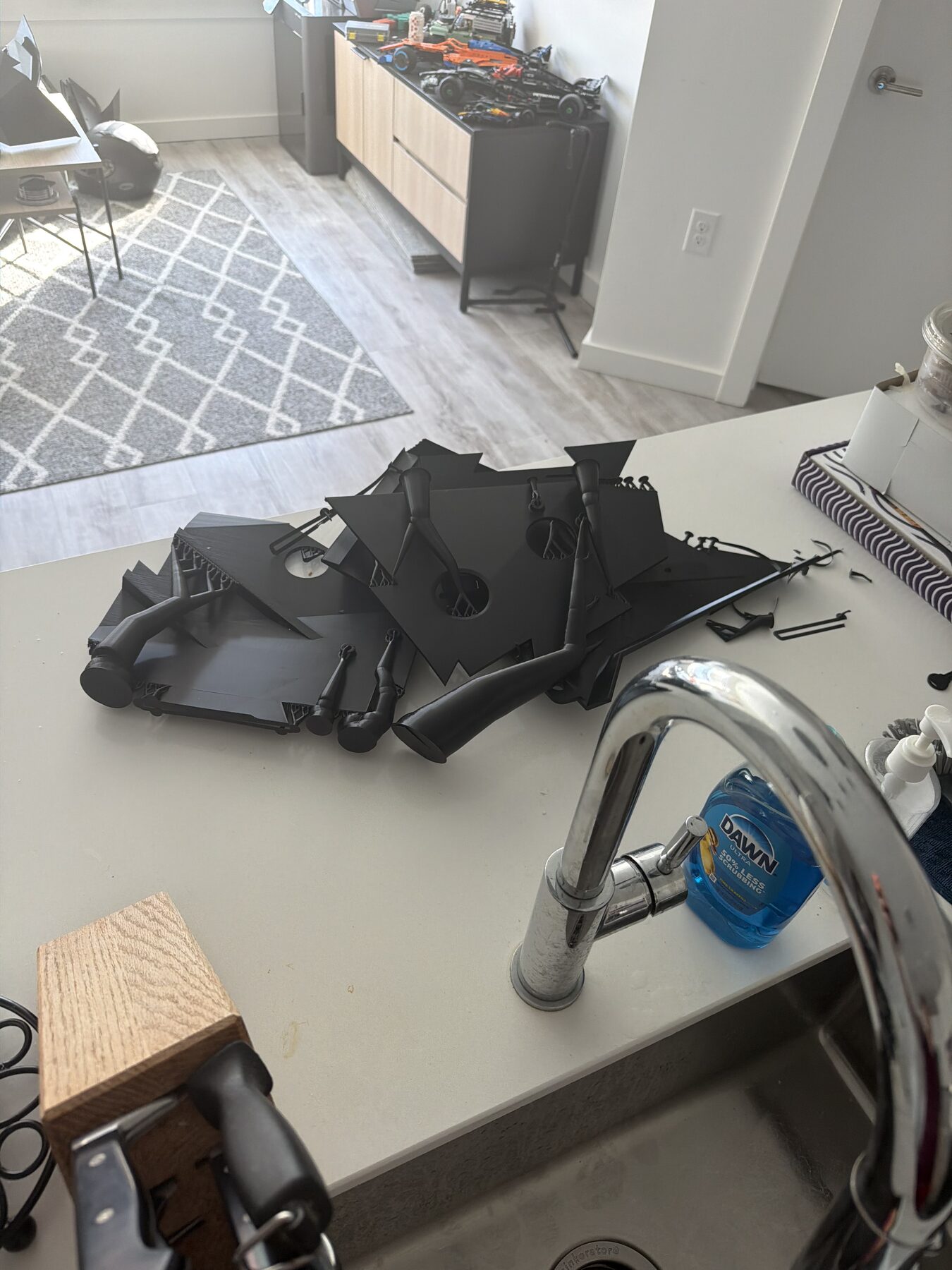
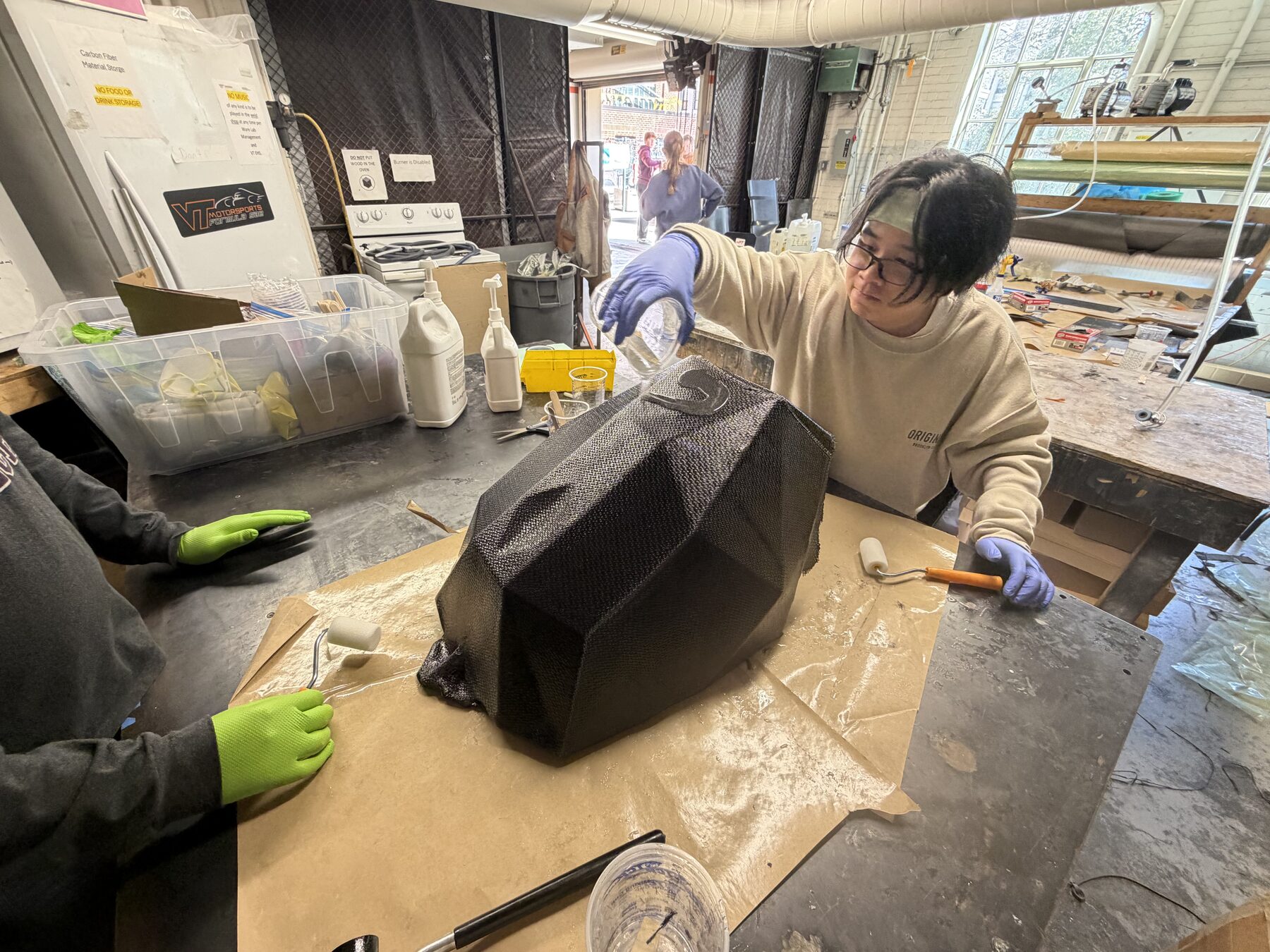
Key structural panels were done as wet carbon fiber layups over the 3D-printed forms. Fiber orientation, resin saturation, and vacuum bagging were all critical to getting void-free parts — any air trapped in the laminate shows up as a blister once cured. The tank fairing and main side panels got this treatment to add rigidity without adding weight.
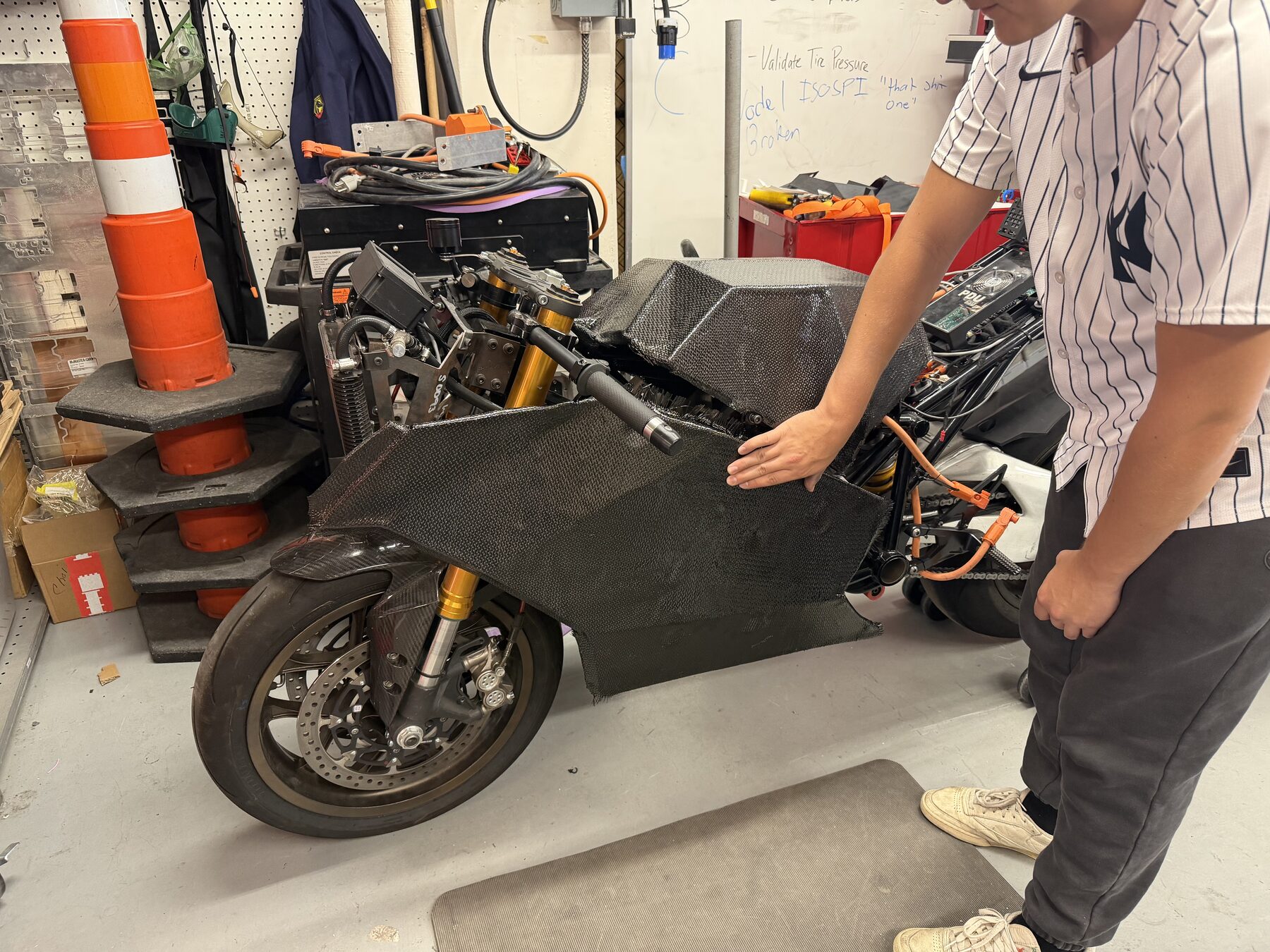
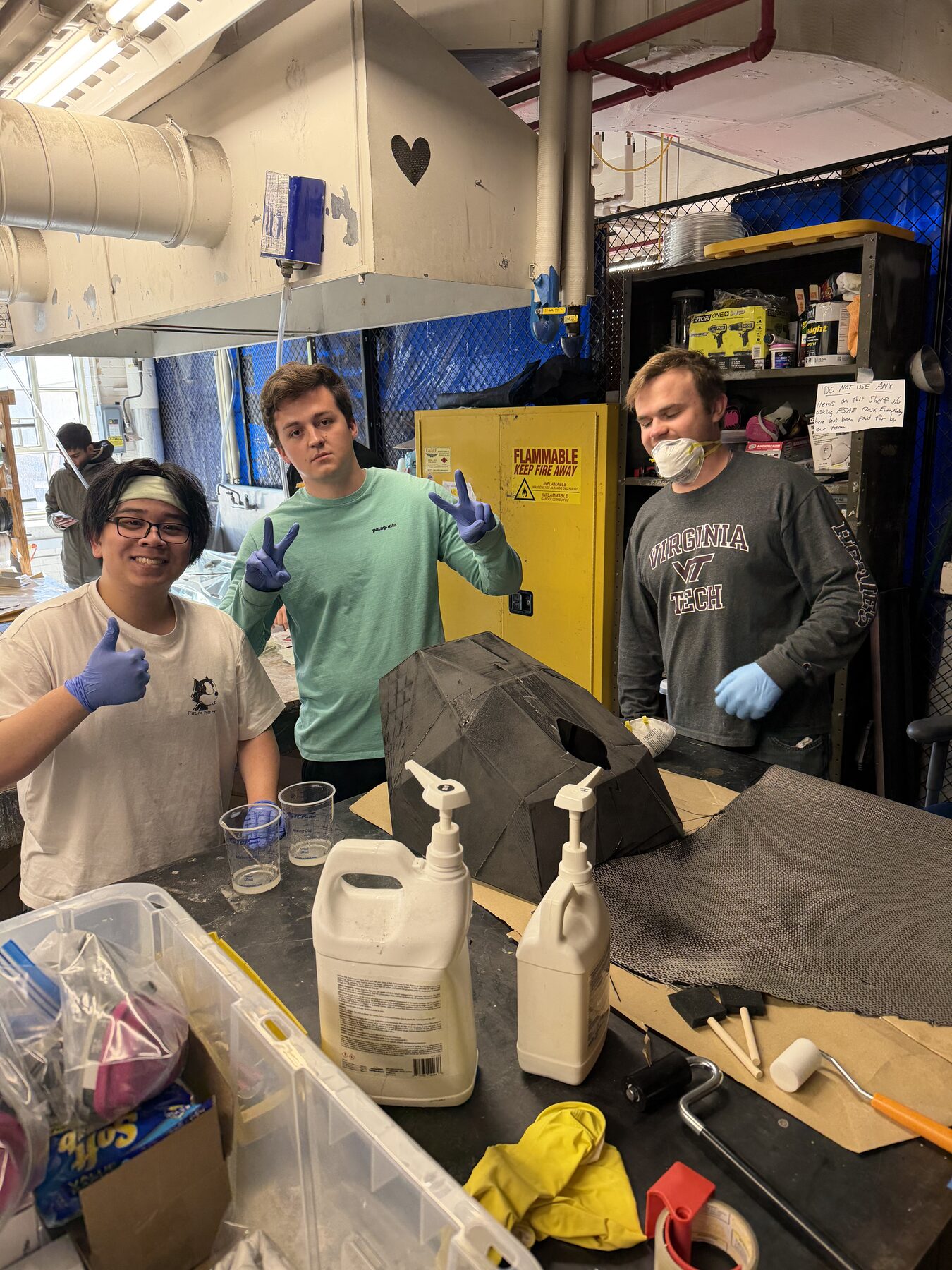
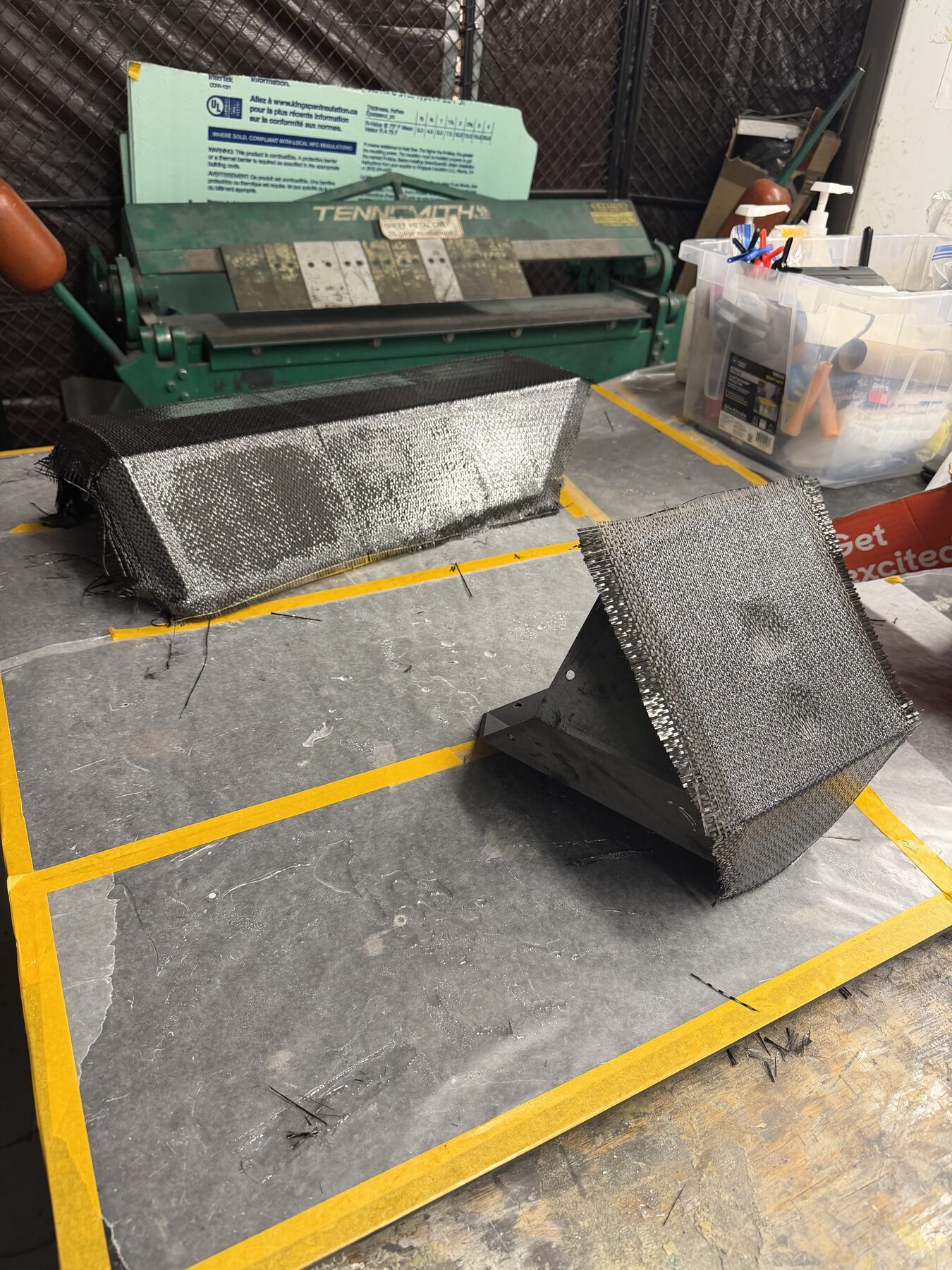
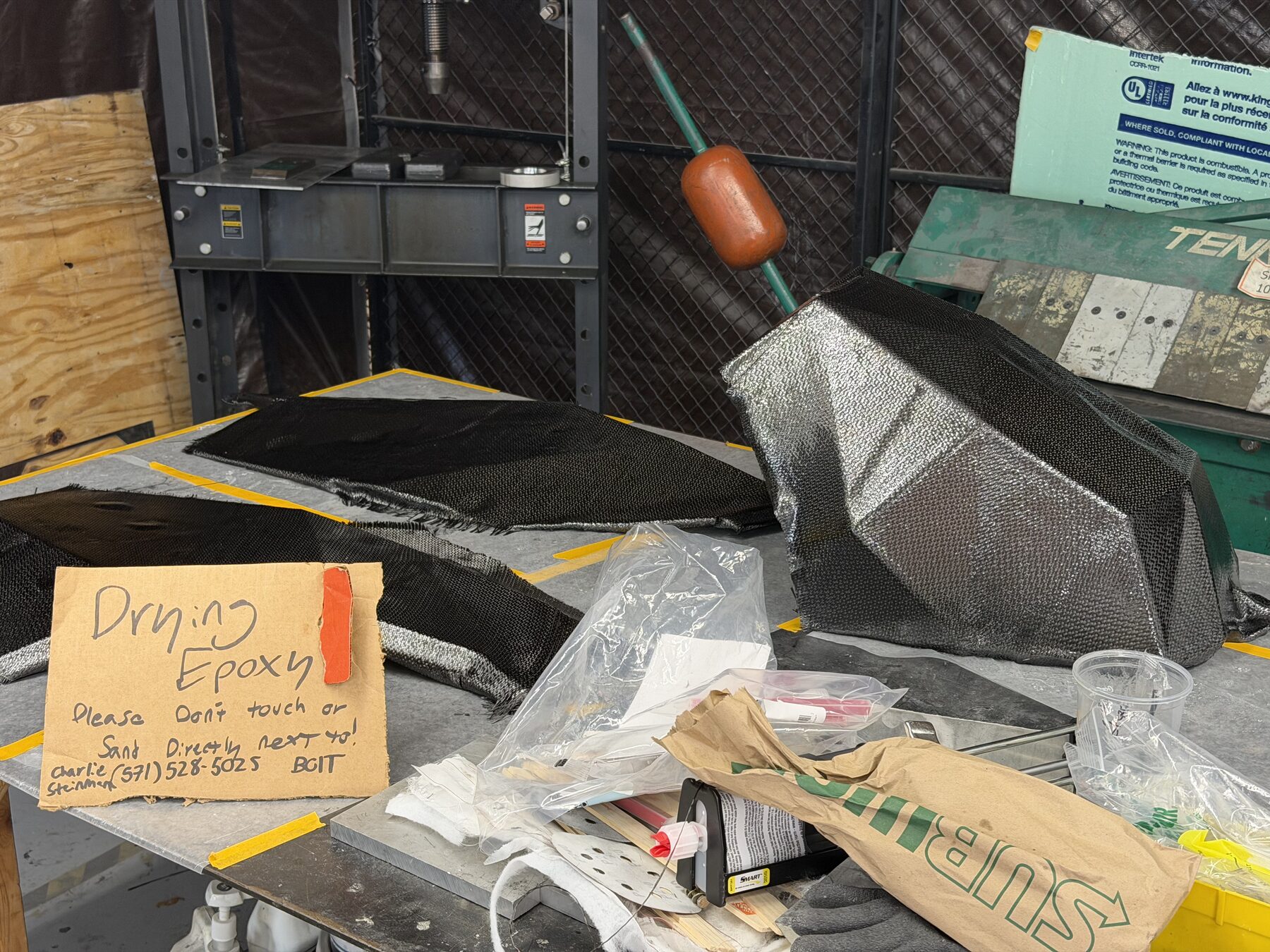
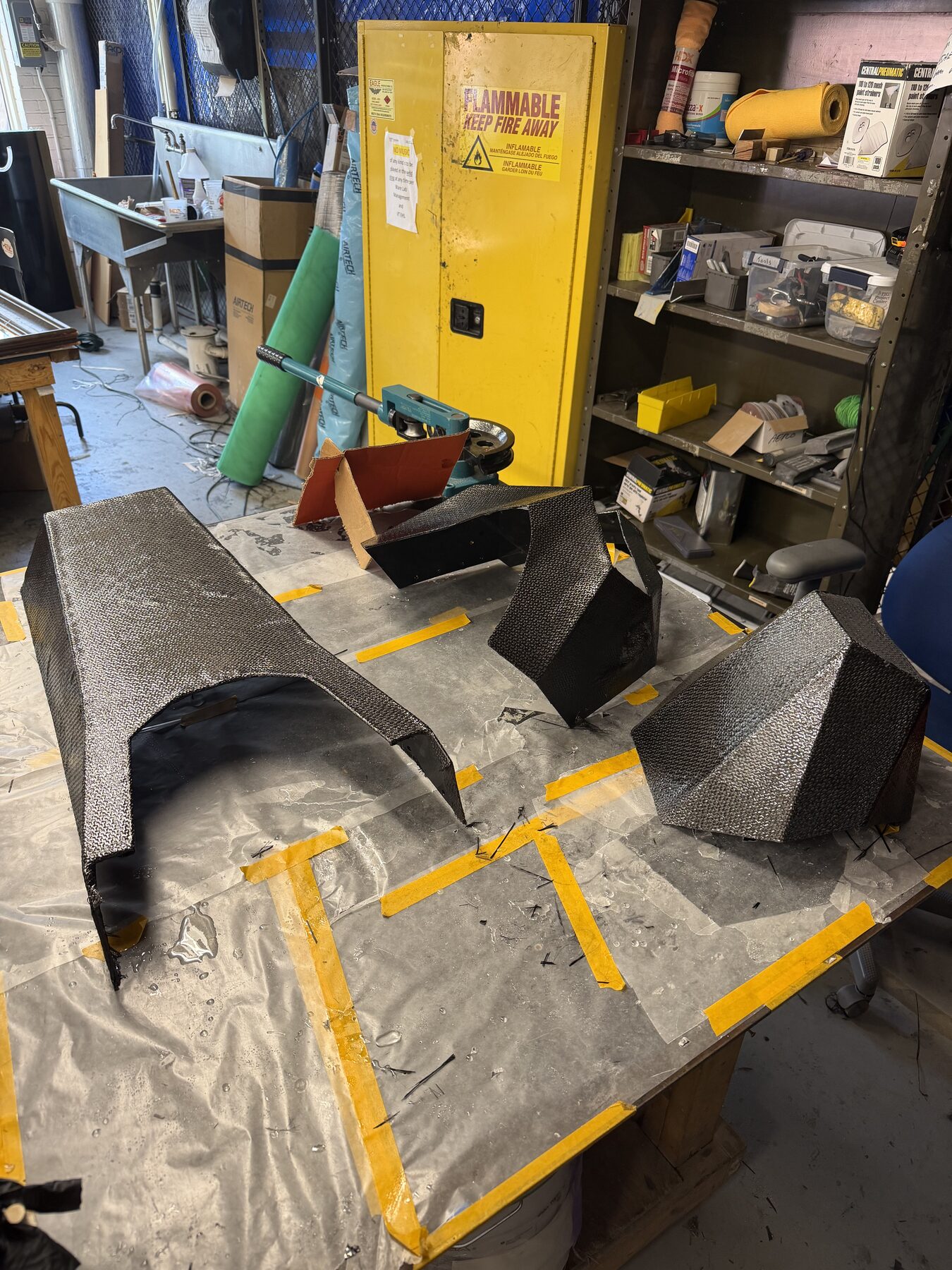
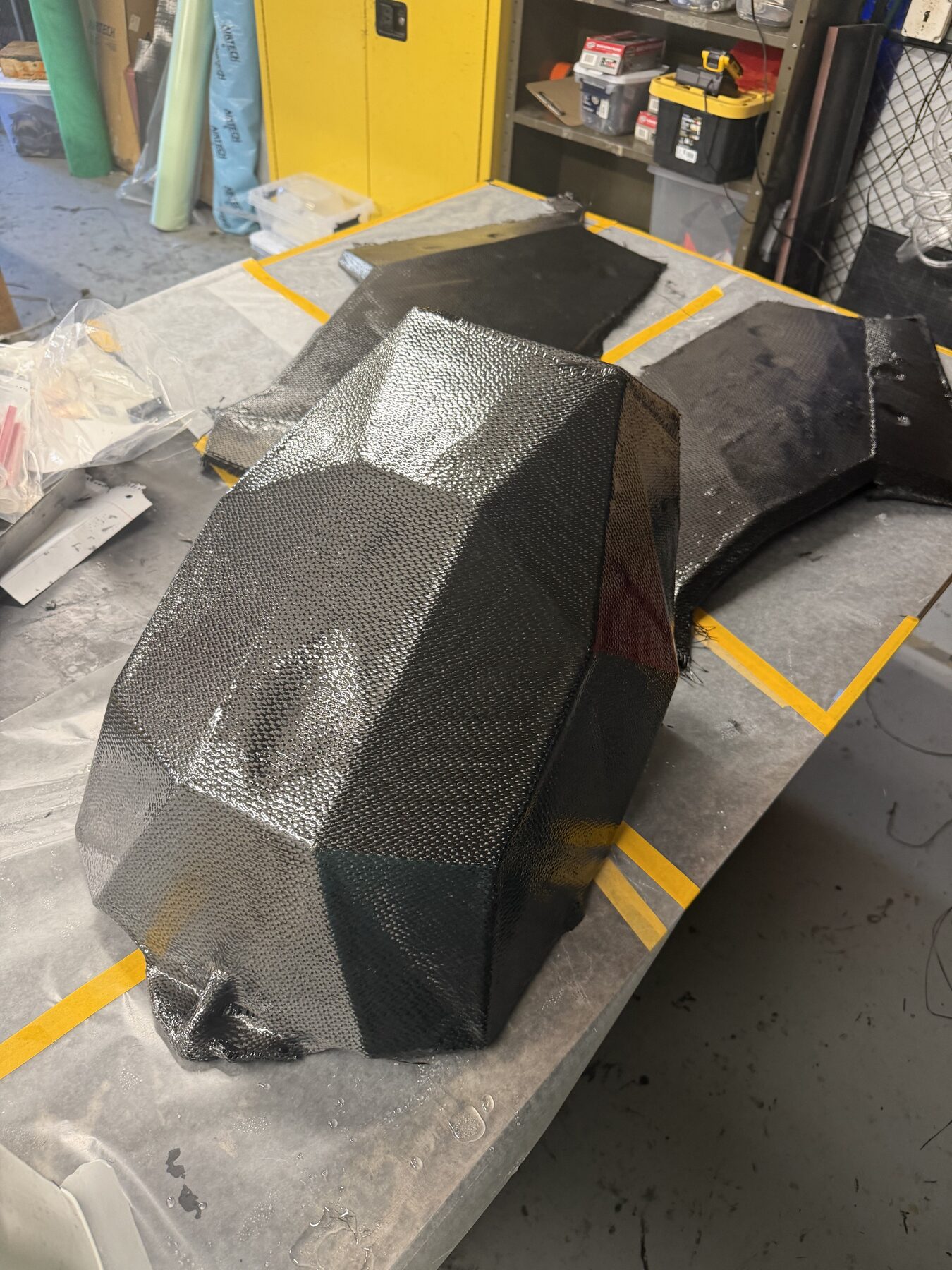
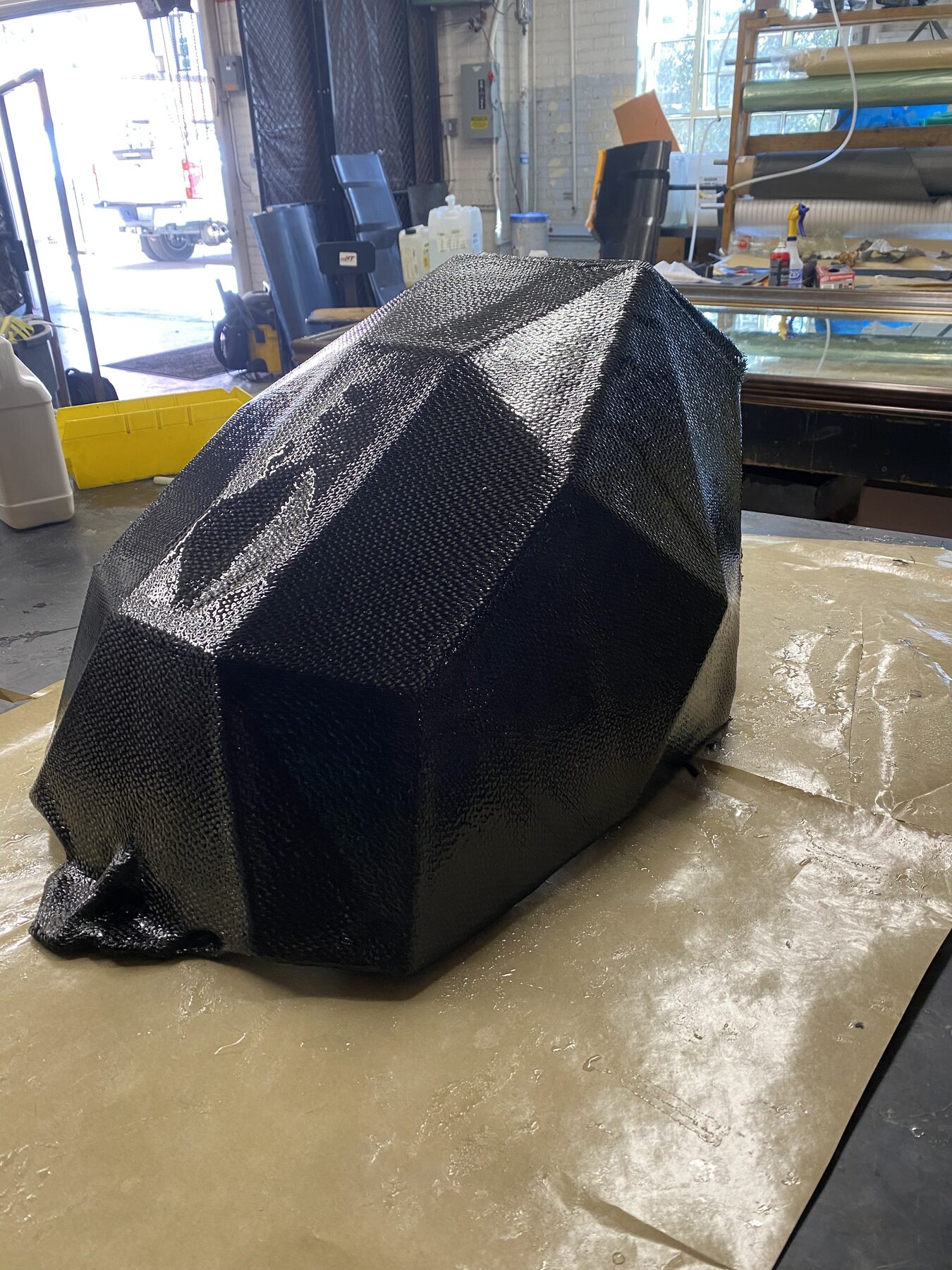
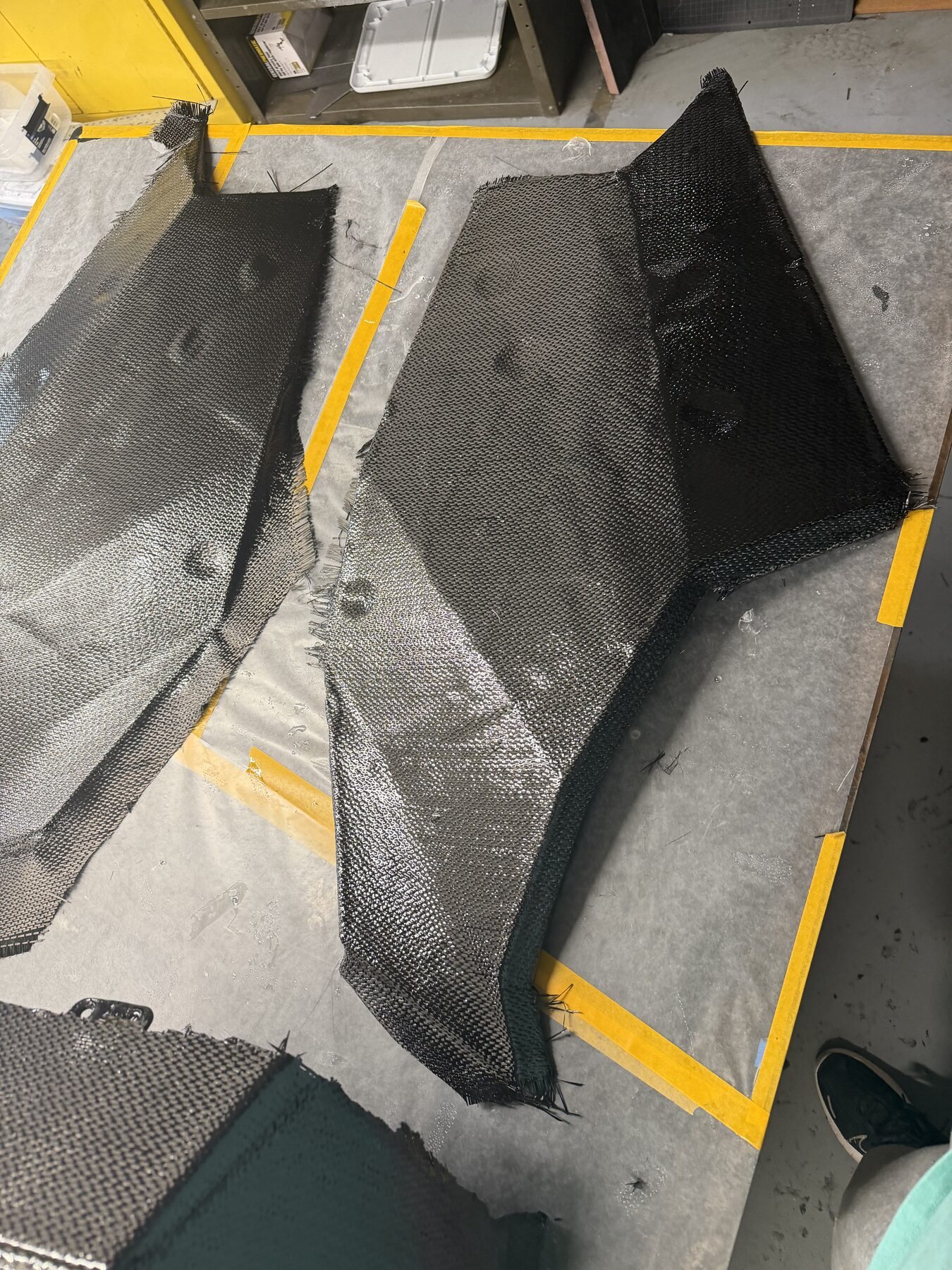
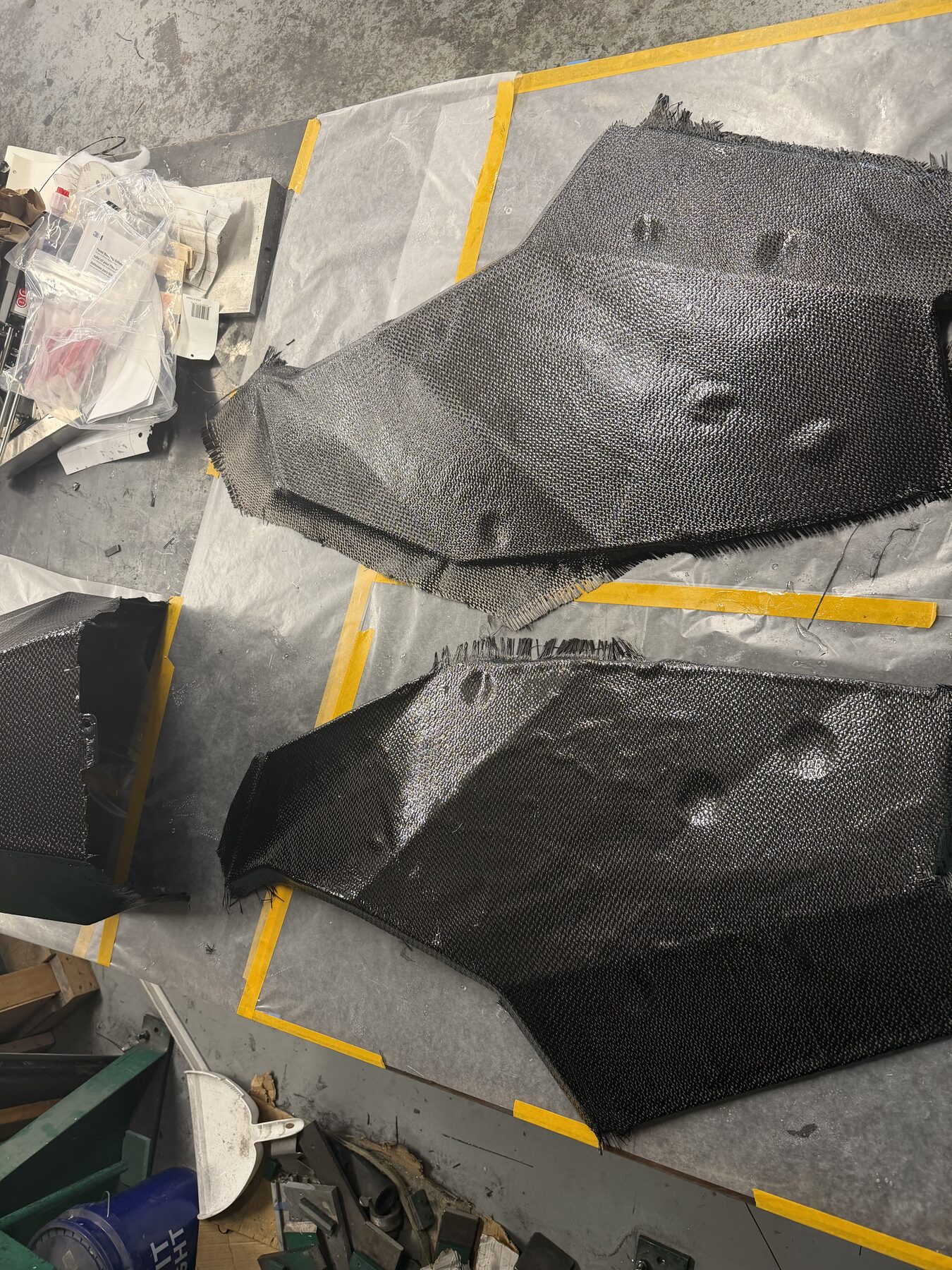
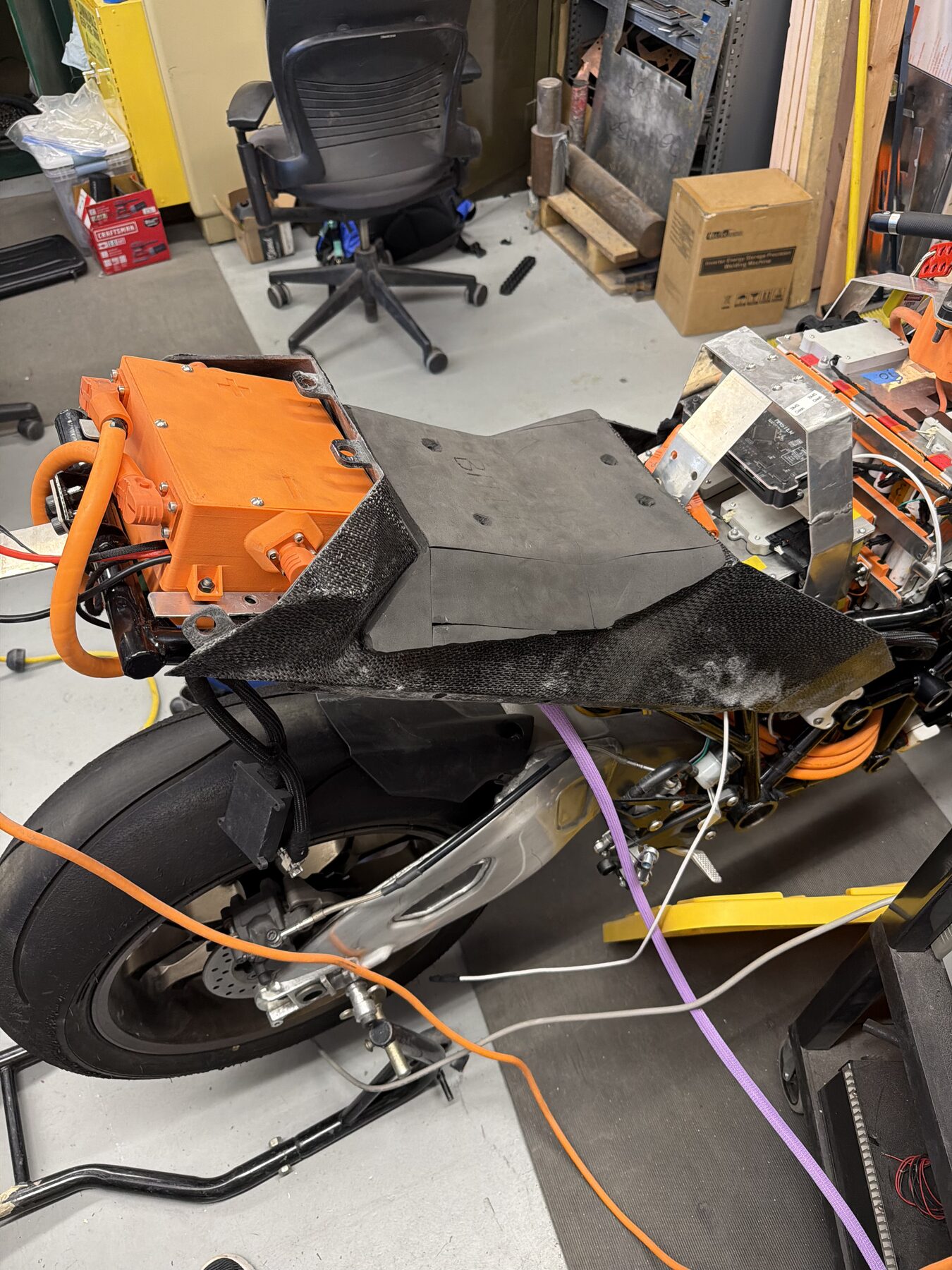
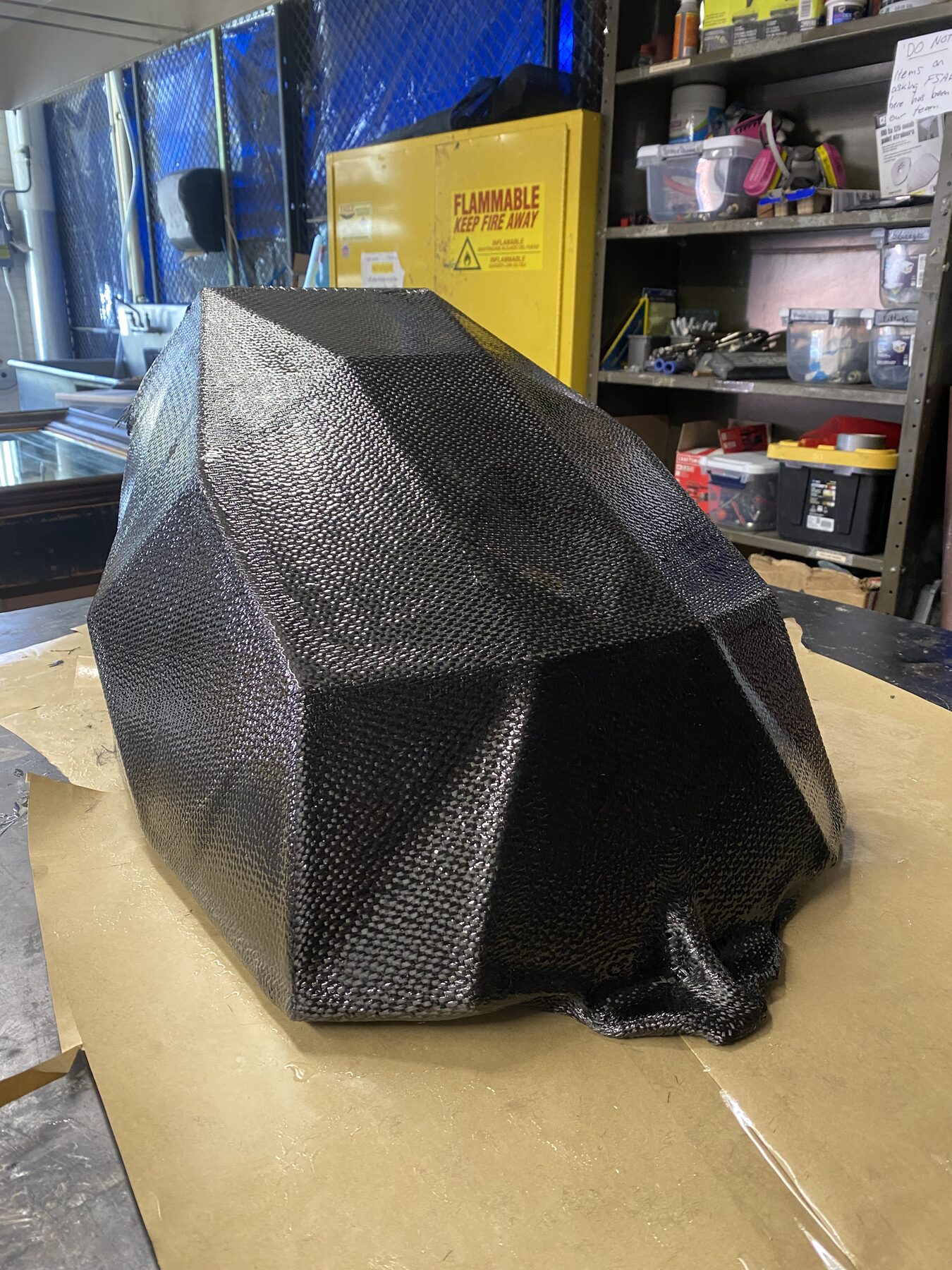
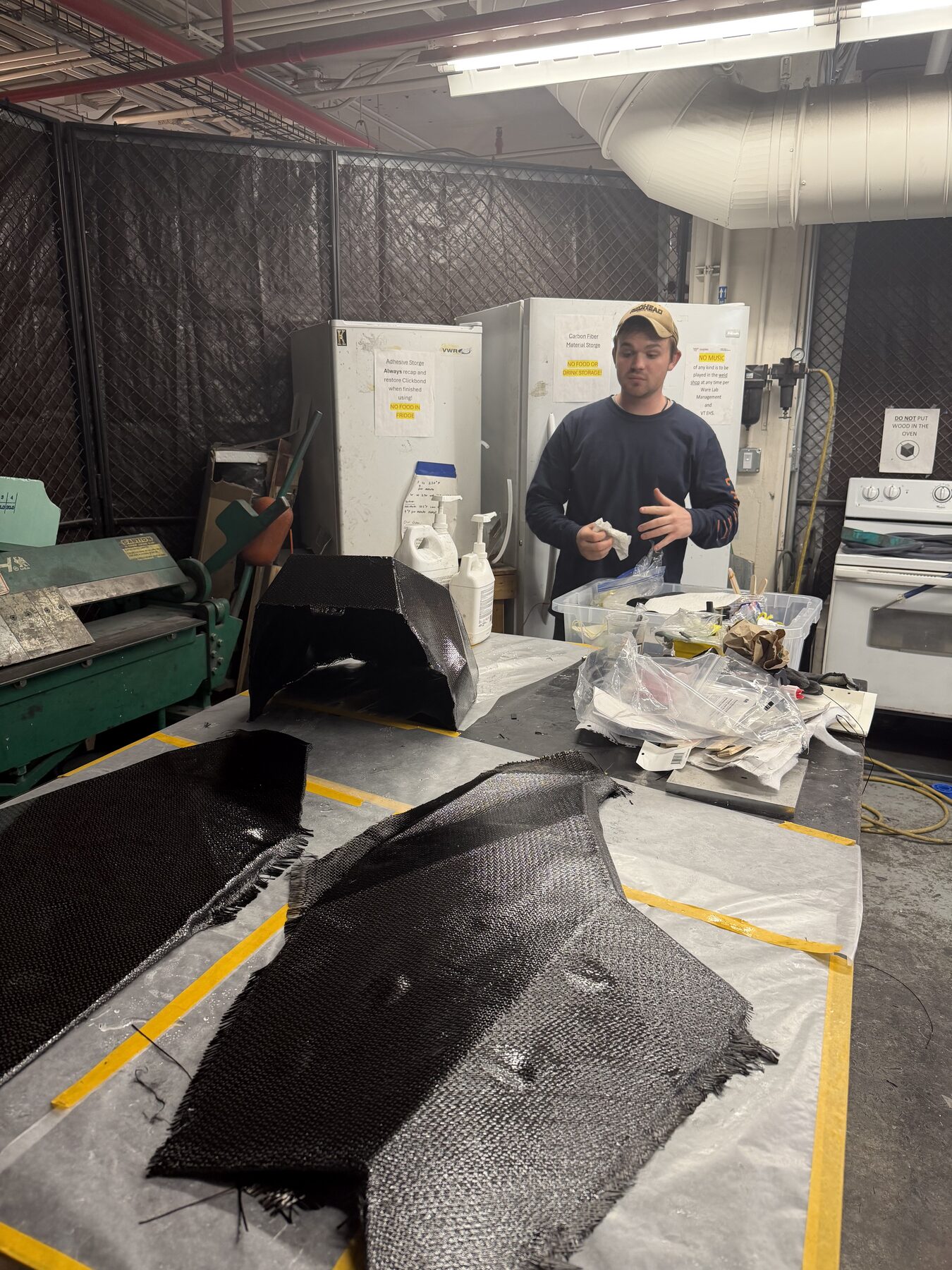
The printed and laid-up pieces were bonded together with structural adhesive, clamped, and left to cure. Getting seams flush across dozens of mating faces — without dedicated fixtures — took a lot of patience and iteration. Any gap or step at a seam shows up immediately under paint, so the bond-line quality directly set the amount of surface-prep work to follow.
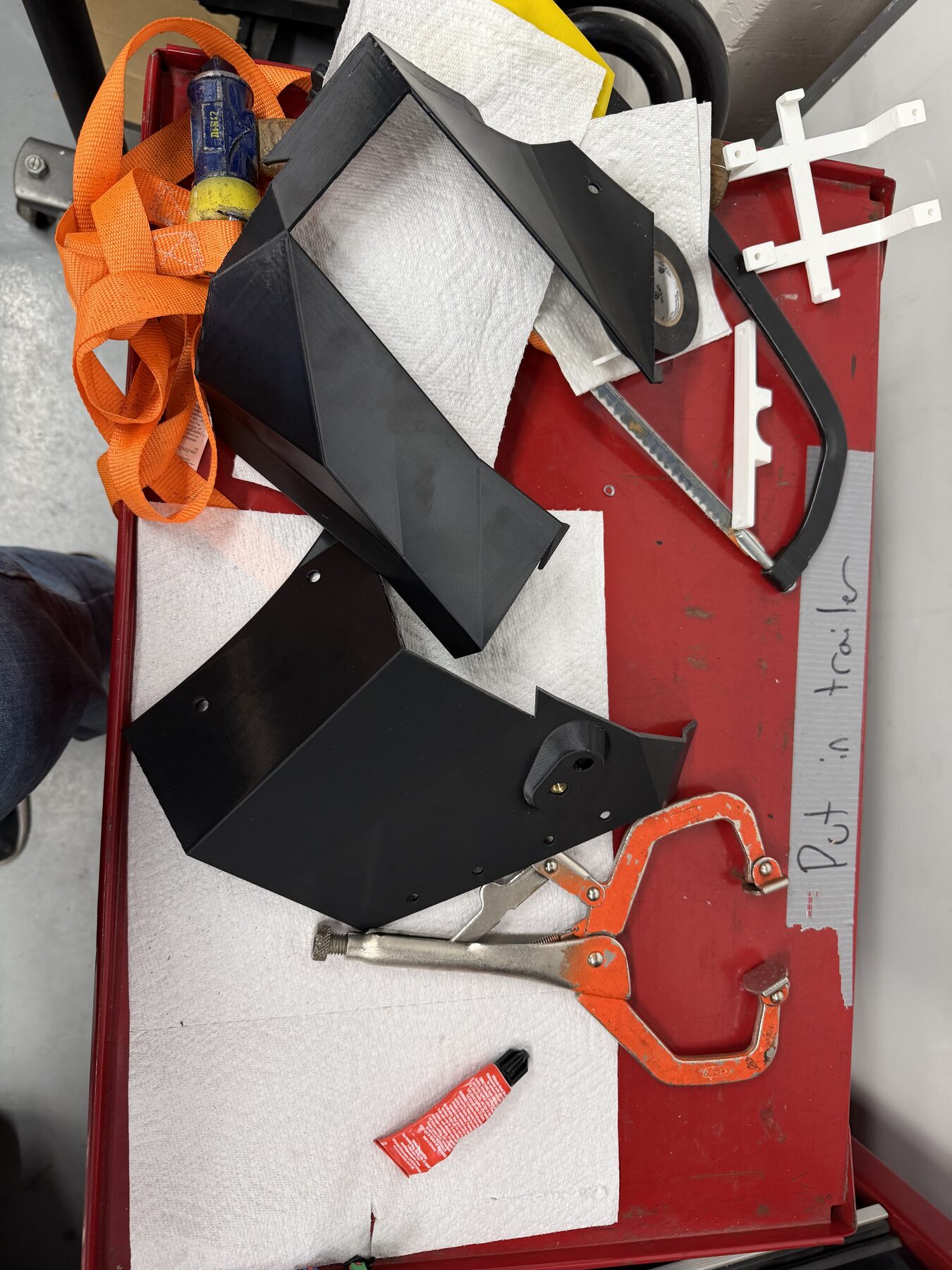
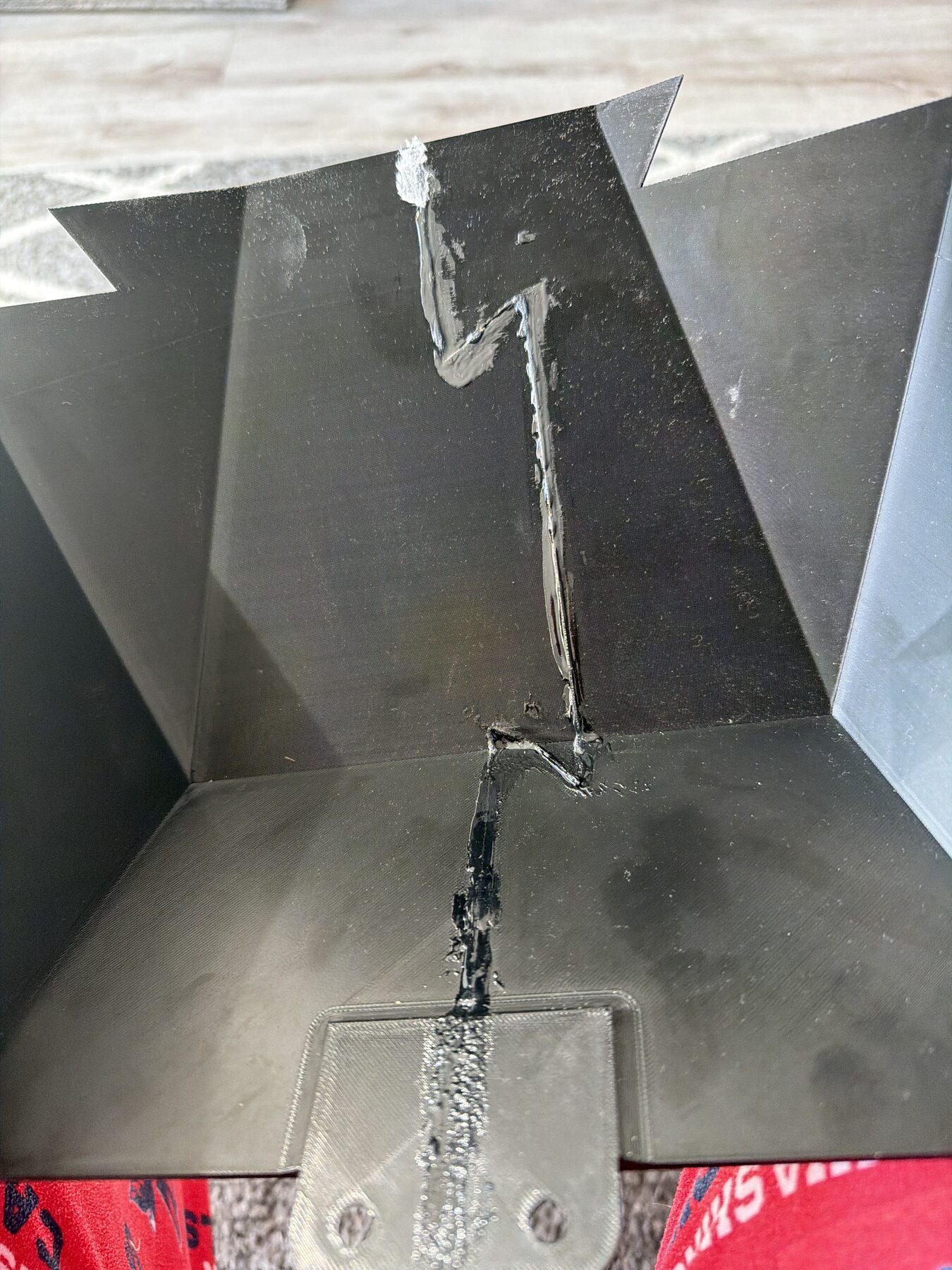
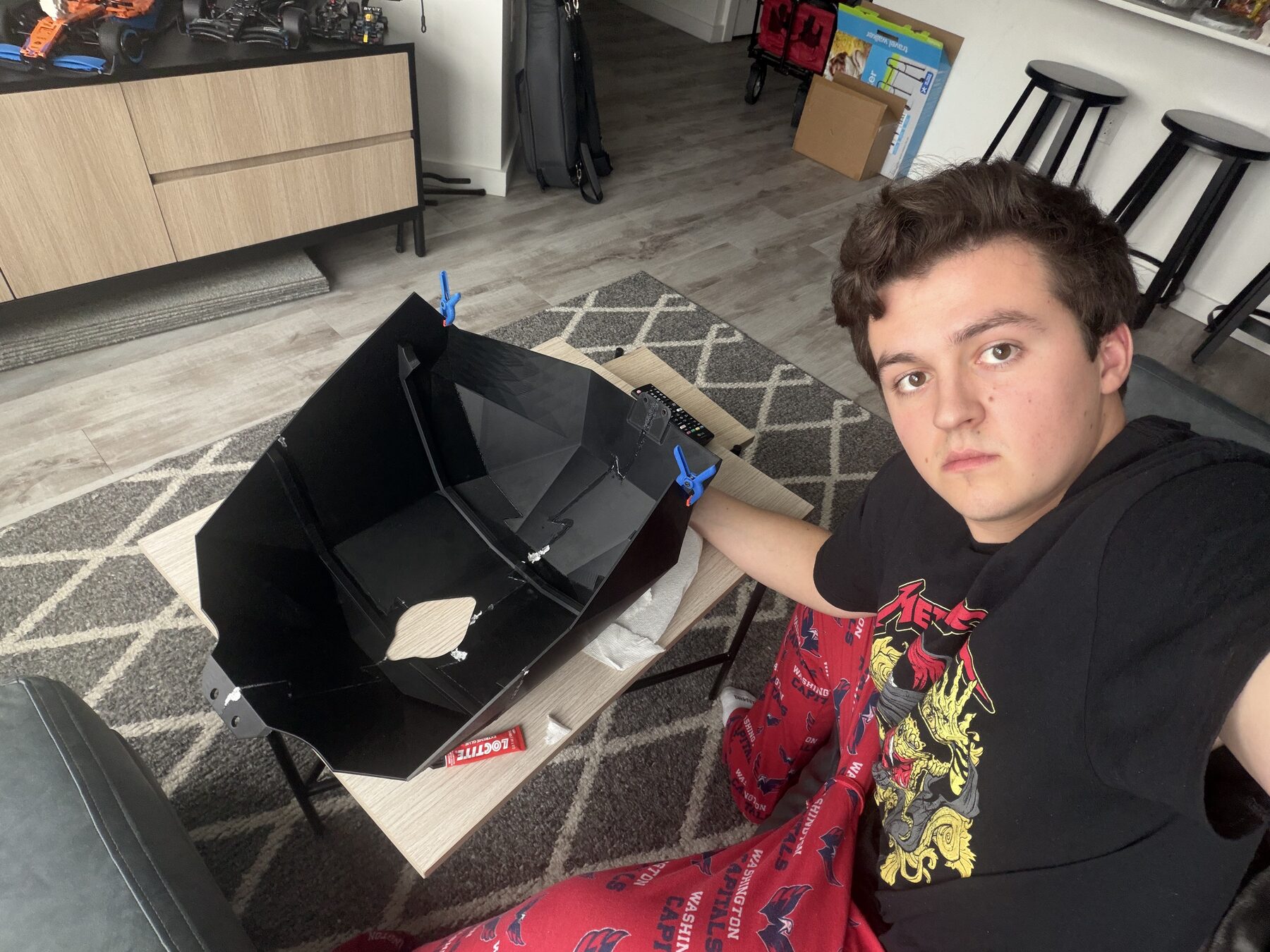
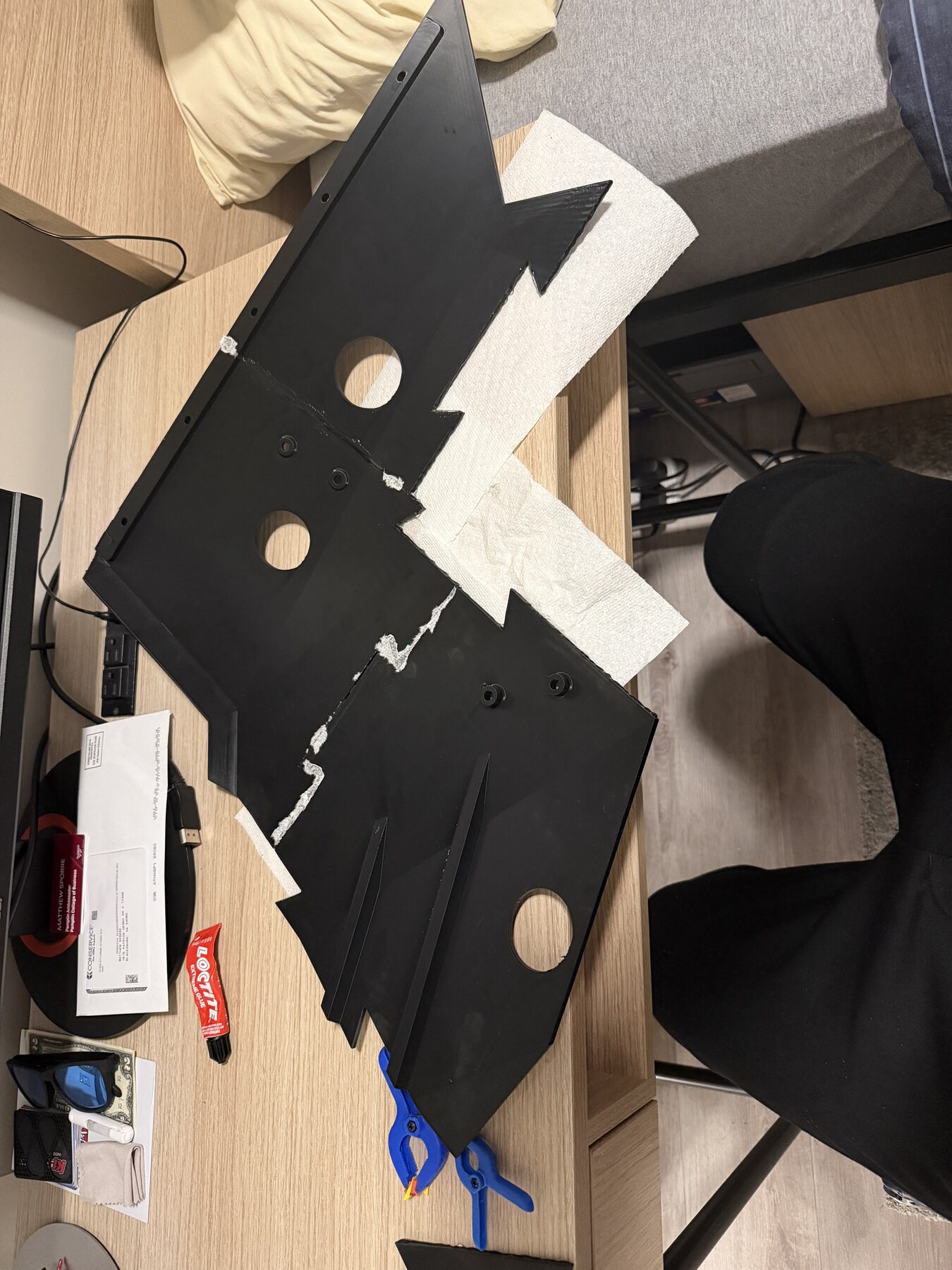
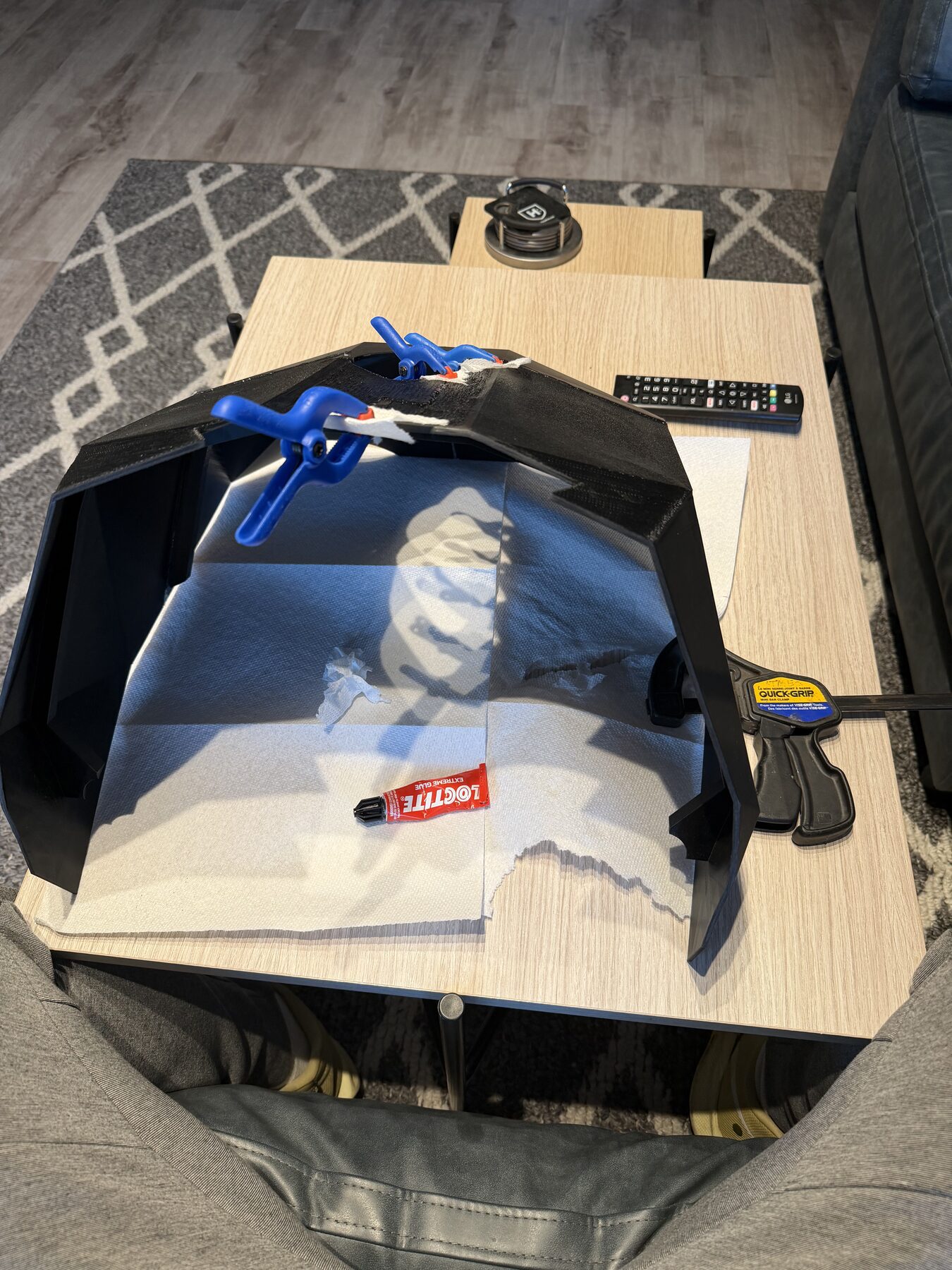
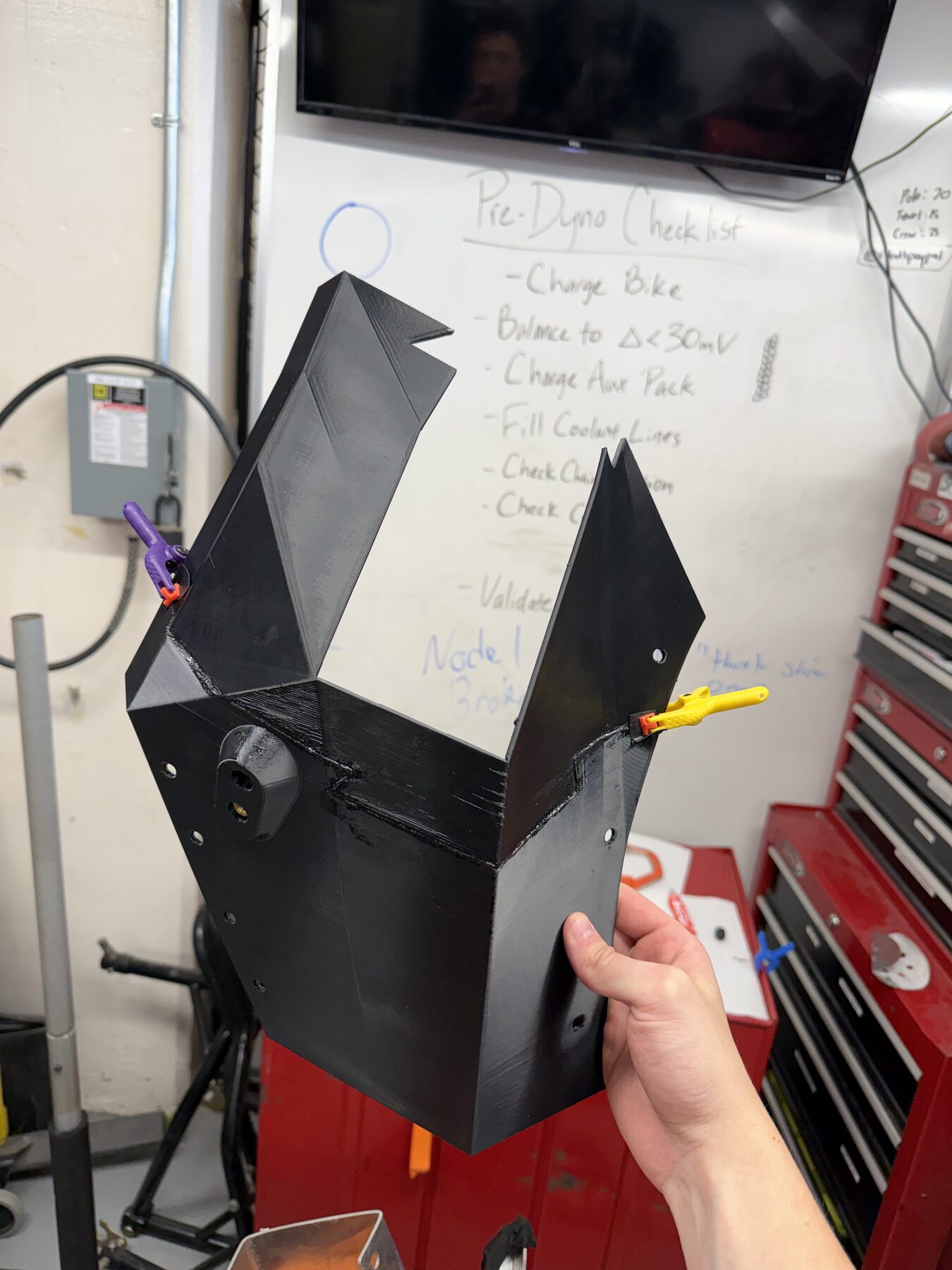
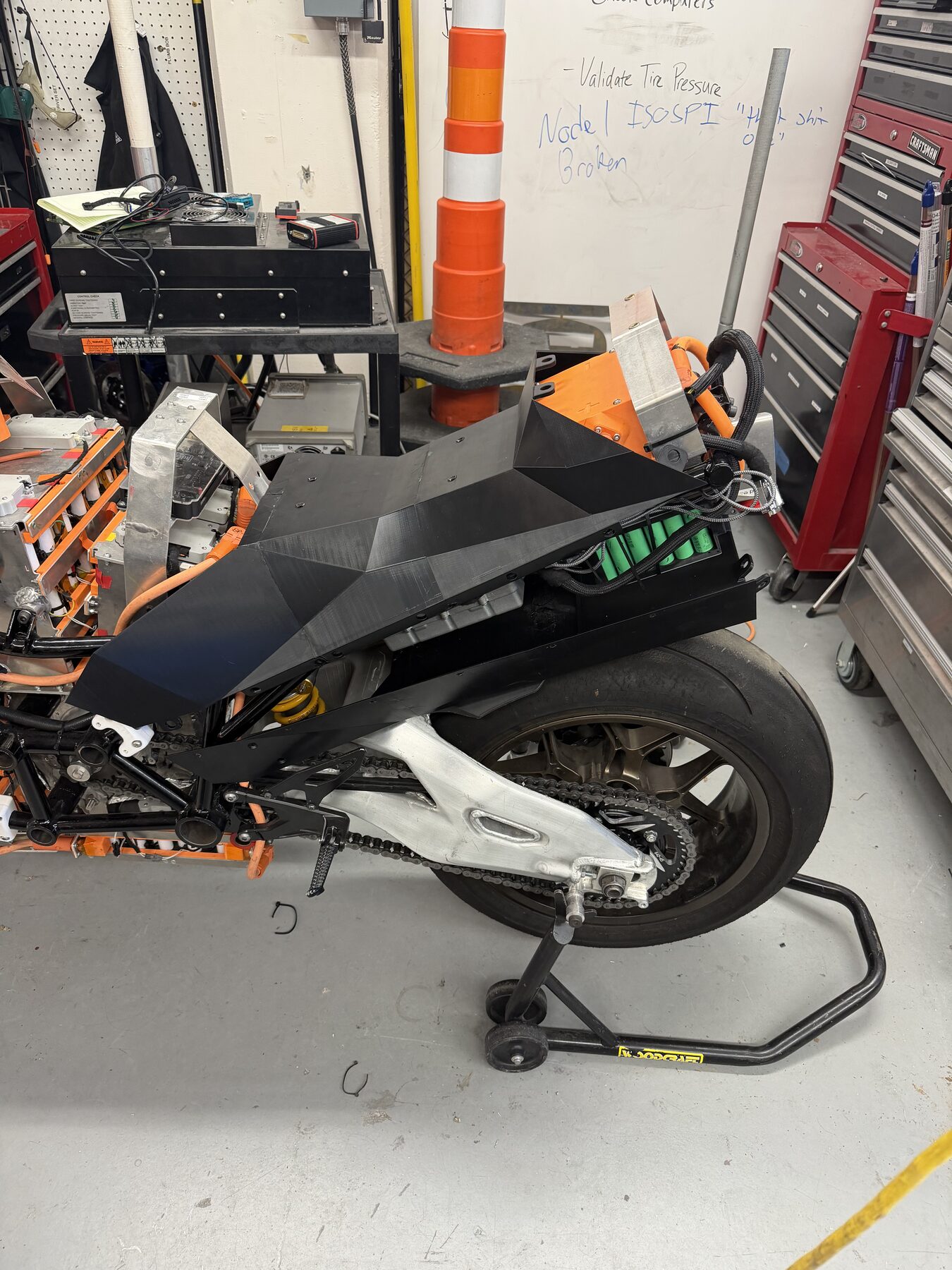
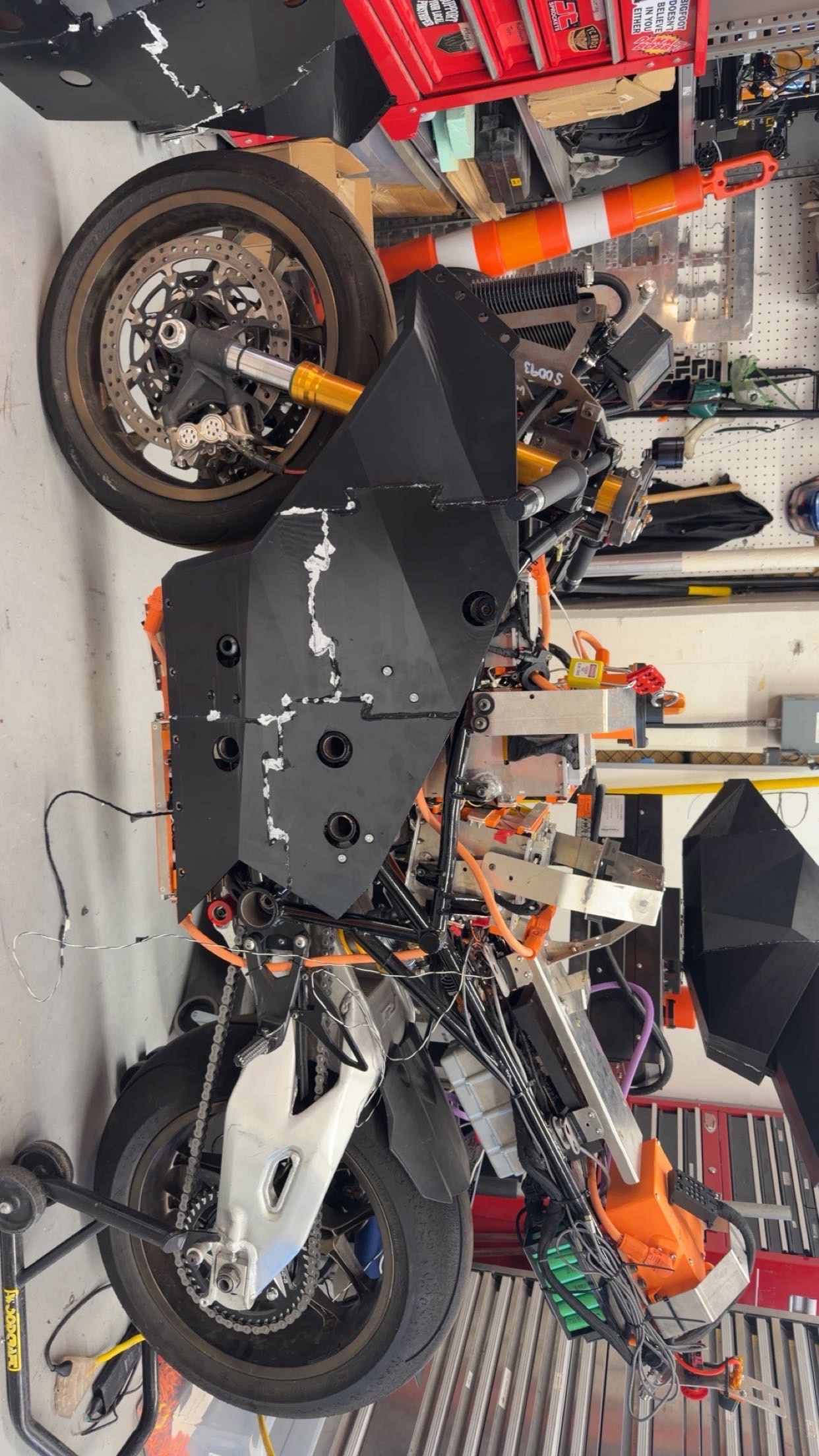
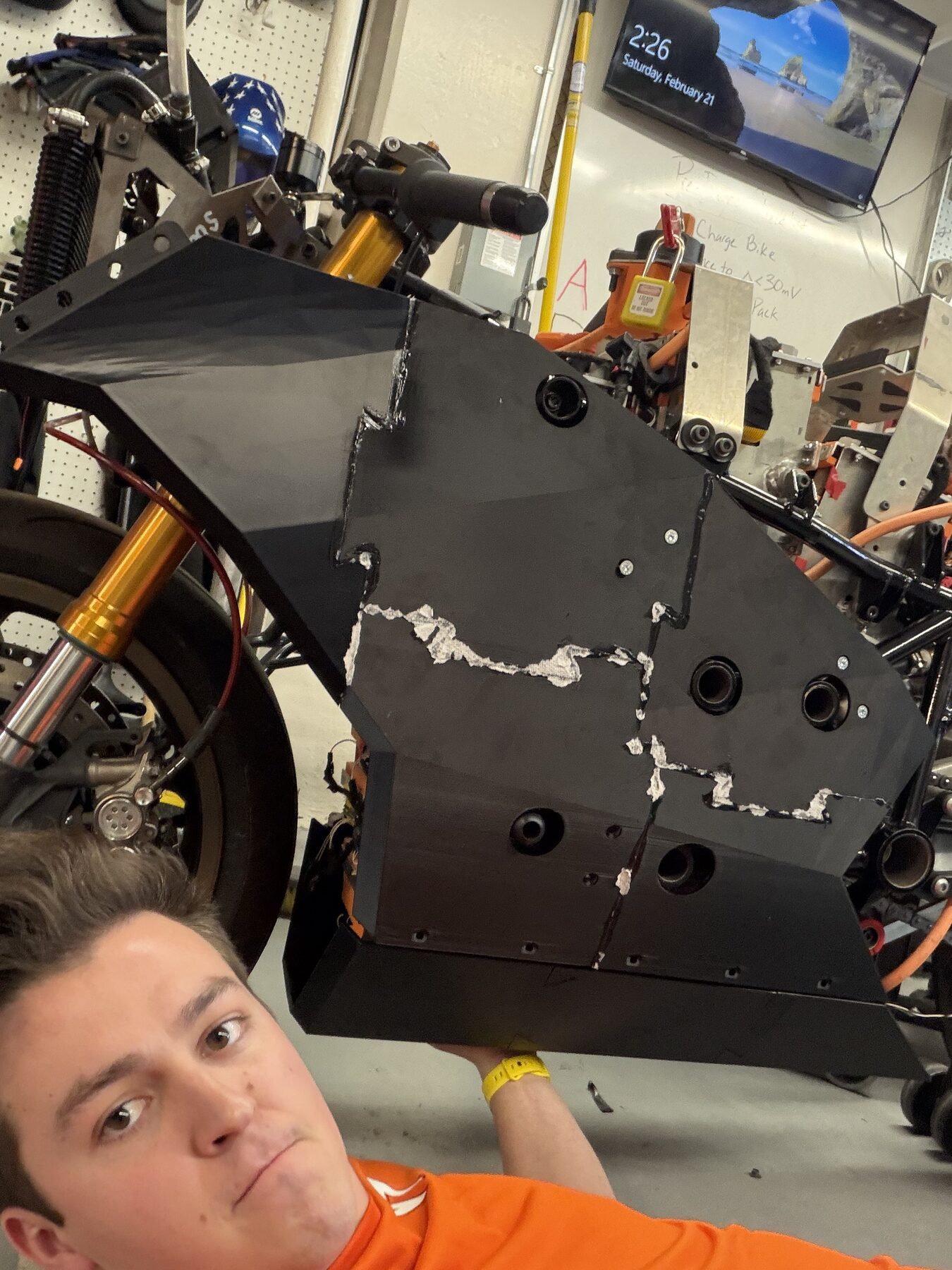
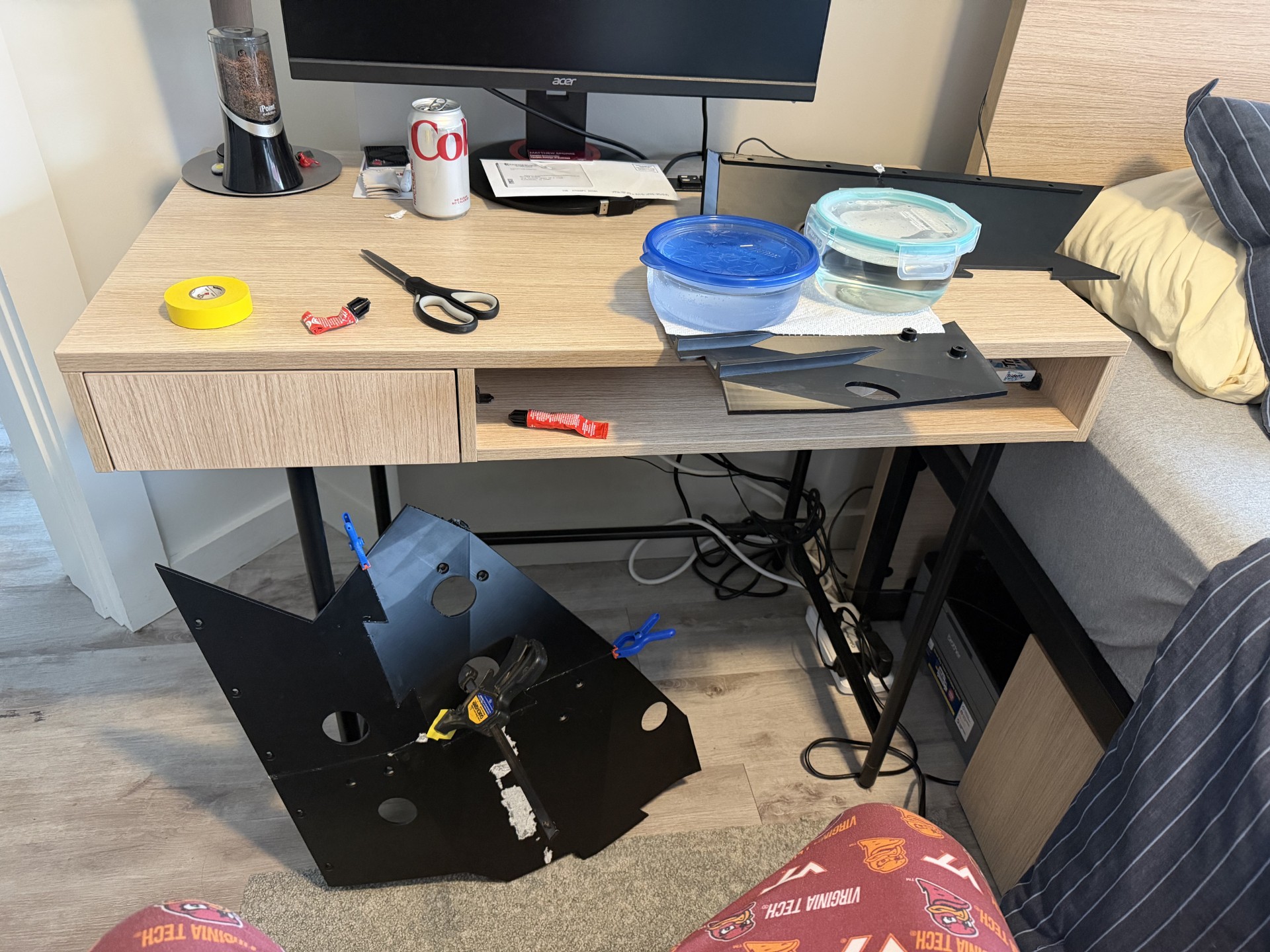
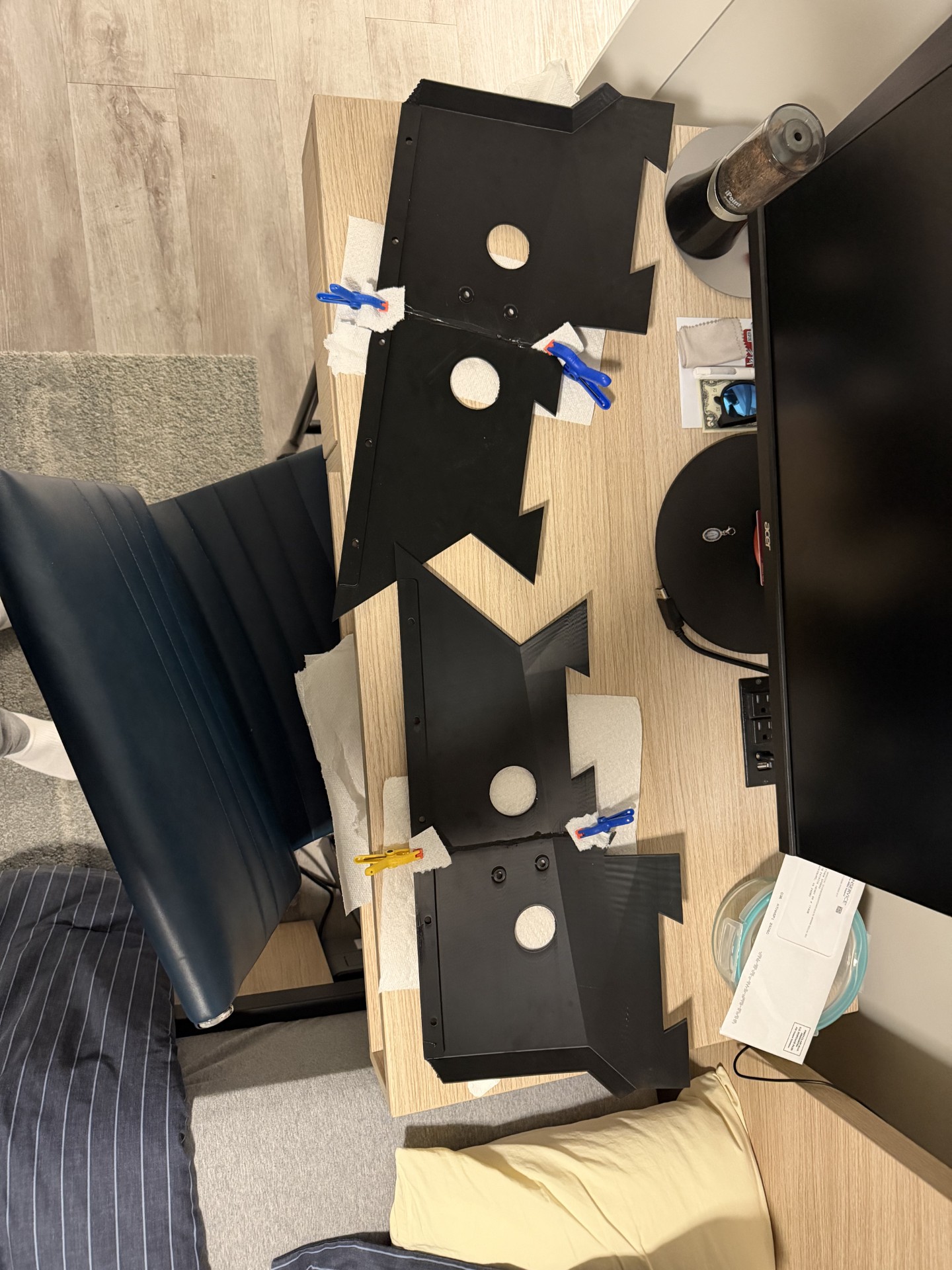
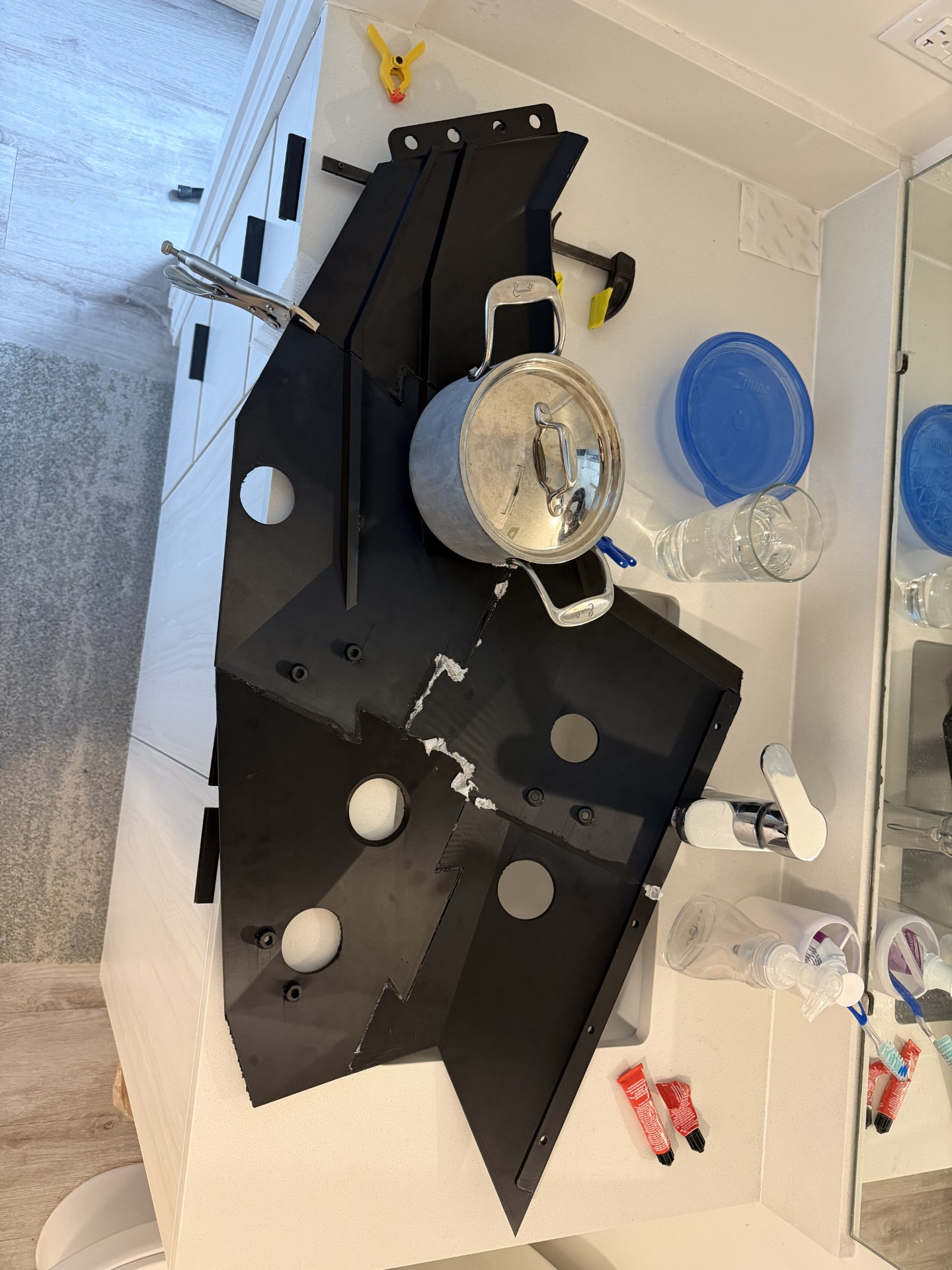
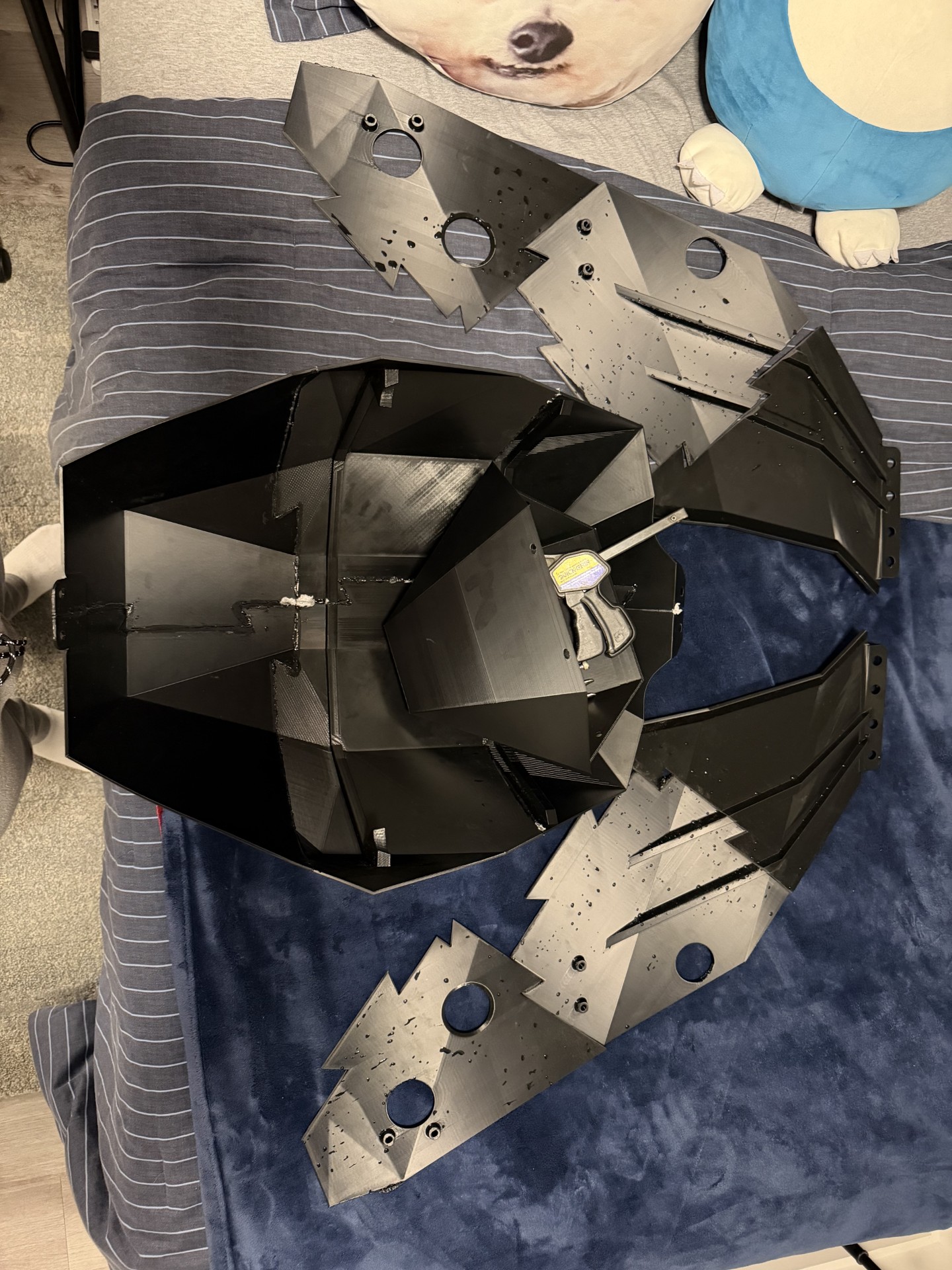
Surface prep is most of the work — seam-filling, blocking, primer coats, and sanding before topcoat even goes on. The fairings went through multiple rounds of primer and block-sanding to get the surface flat enough to hold a clean color coat.
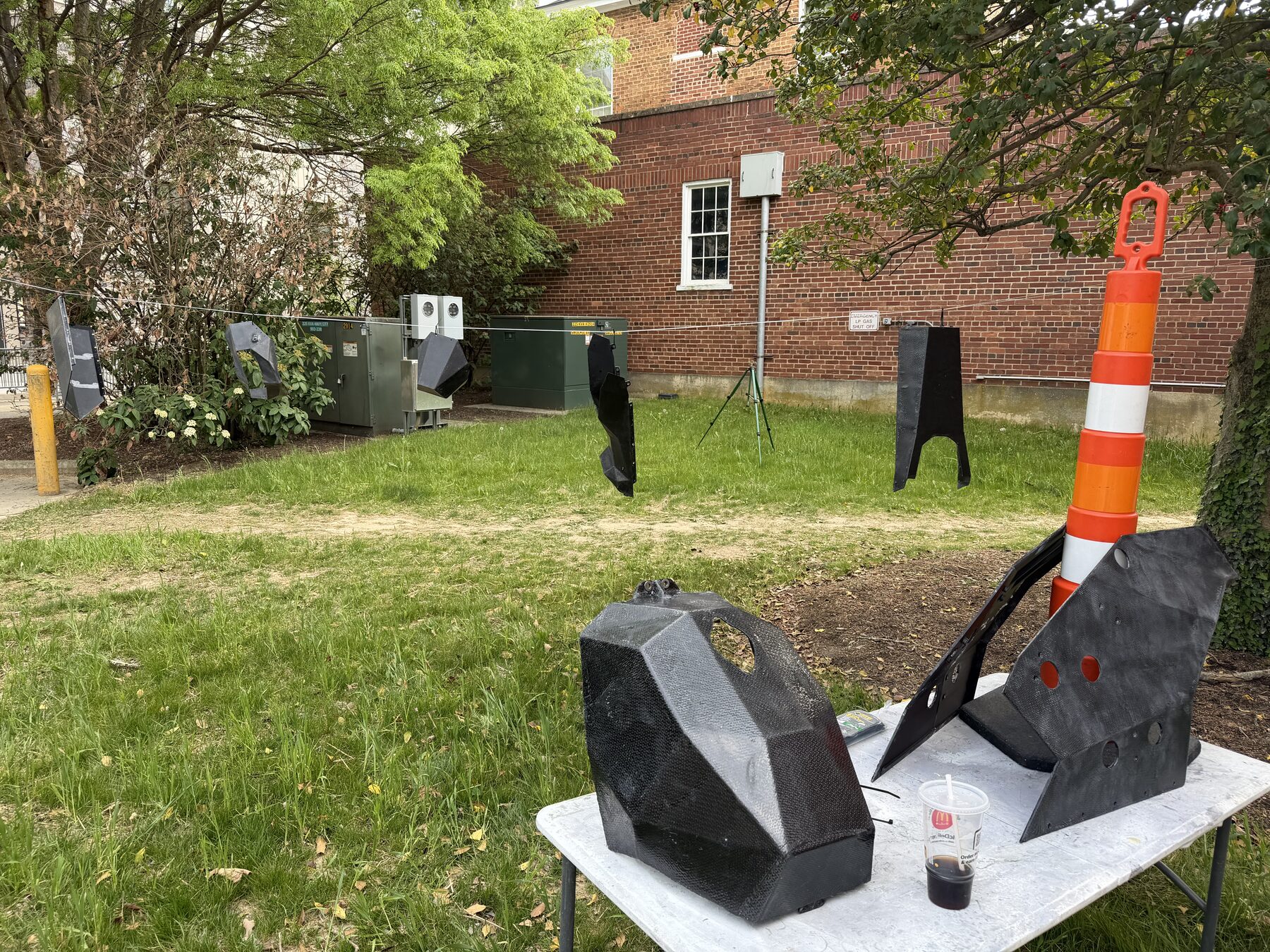
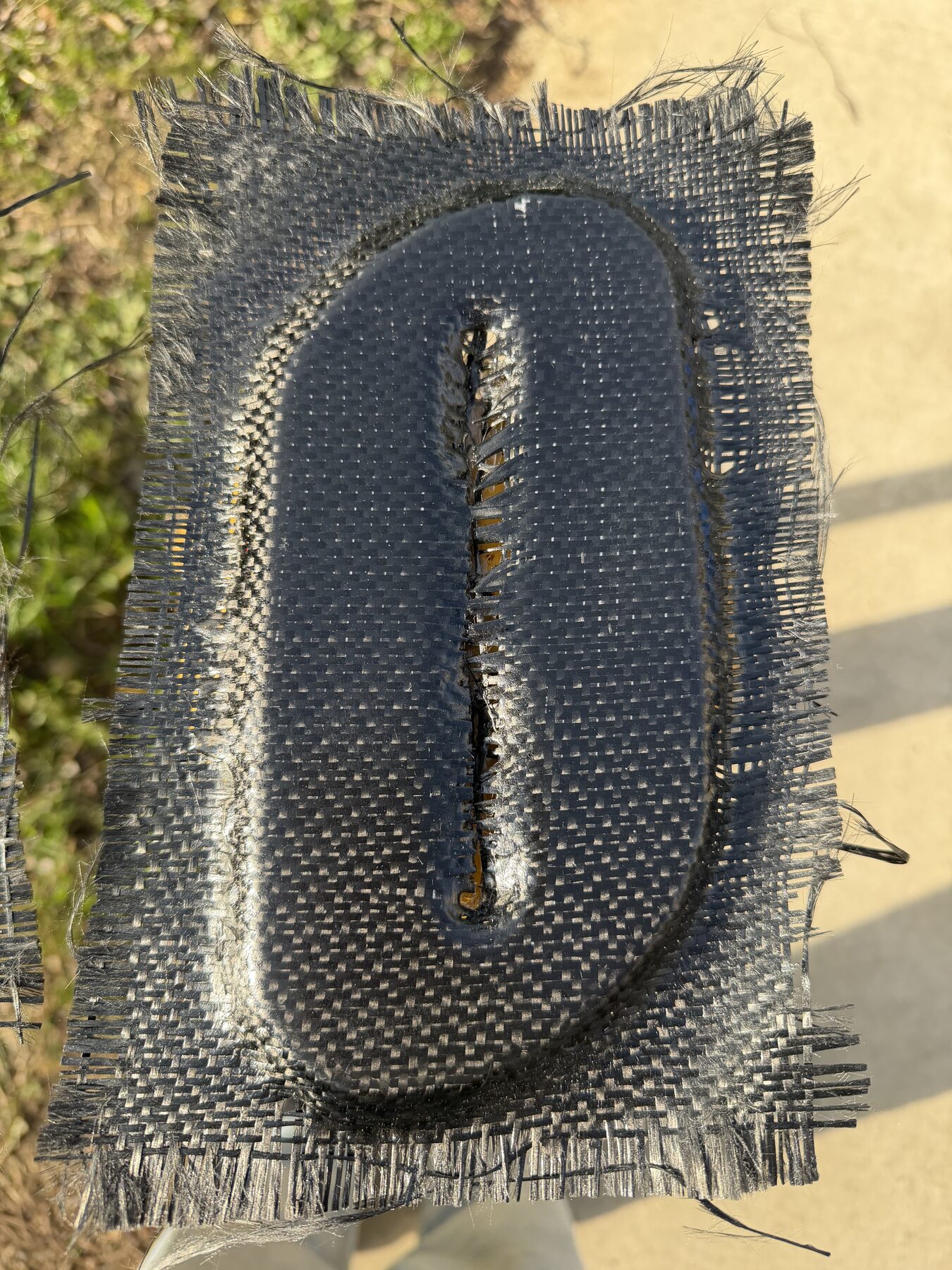
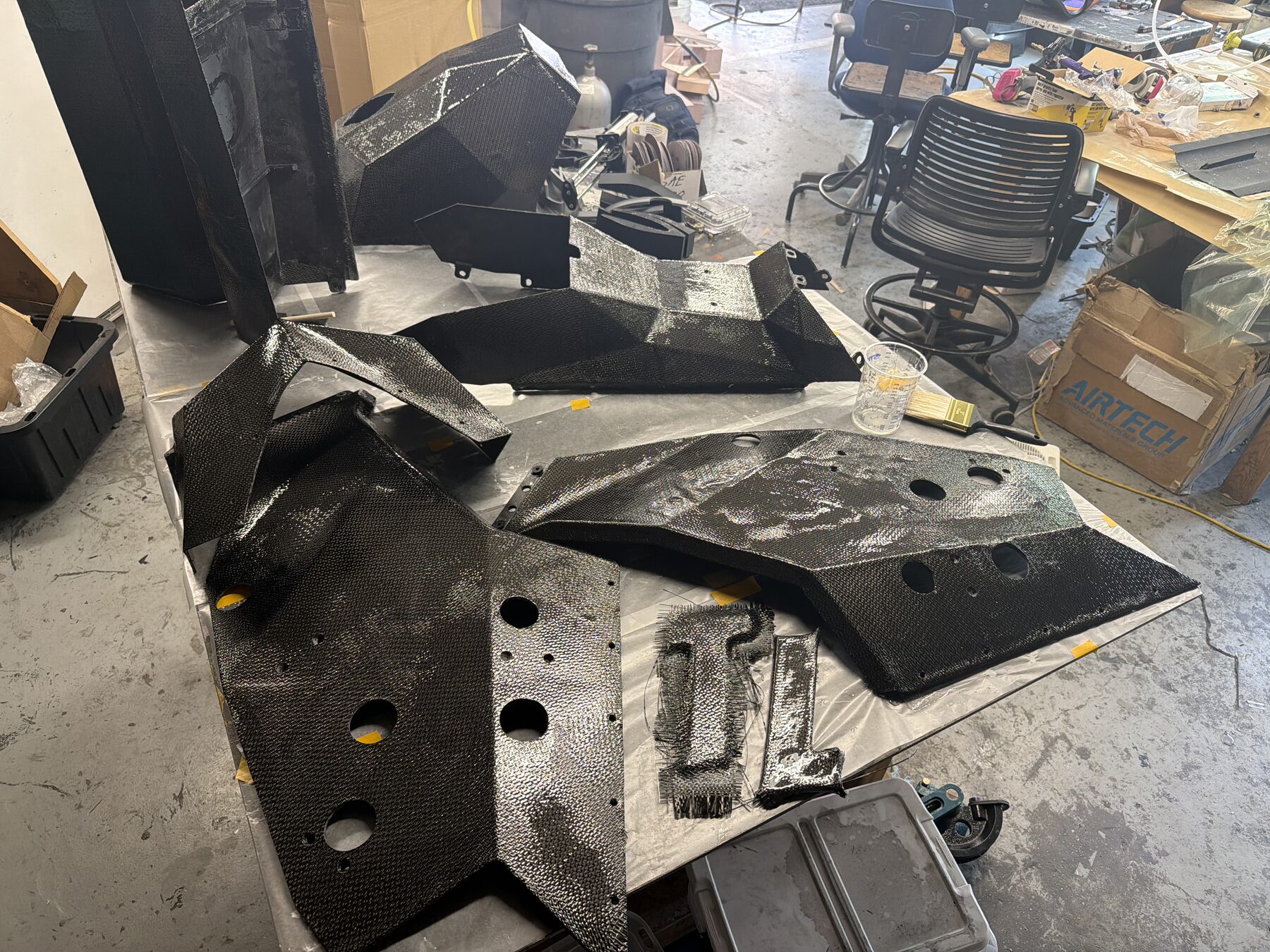
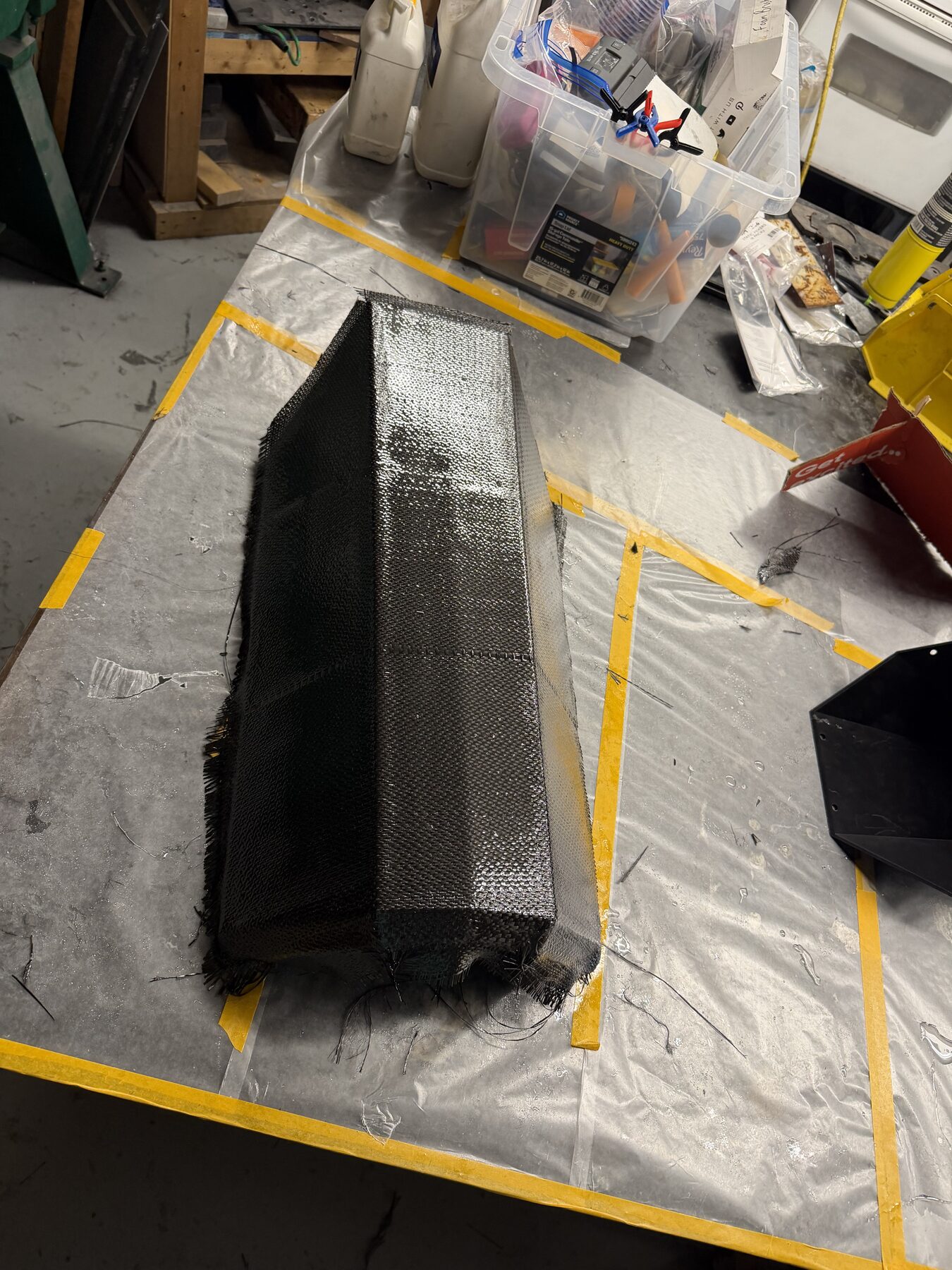
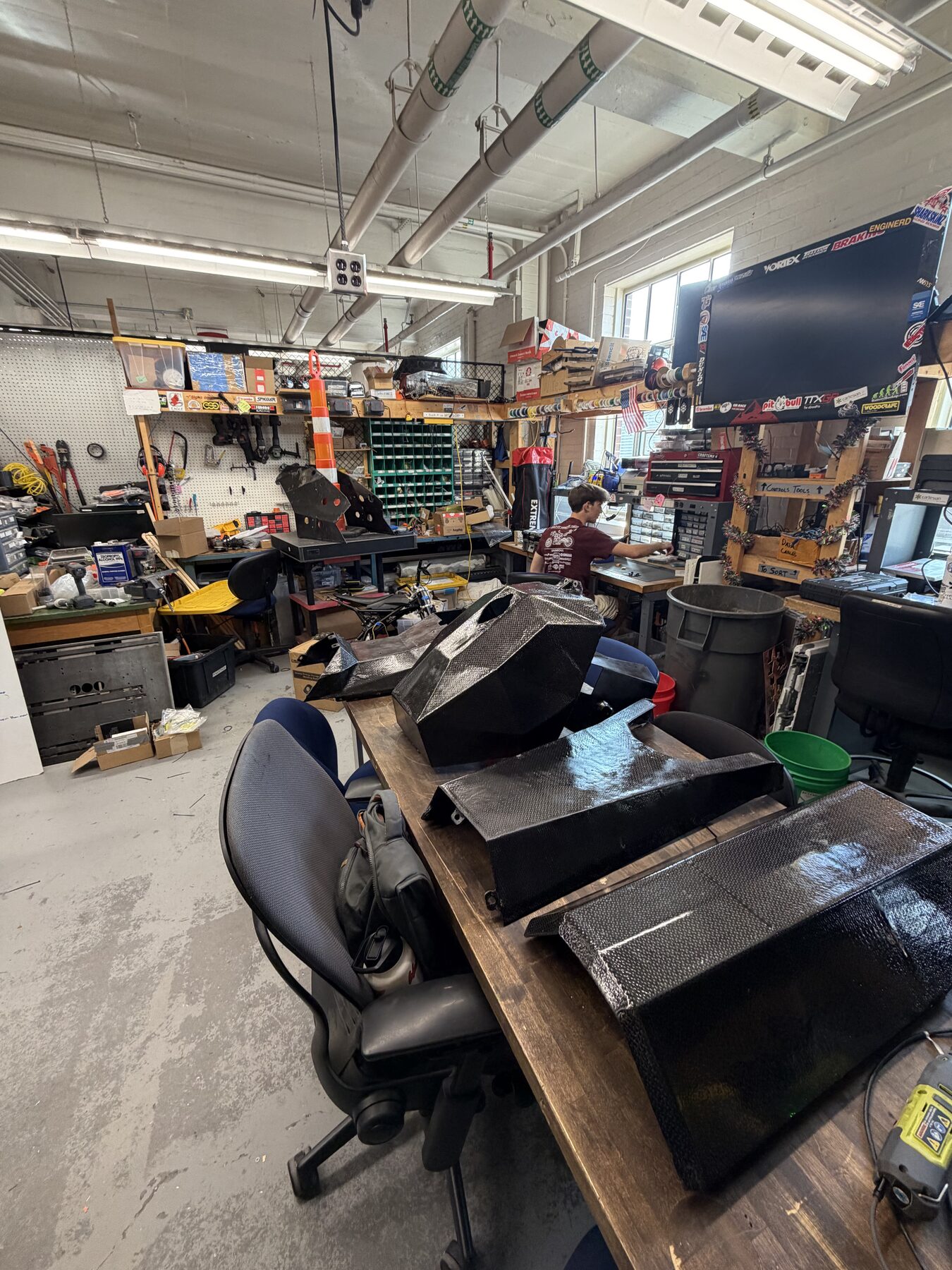
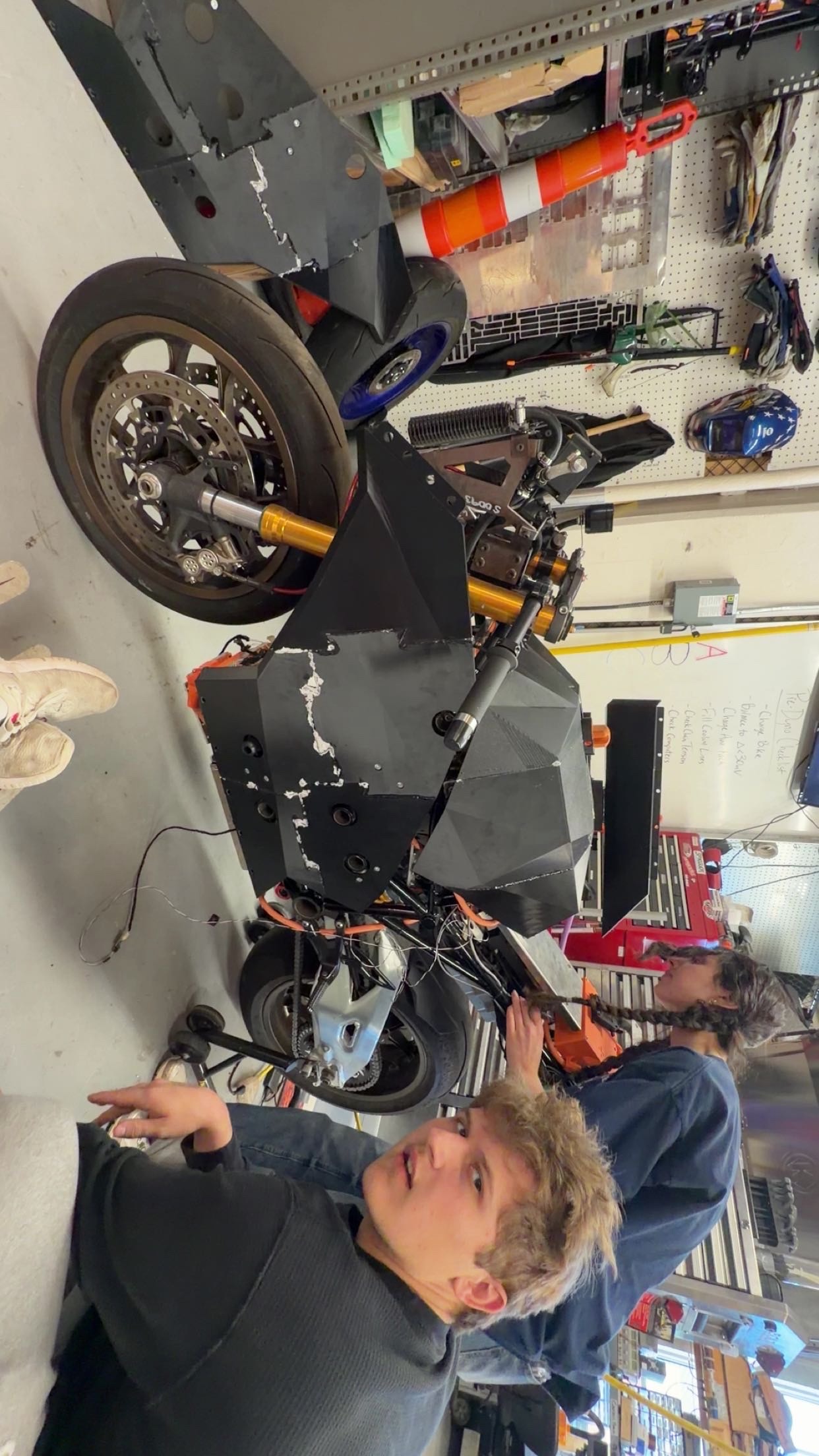
The bike came together over several months of assembly, integration, and testing. Machining the structural components, fitting the electronics, and mounting the finished fairings all had to sequence carefully around each other. BOLT VI was shown at the Virginia Tech Senior Design Expo and put on the dyno before competition.