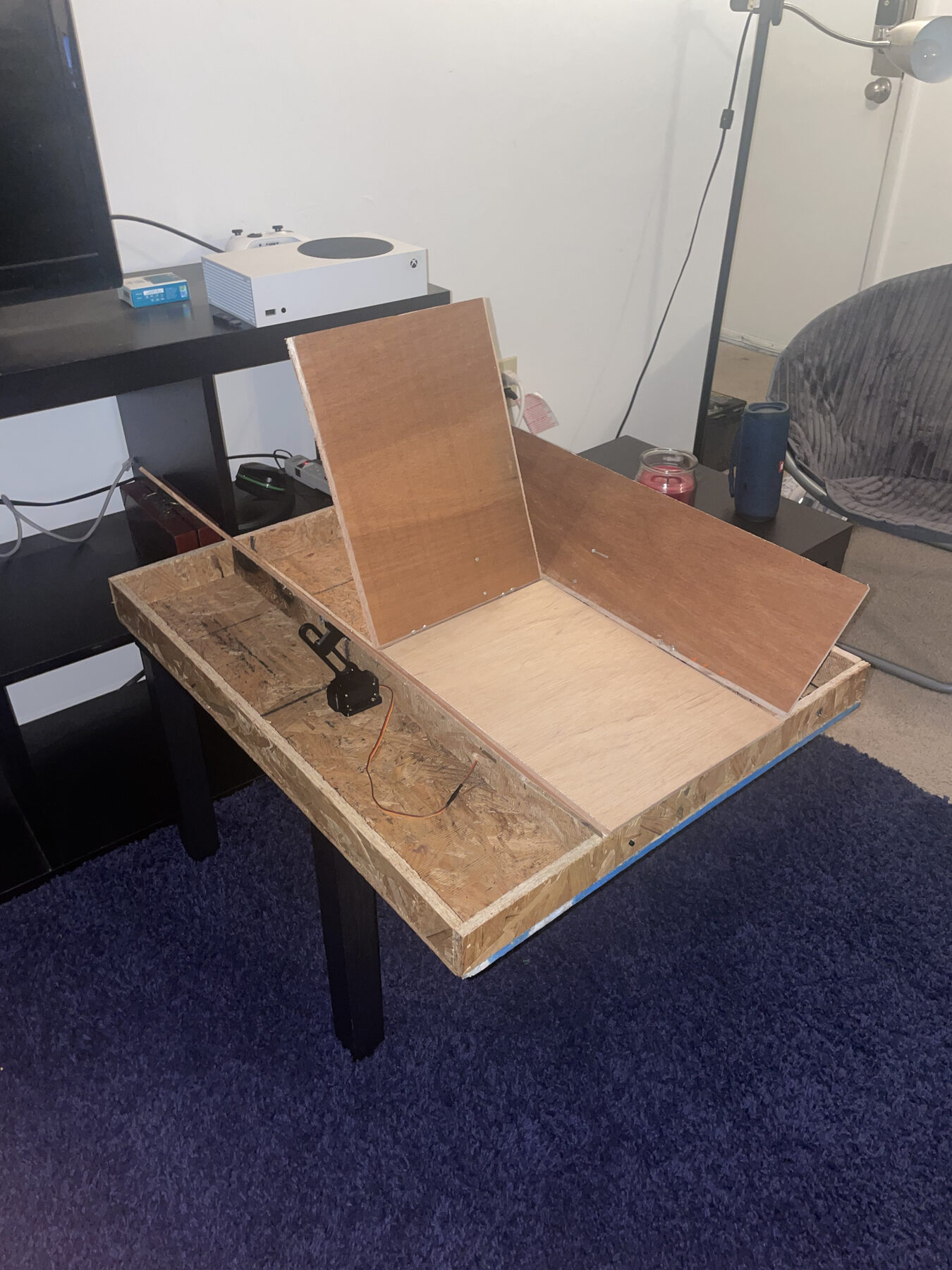
The class challenge: design a product that makes college students’ lives easier. Most groups went with apps or digital solutions. Our group went mechanical — a semi-automatic t-shirt folder that folds a shirt in three steps with a single button press.
The result is TIDY: three hinged folding flaps, each driven by its own servo motor and sequenced by an Arduino Uno. Place a shirt flat on the base, press the button, and the flaps fold it into a consistent rectangle every time.
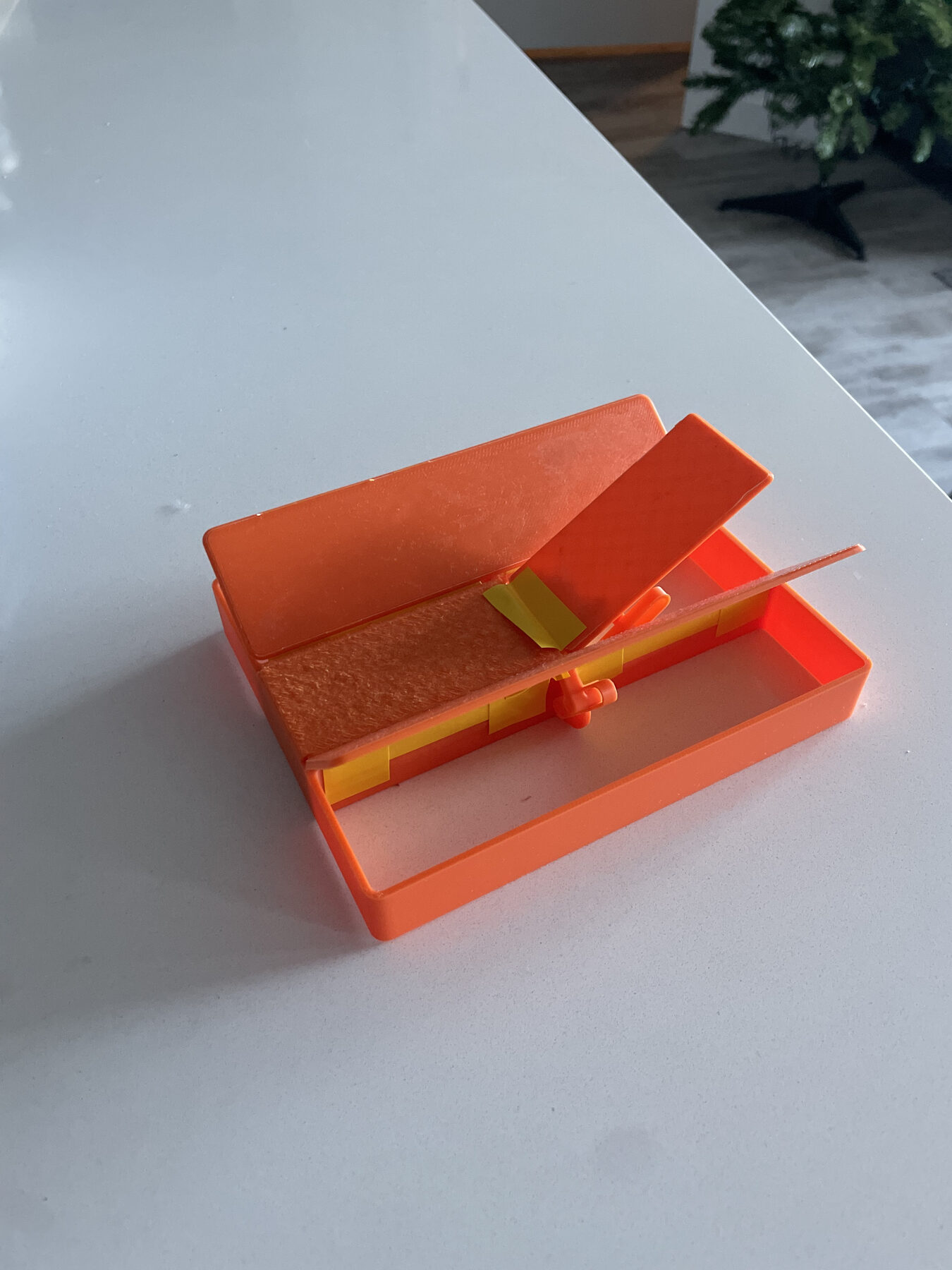
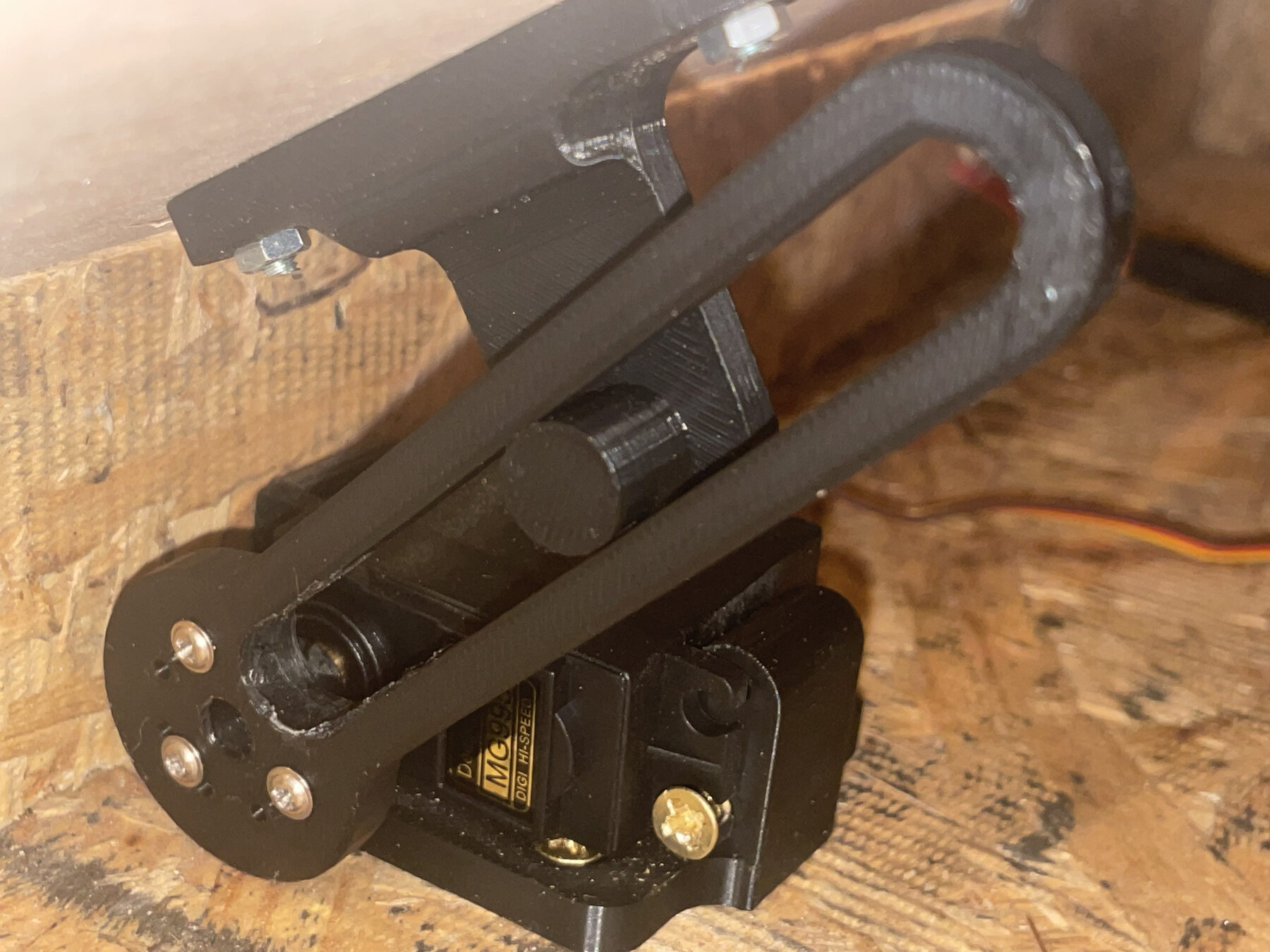
The machine has a central base panel with three folding flaps mounted on hinges along three of its edges. The left and right flaps fold inward first, tucking the sleeves, then the bottom flap folds up to complete the fold. The sequence is timed so the flaps don’t collide mid-cycle.
I designed the hinge mechanism to give the servos enough mechanical advantage to push the flaps through a full 90° fold without stalling under the fabric weight. Getting the servo geometry right took a few iterations — the moment arm between the servo horn and the hinge point had to be long enough to generate torque but short enough to avoid overshooting the fold angle.
The first successful fold happened before any tuning. The timing was rough and the flaps moved slower than intended, but the shirt came out folded. From there it was refinement: adjusting servo speed, tweaking the fold sequence delays, and improving the fold surface so the fabric lands flat on each flap without bunching.
Part of the class deliverable was a product pitch. We put together a short advertisement for TIDY as if it were going to market — naming the product, establishing a brand, and showing it actually working.