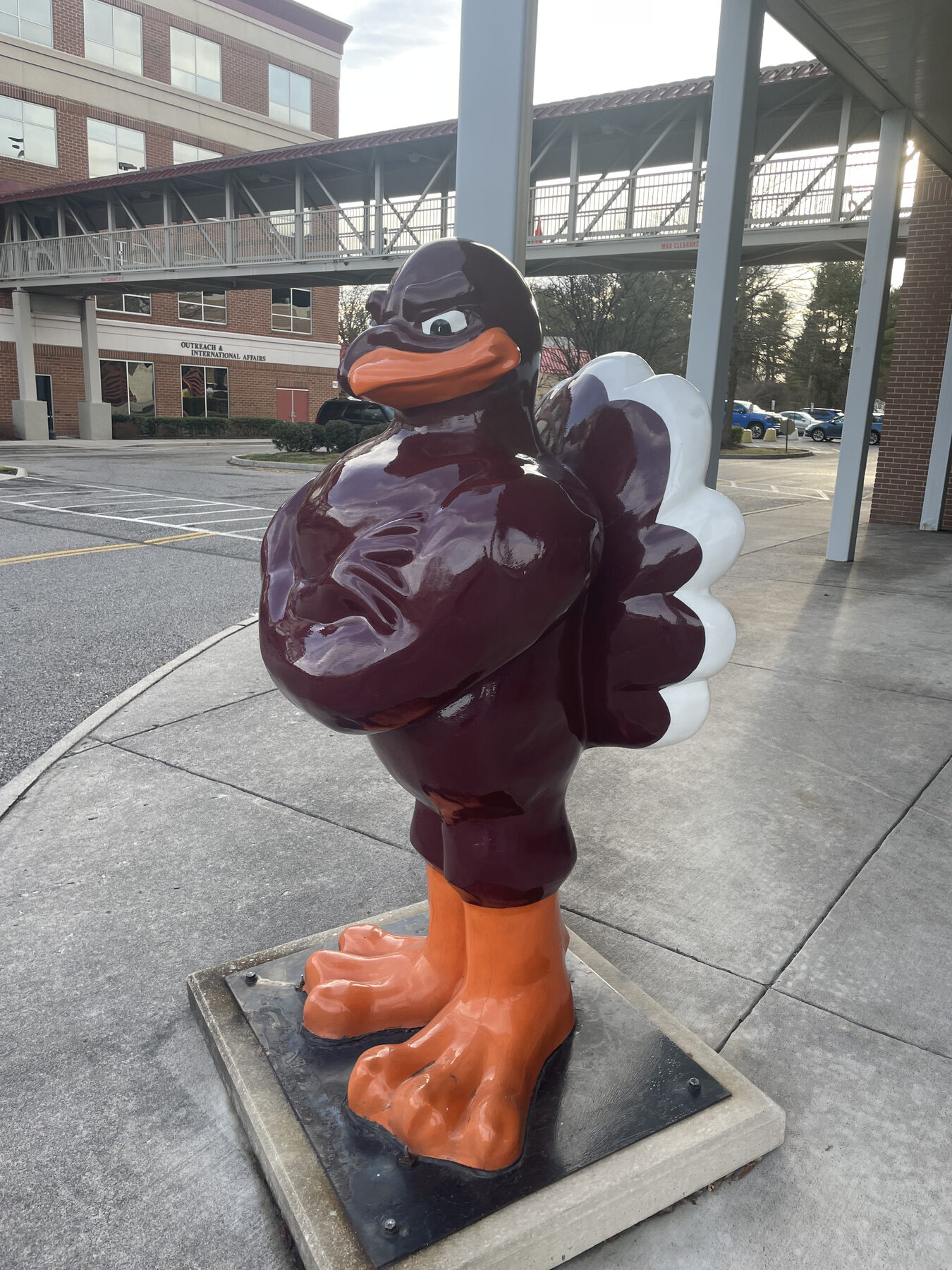
The Hokiebird statues scattered around the Virginia Tech campus were always a recognizable piece of VT identity. I wanted one — but not a cheap souvenir knockoff. I wanted something that was actually accurate to the real sculpture. So I scanned one.
Using photogrammetry, I captured the geometry of an actual campus Hokiebird statue, stitched the mesh together in Blender, fixed up the topology, and printed a test copy. Then a second. Then a bunch more.
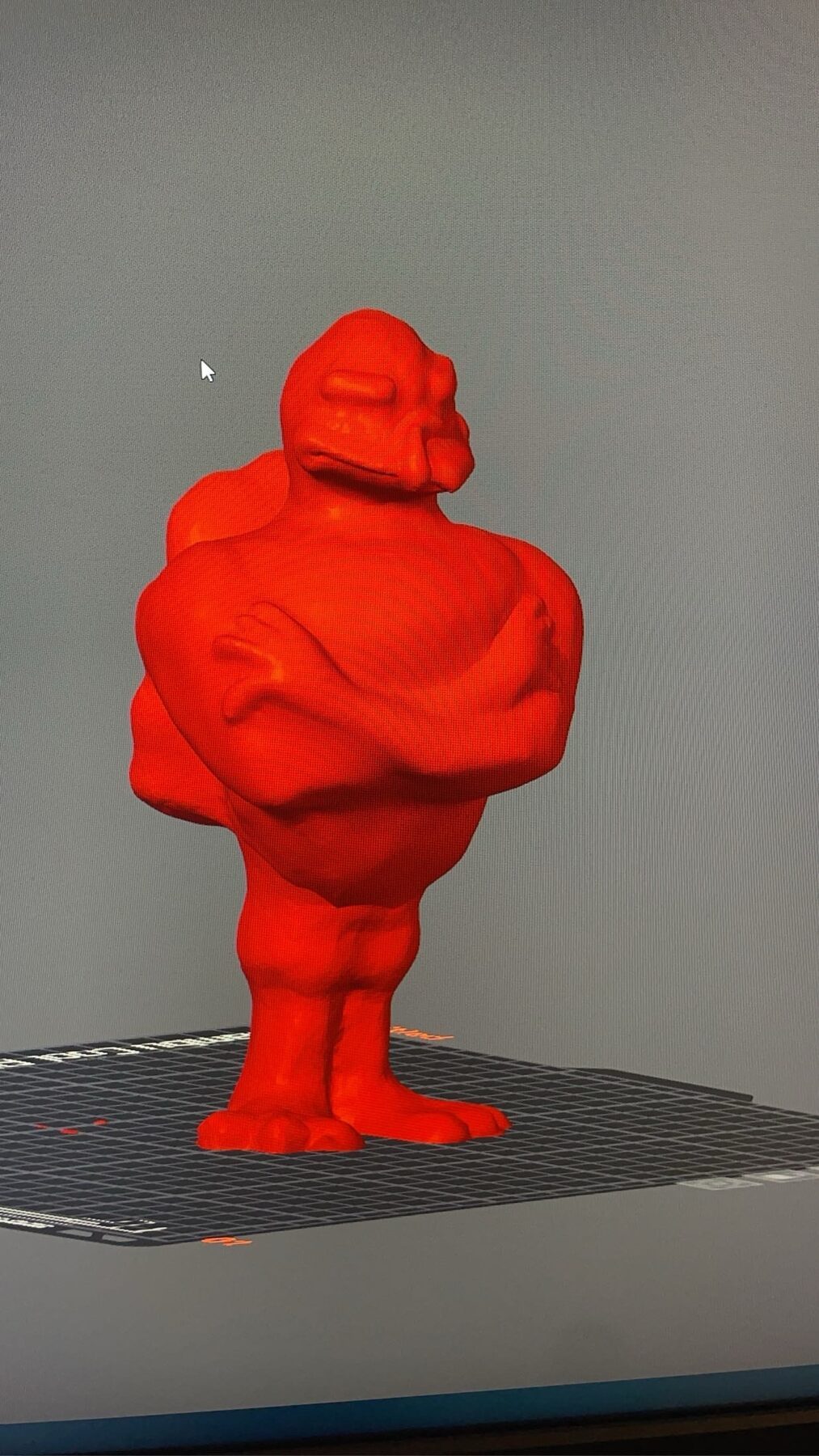
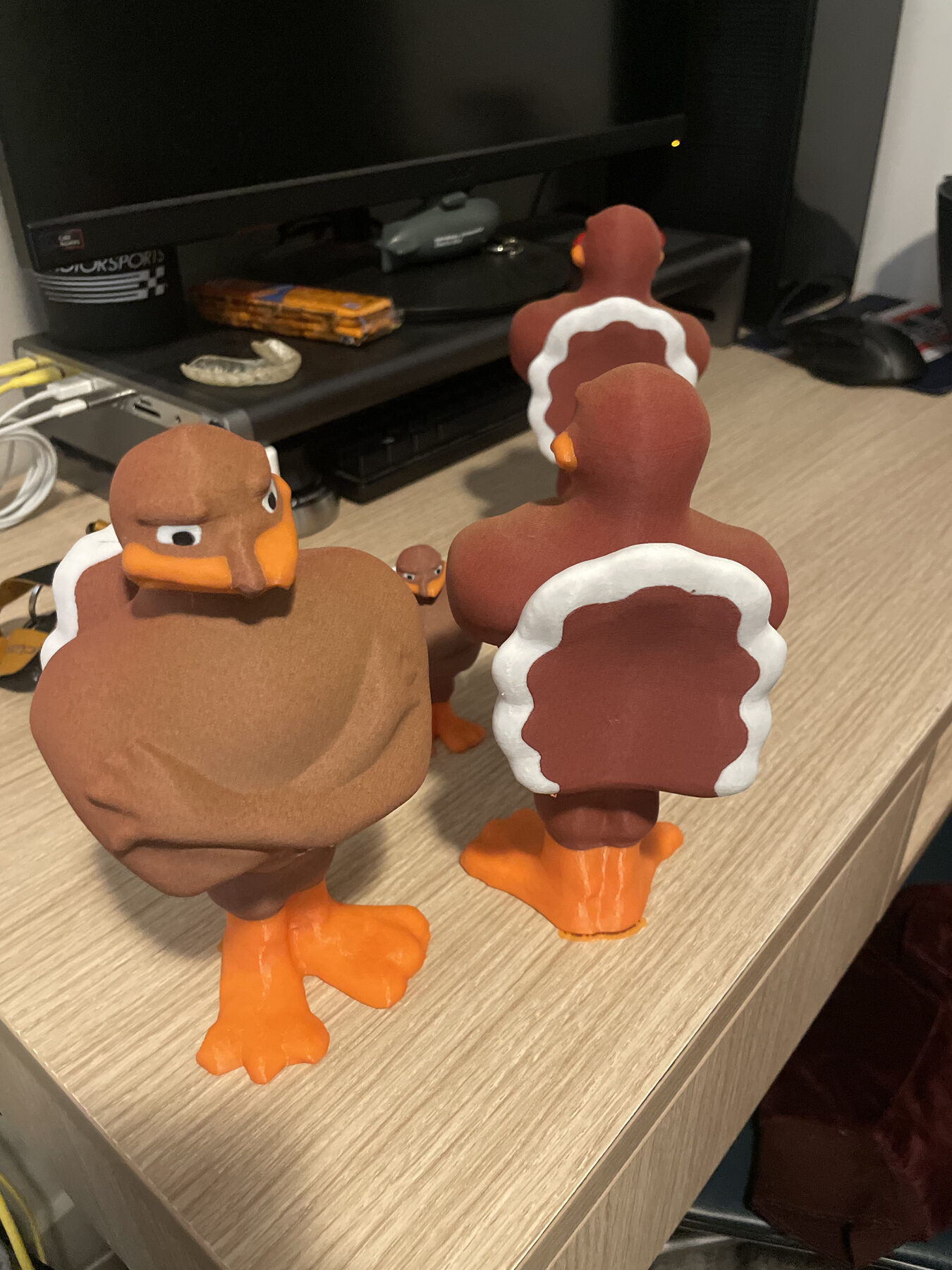
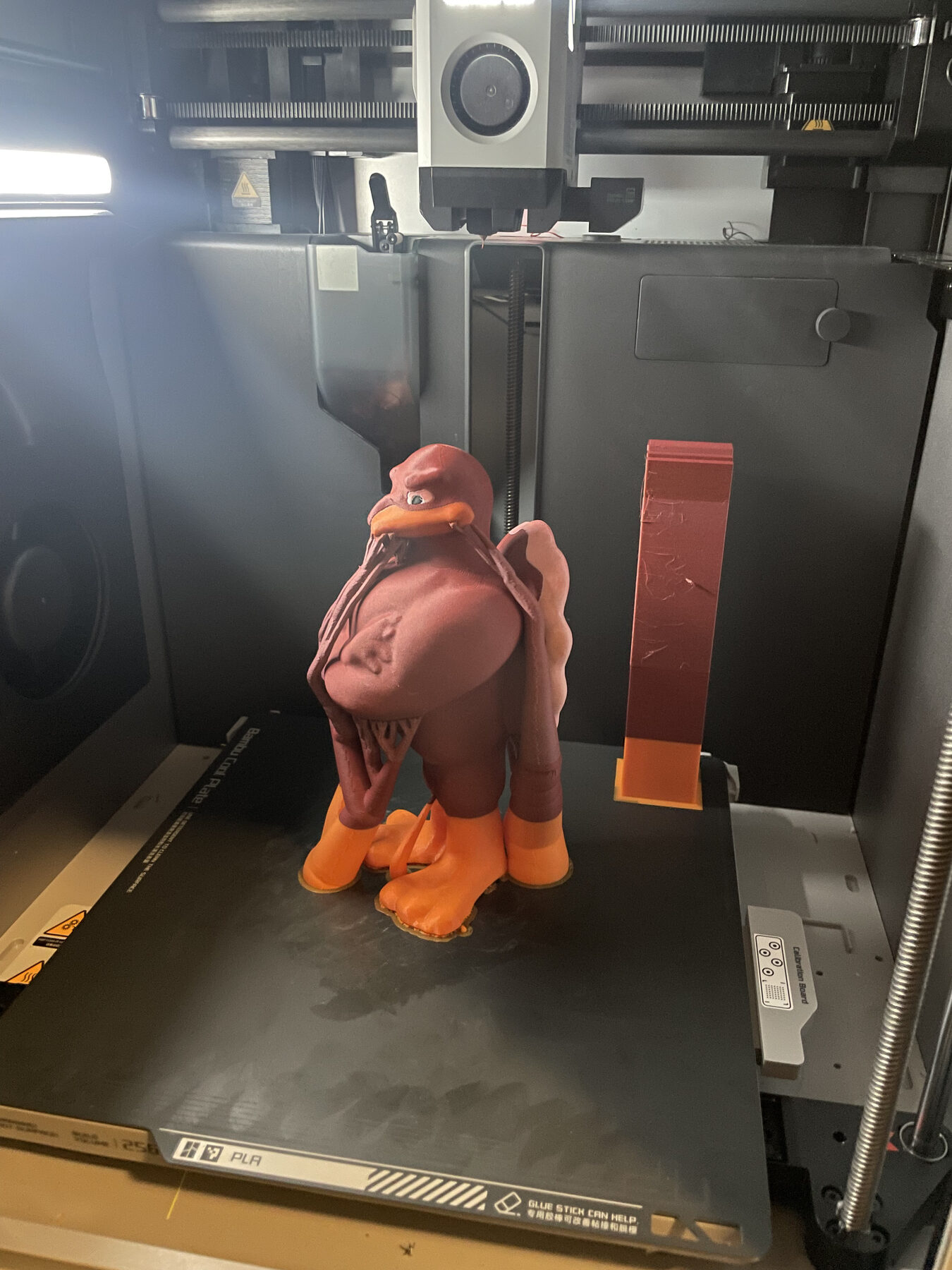
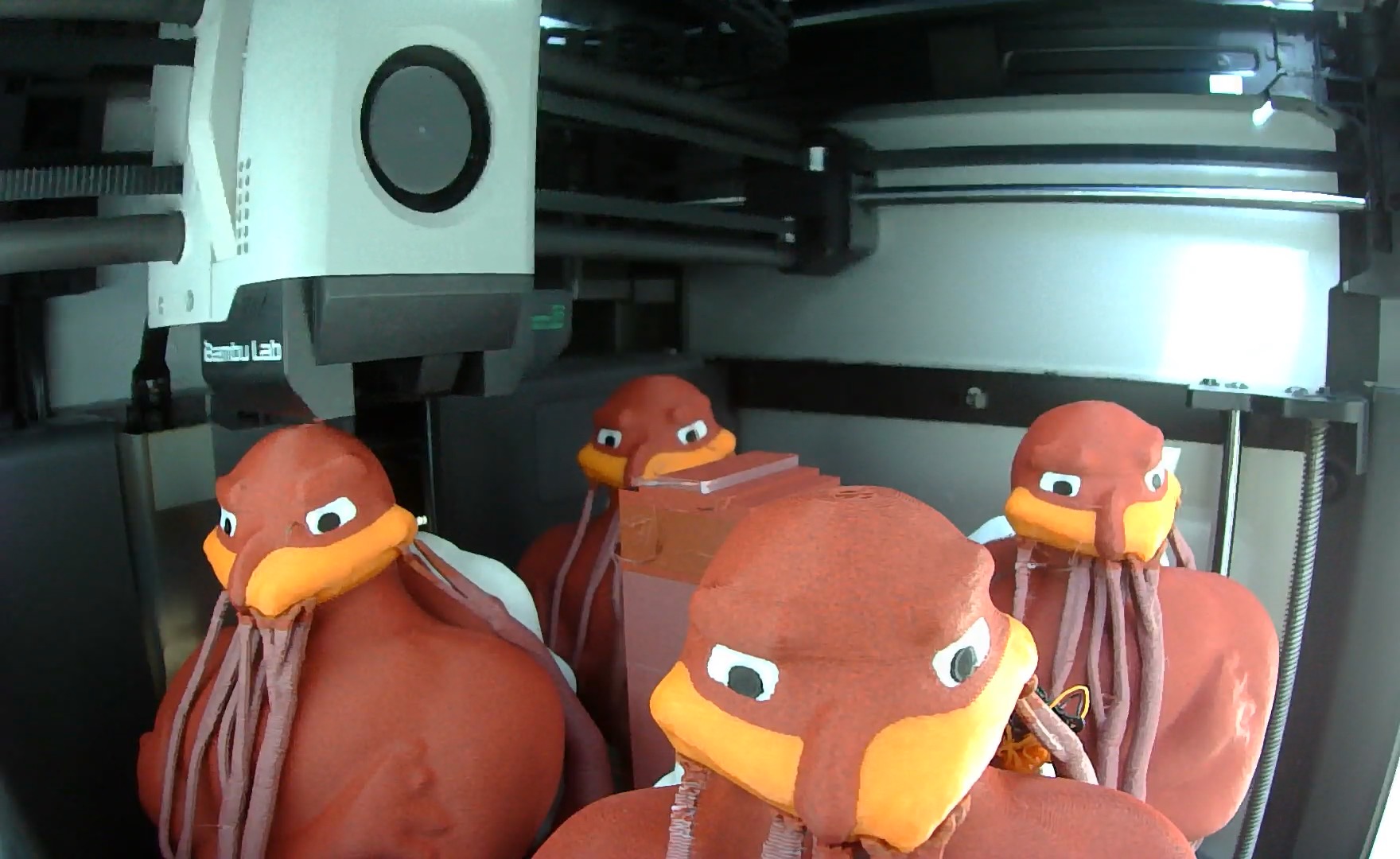
Getting a clean printable mesh from photogrammetry isn't as automatic as it sounds. The initial scan had holes, overlapping geometry, and noise artifacts around the base. I cleaned all of that up in Blender — retopologizing the problem areas, filling holes, and smoothing surfaces that should be smooth while preserving the detail in the feathers and face.
Print settings went through several iterations too. The early PLA prints looked good indoors but warped and discolored in direct sunlight. I switched to PETG for better UV and heat resistance, and tuned wall thickness and infill to balance print time against structural rigidity at 8 inches tall.
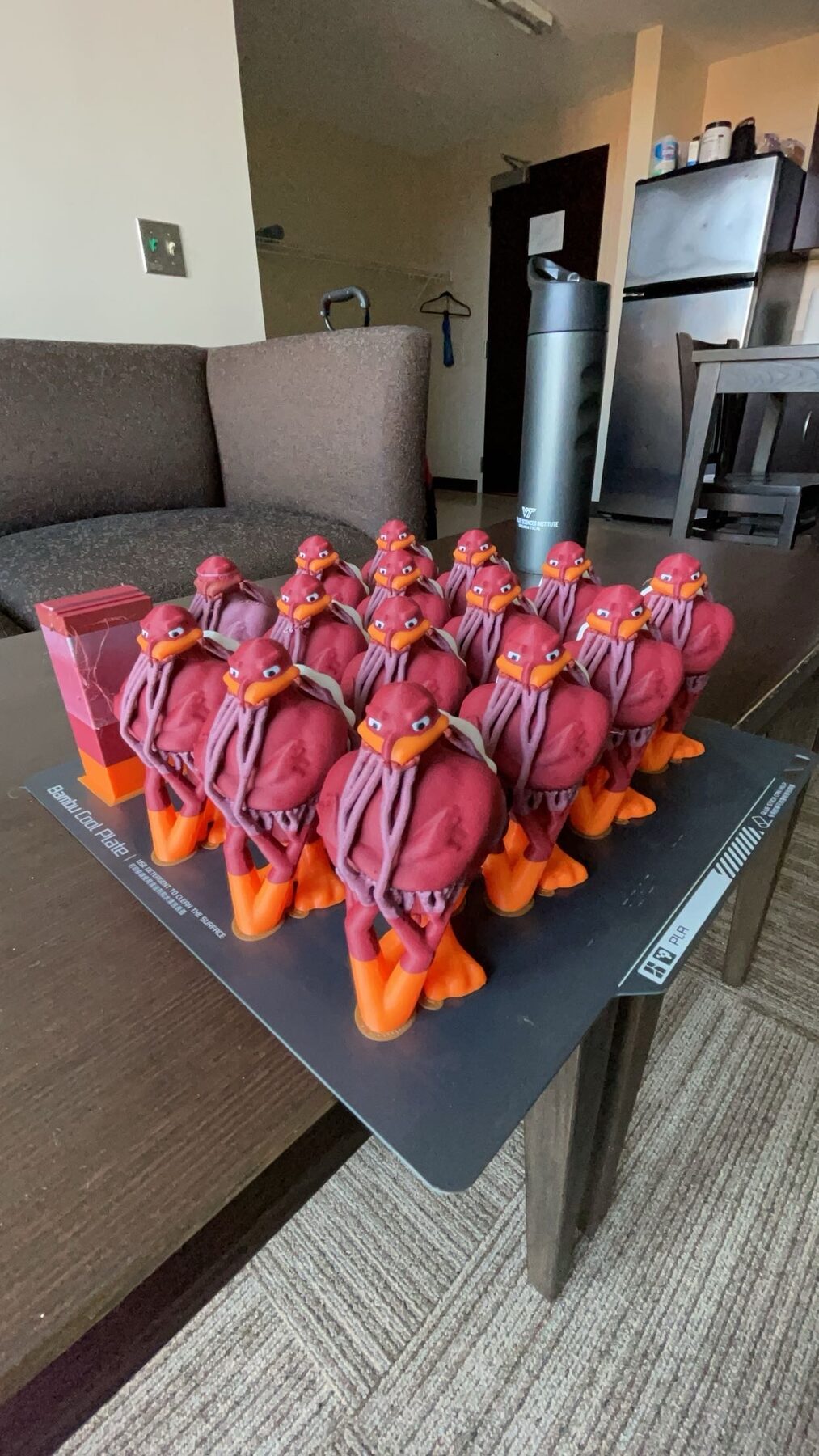
What started as a one-off for my own shelf has turned into a running small project. Classmates, friends, and VT alumni have bought copies — at this point there are 40+ of these statues out in the world. Print time depends on size: four 8" statues have taken about 36 hours each on a Bambu Lab X1C, while fifteen 3" versions took about 24 hours each. The multi-color version, using an AMS system to swap filament mid-print, adds another layer of fidelity to the maroon-and-orange color scheme.
Available on MakerWorld and Printables as a free download if you have your own printer, or as a finished print through the shop.
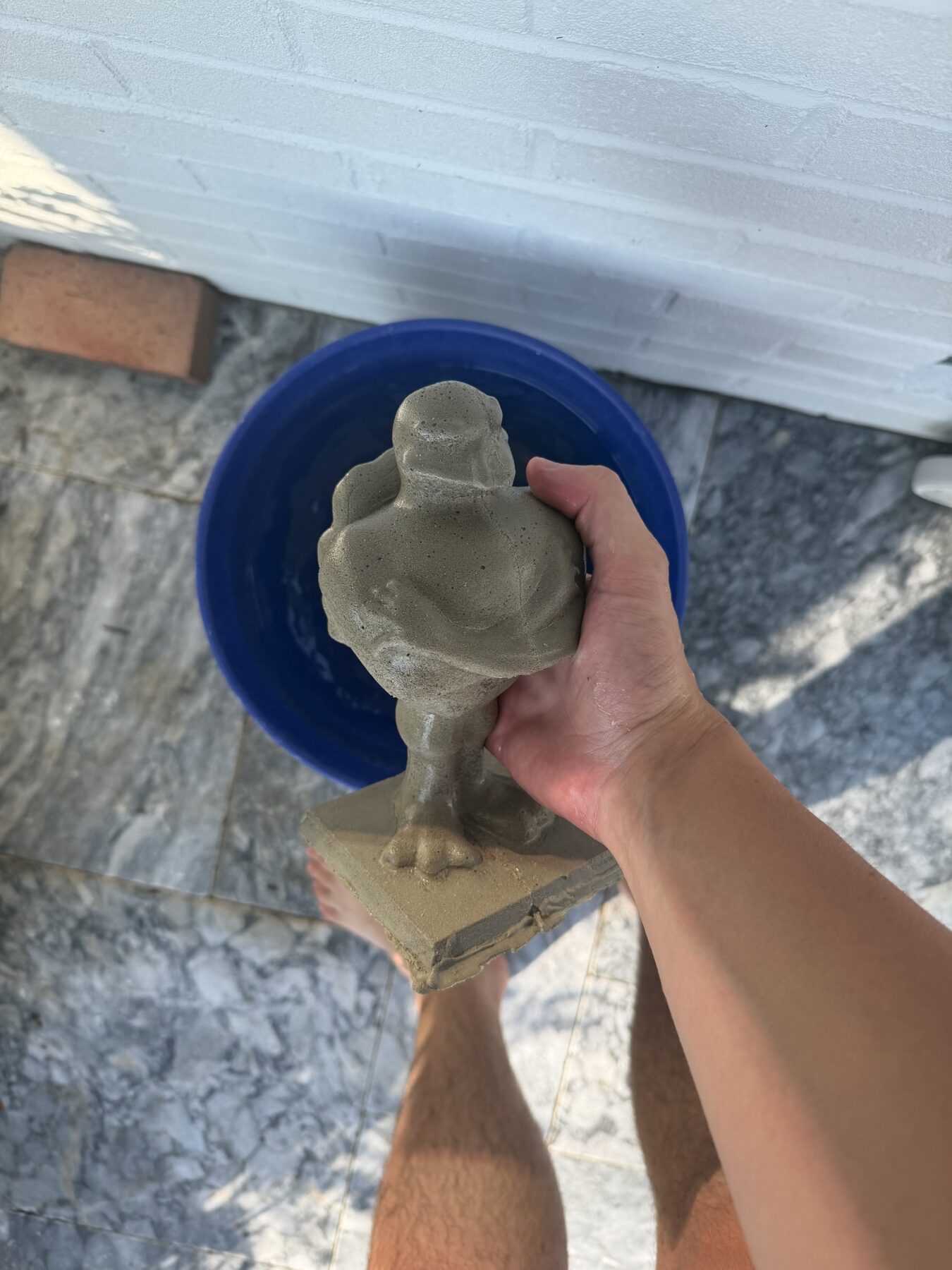
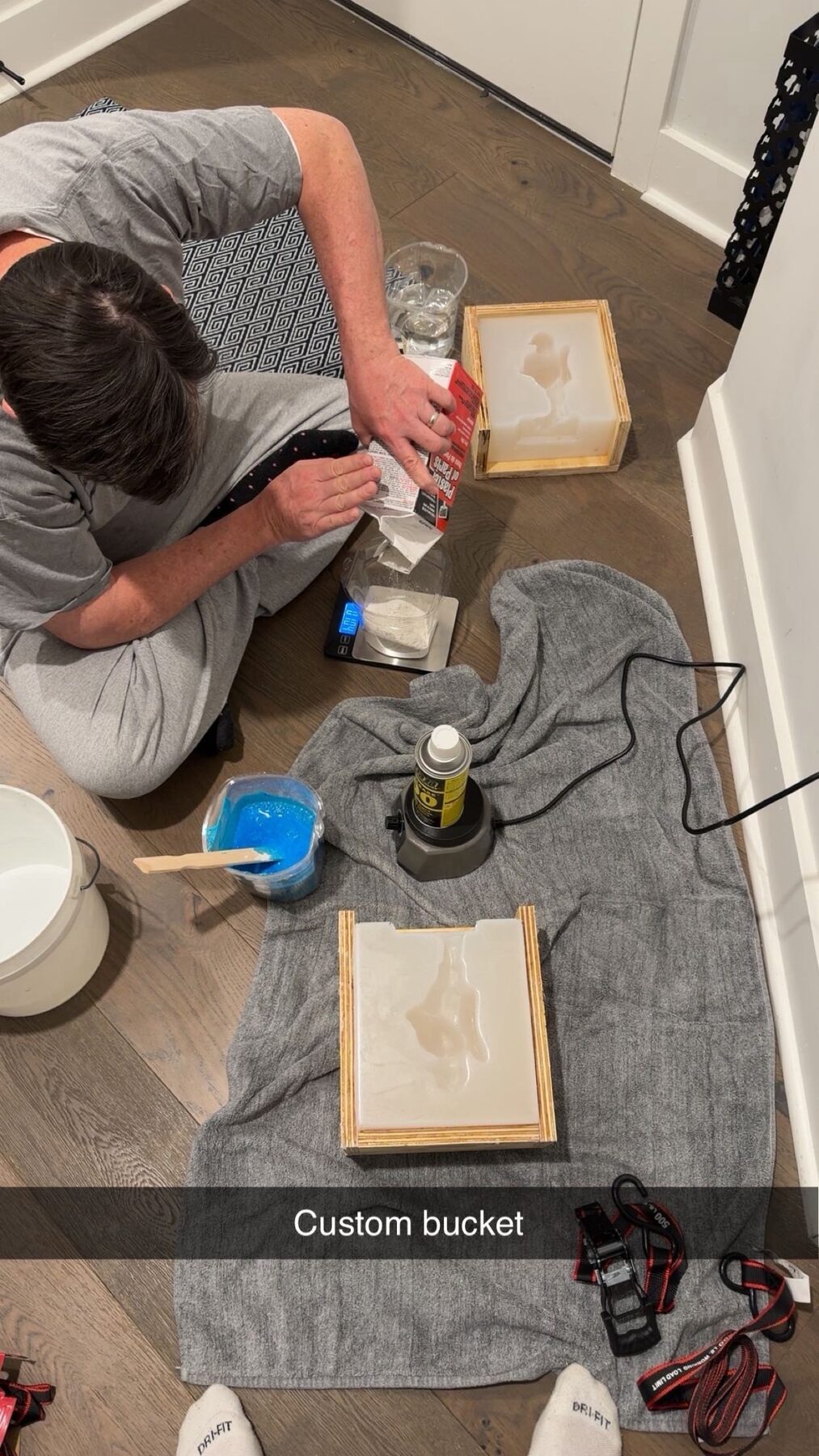
The plastic prints were only the start. I built a silicone mold from one of the printed masters and started casting copies in plaster instead of PLA — mixing, weighing, and pouring by hand into a custom-built mold box.
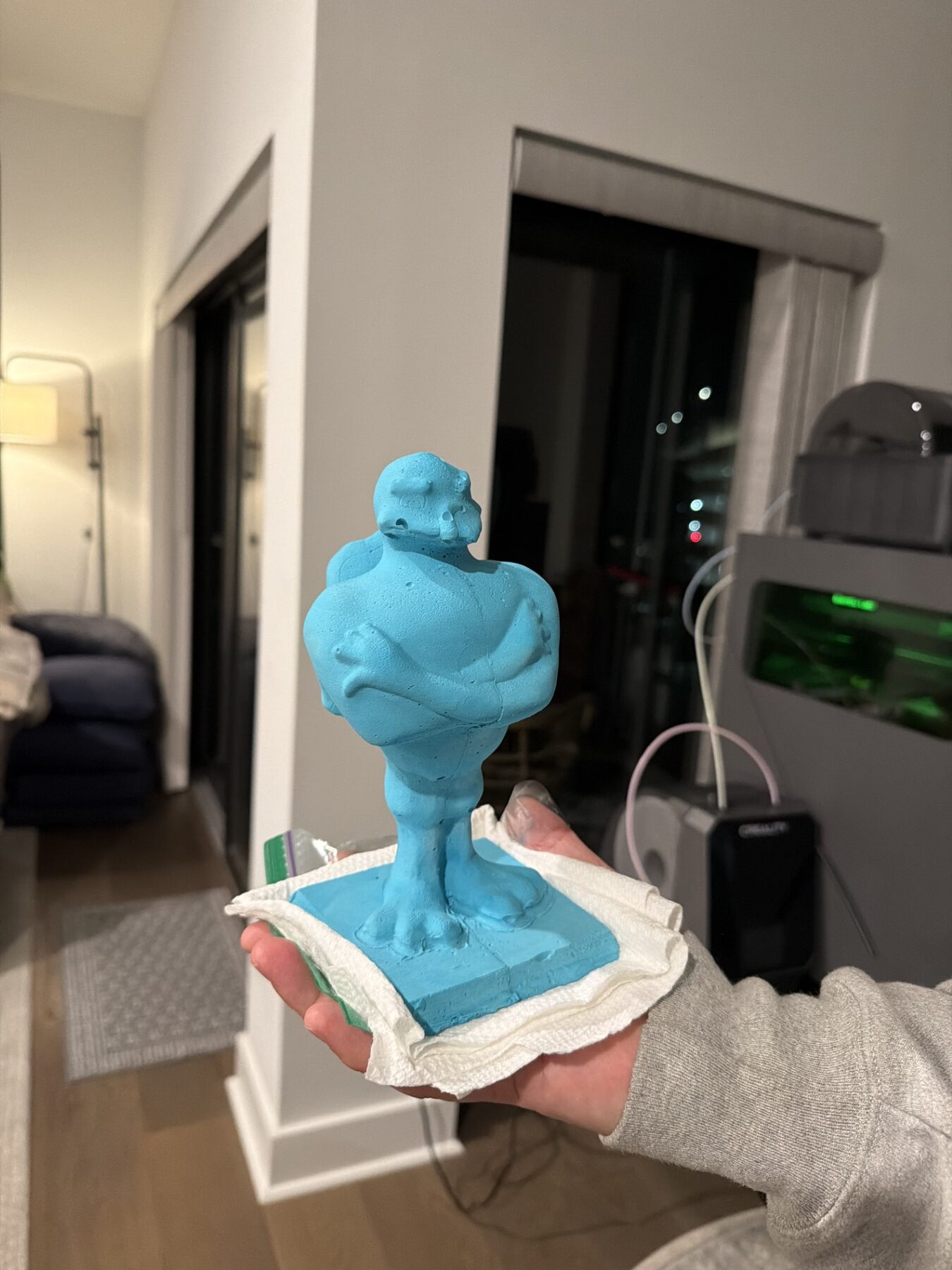
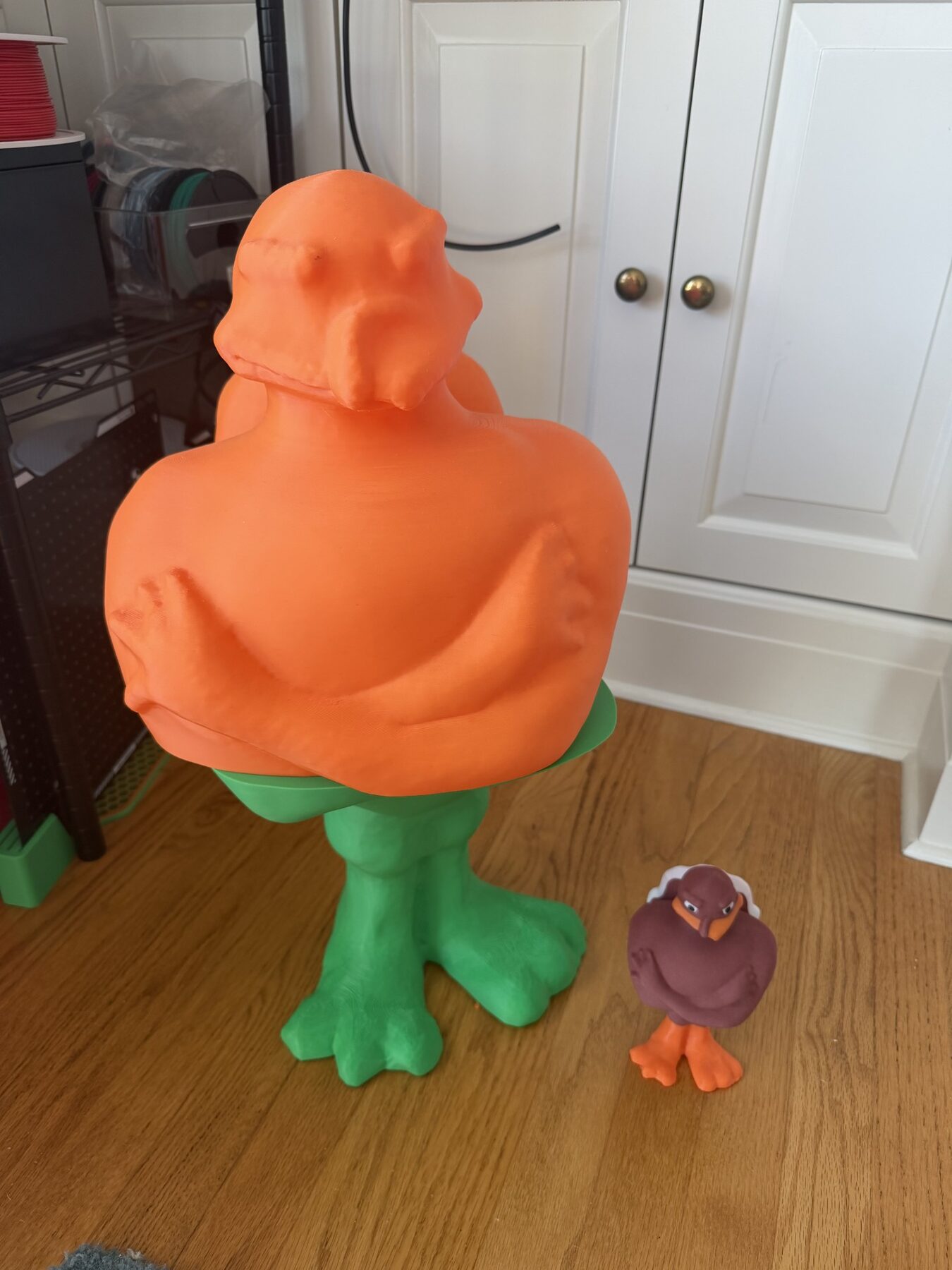
From there I moved on to concrete, for a version with real outdoor durability and heft. The next step is a two-foot-tall version, also destined for a concrete cast — shown here next to an original for scale — as a test run before an eventual yard-scale piece.