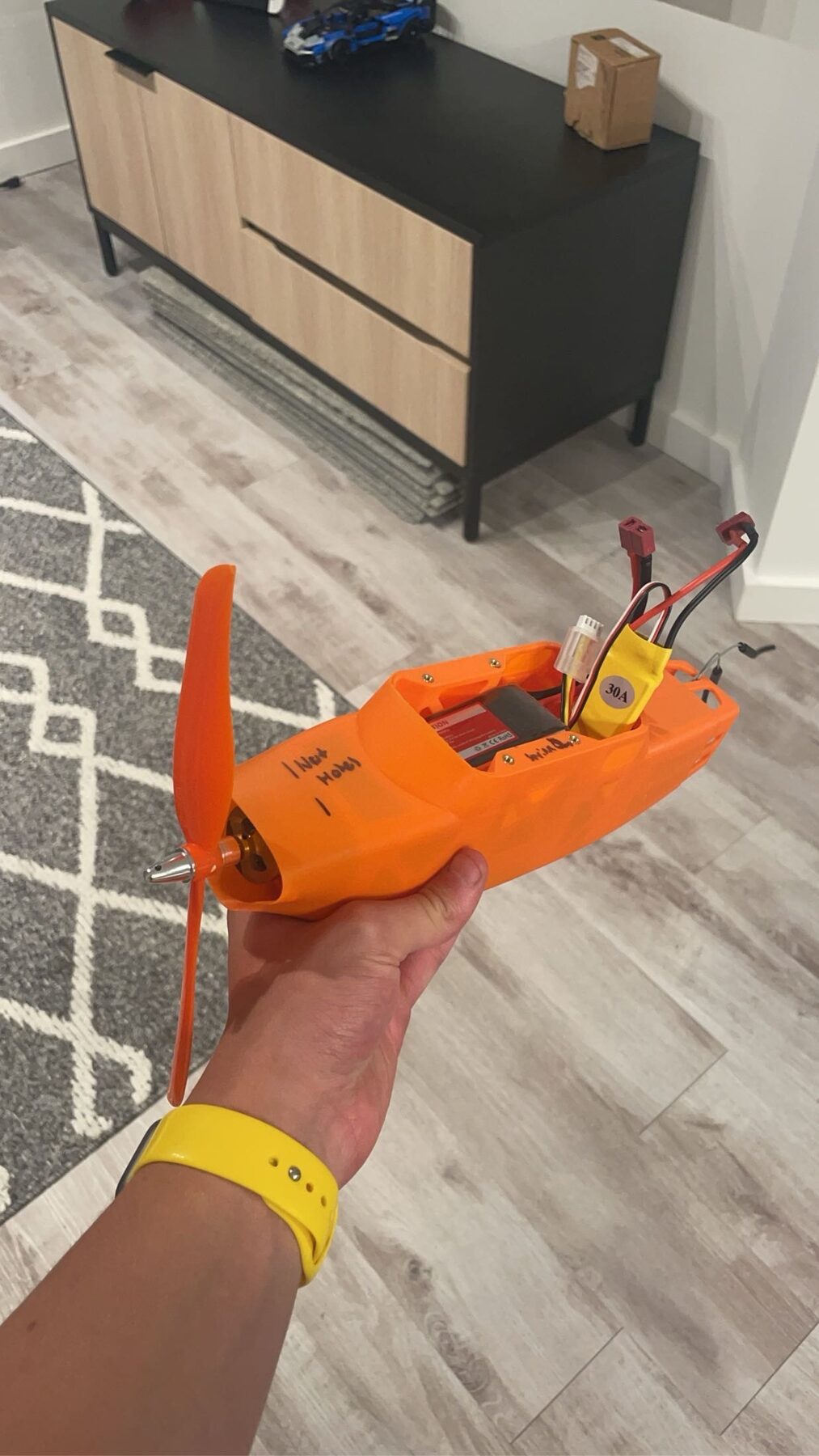
When I got interested in RC planes, most builds start from a kit — a known-good airframe someone else already designed, tested, and packaged up. I wanted something harder: a plane designed and built almost entirely from 3D-printed parts, both to simplify manufacturing and to force a real weight-management challenge, since printed structure is heavier than traditional balsa or foam construction. I based this design on the Cessna 172, a plane you'll see at pretty much any general-aviation airport, and modeled every component from the ground up in Fusion 360.
The school year has a habit of pushing the timeline out, but as of early 2025 the airframe was nearly complete. The first version deliberately omits yaw control — no rudder servo. The goal is to prove the rest of the airframe can fly before adding more complexity.
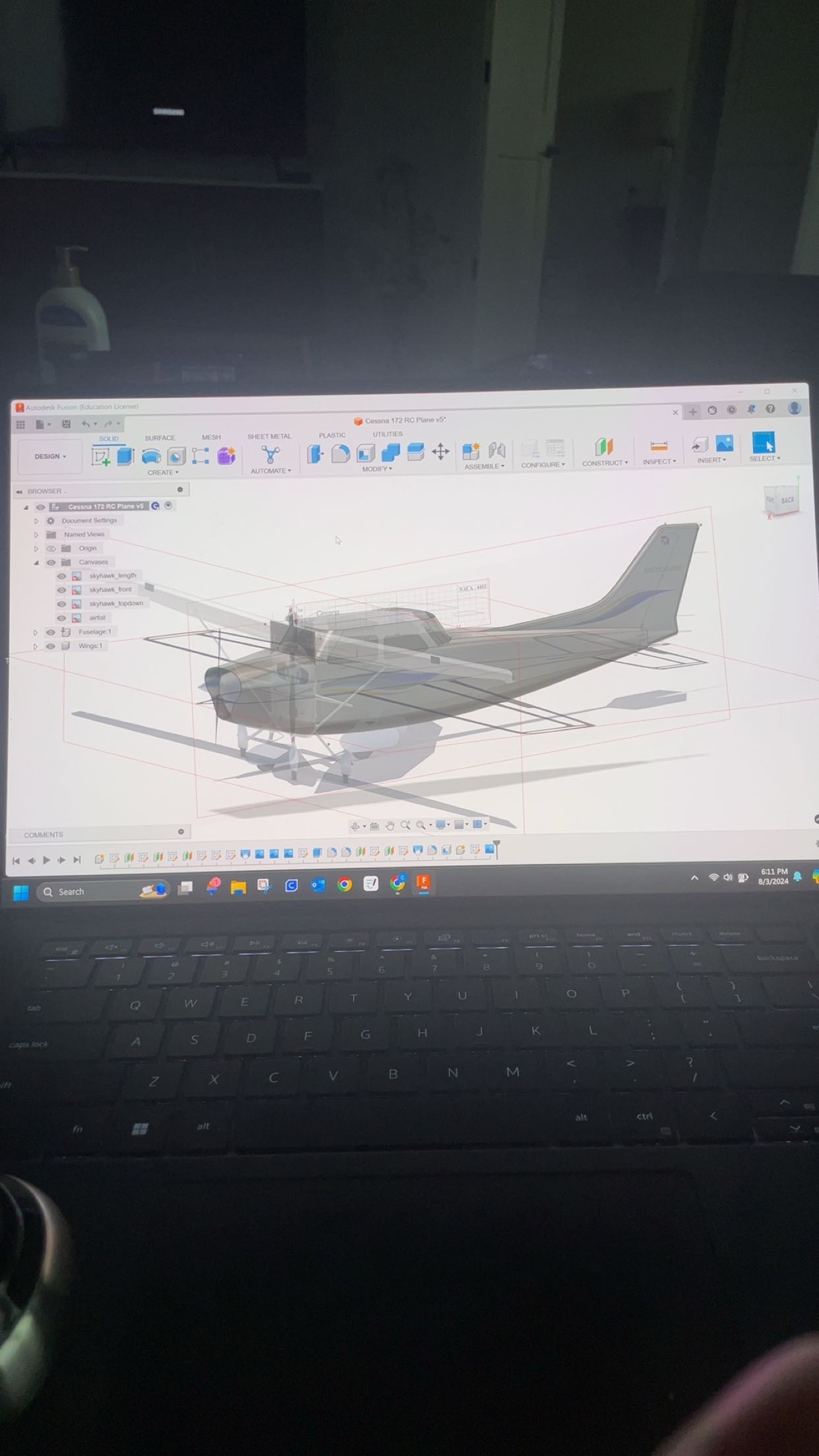
The airframe was modeled in Fusion 360 before any part was printed. Drag to rotate, or move your mouse across it to explode the assembly into its individual parts.
I built a full mass budget for the plane in a spreadsheet: motor, prop, ESC, battery, receiver, servos, and the printed structure itself. Tracking each component's actual weight let me estimate the center of gravity before committing to final assembly.
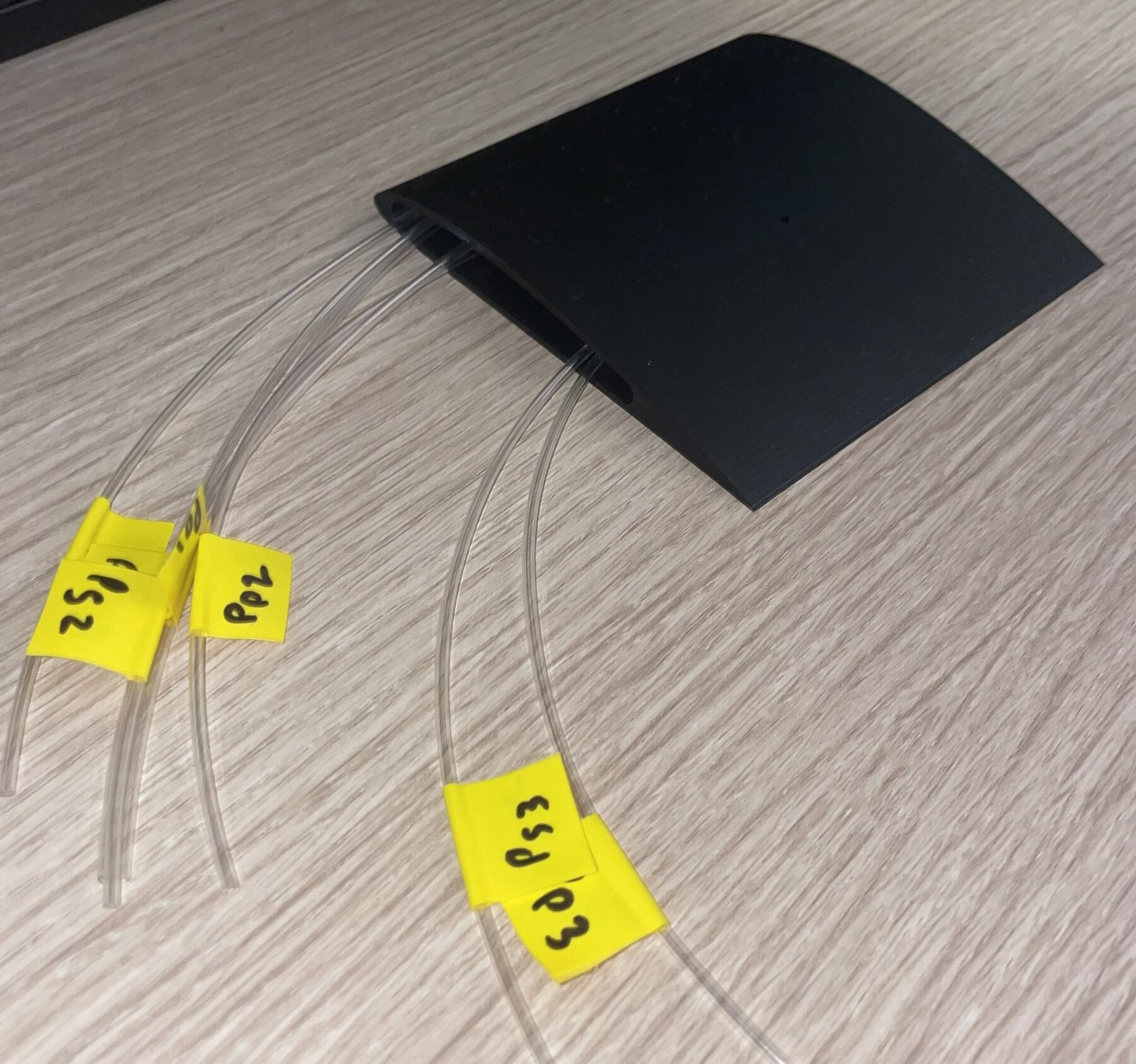
From the mass model, I estimated wing loading and calculated a conservative stall and takeoff speed. A university lab let me go further and test the actual airfoil profile, taking pressure readings across seven points along the wing. That data became a real lift curve I used to estimate lift at different airspeeds, rather than leaning purely on textbook coefficients — and the numbers line up well with comparable RC aircraft.
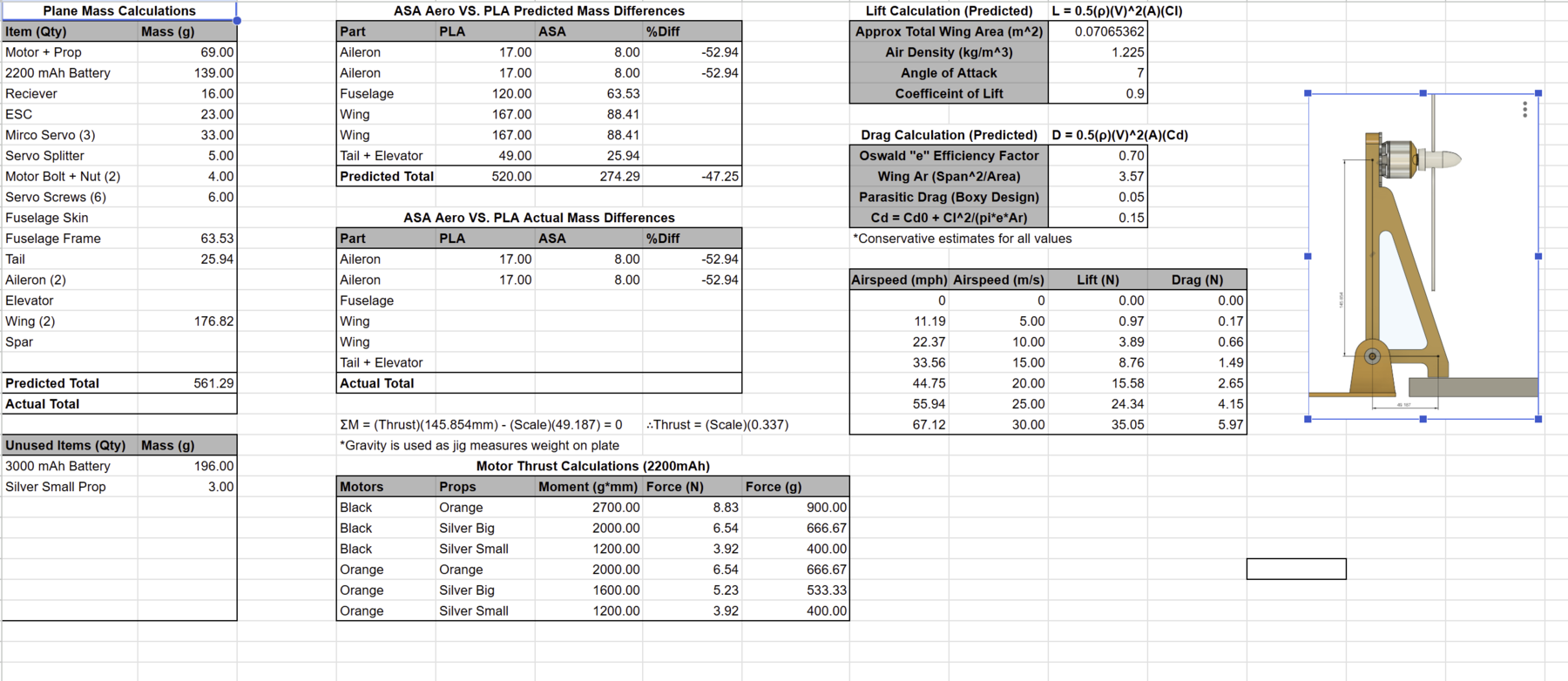
One known problem to solve before first flight: the CAD center of gravity matches the physical model well in X and Y but drifts noticeably on the Z axis. 3D-printed infill isn't perfectly uniform, and the internal fill pattern distributes mass differently than the solid CAD model predicts. Ballast placement before flying will address this.
The ailerons and elevator are built and connected. Servo travel has been dialed in and both surfaces deflect through the full range without binding. Remaining work before a first flight attempt: CG ballast, final battery placement for trim, and field range-check of the radio link. Once the baseline airframe is proven to fly, a rudder servo will be the next addition.